



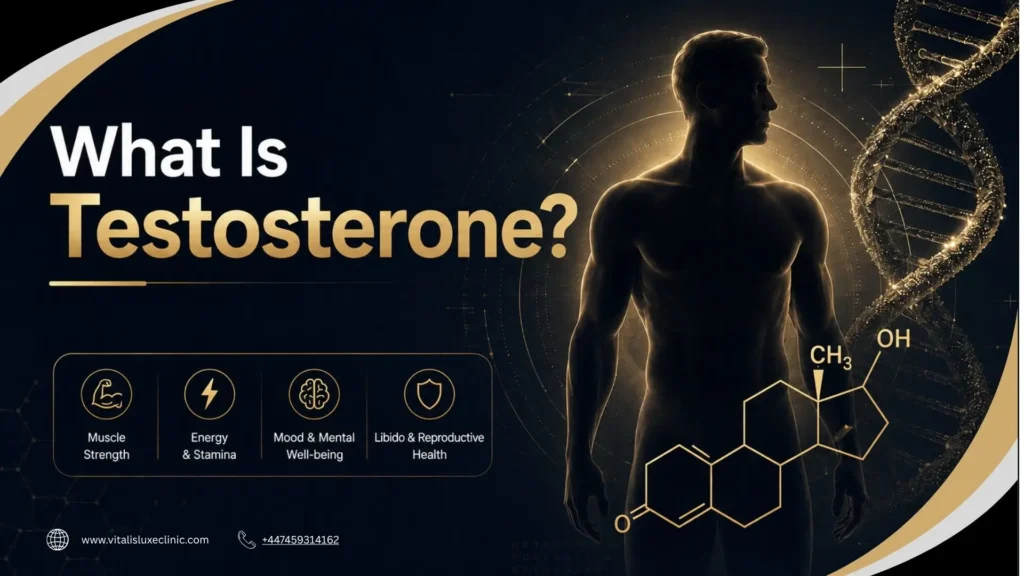

Definition of Testosterone?
Testosterone is a natural hormone found in both men and women. It belongs to a group of hormones called androgens.
It is often called the main male sex hormone because men usually have much higher levels than women. But testosterone is not only important for men. Women also need small amounts of testosterone for hormone balance, libido, bone health, mood, and general wellbeing.
Testosterone helps the body with sexual development, reproductive health, muscle mass, bone strength, red blood cell production, energy, mood, and motivation.
In simple words, testosterone is a chemical messenger. It tells different parts of the body how to grow, develop, and work properly.
Table of Contents
Testosterone meaning in simple words:
Testosterone is one of the key hormones that helps control physical, sexual, and emotional health.
It plays a role in:
- Puberty and sexual development
- Sex drive
- Sperm production in men
- Muscle strength
- Bone density
- Energy levels
- Mood and motivation
- Red blood cell production
- Body hair and facial hair growth
- Overall hormone balance
This is why testosterone is often linked with topics like low energy, low libido, fertility, muscle loss, mood changes, and hormone health.
Testosterone does not work alone. It works with many other hormones and body systems. Sleep, stress, body weight, diet, exercise, medication, and medical conditions can also affect how a person feels.
Why is testosterone important?
Testosterone is important because it affects many parts of the body at the same time. It is not just a sex hormone.
| Area of health | How testosterone helps |
|---|---|
| Sexual development | Supports puberty and reproductive development |
| Reproductive health | Supports sperm production in men and libido in both sexes |
| Muscle health | Helps support muscle mass and strength |
| Bone health | Helps maintain bone density |
| Mood | May affect motivation, confidence, and emotional wellbeing |
| Energy | Can affect drive, tiredness, and physical performance |
| Blood health | Helps support red blood cell production |
| Hormone balance | Works with other hormones in the endocrine system |
Healthy testosterone levels are part of wider hormone health. The goal is not to have the highest testosterone possible. The goal is to have the right level for your body, age, symptoms, and health situation.
Where is testosterone produced?
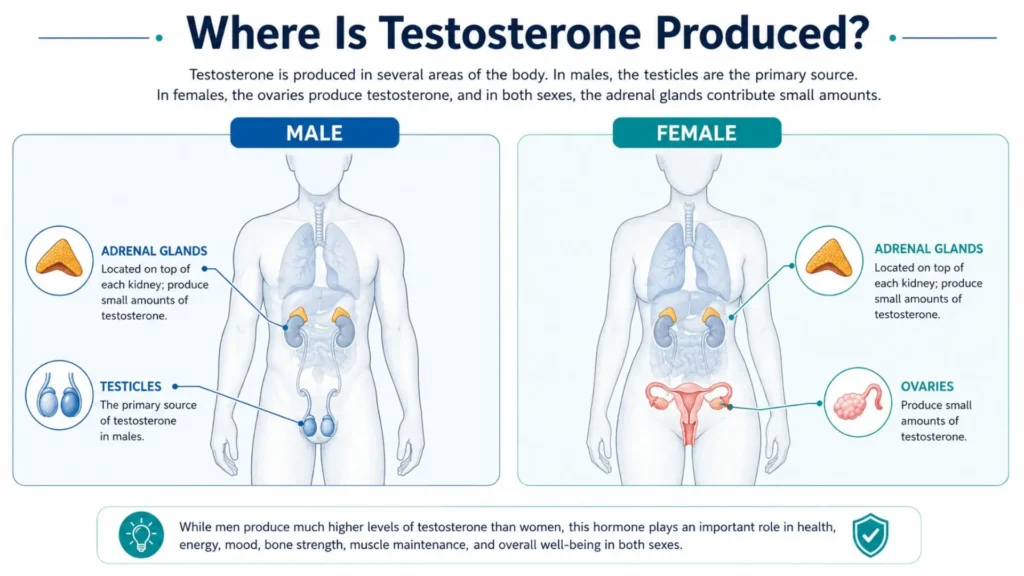
In men, most testosterone is produced in the testicles. A smaller amount is made by the adrenal glands.
In women, testosterone is produced in smaller amounts by the ovaries and adrenal glands.
Testosterone production is controlled by the brain. The hypothalamus and pituitary gland send signals that tell the testicles or ovaries how much testosterone to produce.
A simple way to understand it is:
Brain signals → pituitary gland → testicles or ovaries → testosterone production
This system works like a feedback loop. If testosterone levels rise or fall, the body tries to adjust hormone production.
This is why testosterone problems are not always caused by one body part. Low testosterone may be linked with the testicles, ovaries, adrenal glands, brain signalling, sleep, stress, weight, medication, illness, or ageing.
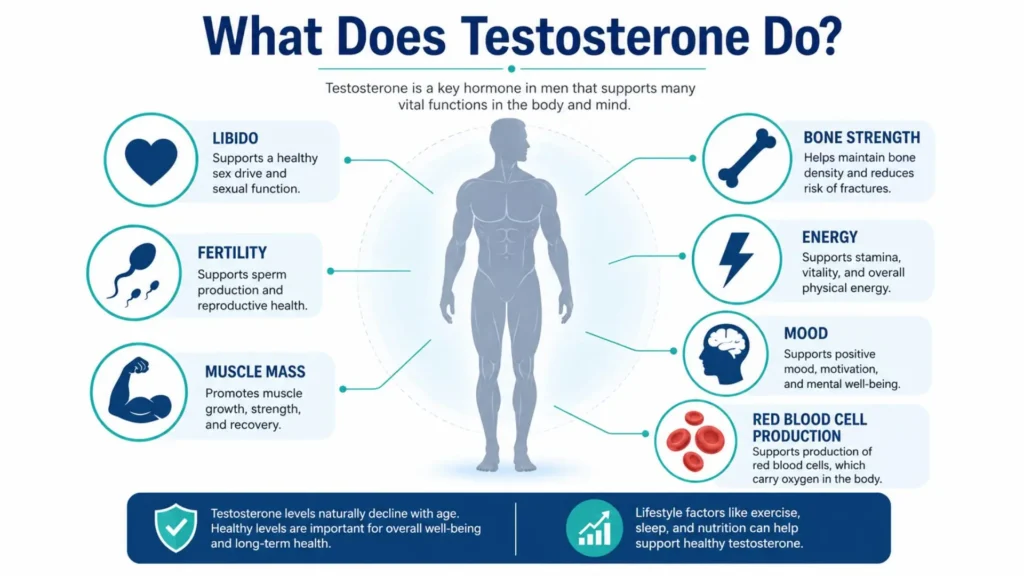
What does testosterone do in the body?
Testosterone has different roles at different stages of life.
During puberty, testosterone helps drive many physical changes. In males, this can include voice deepening, facial hair growth, body hair growth, growth of the penis and testicles, sperm production, and increased muscle mass.
In adulthood, testosterone continues to support reproductive health, sex drive, muscle, bones, blood health, mood, and energy.
Testosterone can affect:
- Sex drive
- Fertility
- Muscle strength
- Bone strength
- Fat distribution
- Red blood cell production
- Mood
- Motivation
- General wellbeing
Testosterone is important, but it is not the only reason someone may feel tired, low in mood, or less motivated. Other issues such as poor sleep, stress, diet, thyroid problems, diabetes, depression, medication, and lifestyle can also cause similar symptoms.
This is why testing is important before assuming testosterone is the problem.
Testosterone in men
In men, testosterone is the main androgen hormone. It supports male puberty, sperm production, sex drive, erectile function, muscle mass, bone health, and red blood cell production.
When testosterone is low in men, some people may notice symptoms such as low sex drive, tiredness, low mood, poor gym recovery, reduced muscle mass, or erectile difficulties.
But symptoms alone cannot confirm low testosterone. Many health problems can cause similar symptoms. A blood test is needed to check testosterone levels properly.
Testosterone in women
Women also need testosterone, but in lower amounts than men.
In women, testosterone may support libido, mood, bone strength, ovarian function, and general hormone balance.
Too much testosterone in women may be linked with symptoms such as acne, excess facial or body hair, scalp hair thinning, irregular periods, or conditions such as polycystic ovary syndrome, also called PCOS.
Because hormone balance is different for every person, testosterone results should be reviewed with symptoms, age, sex, medical history, and other health markers.
Is testosterone a steroid?
Yes. Testosterone is a natural steroid hormone. More specifically, it is an androgenic and anabolic hormone made by the body.
This does not mean natural testosterone is the same as unsafe anabolic steroid use.
The word “steroid” can sound worrying, but it simply describes the hormone’s chemical structure. Natural testosterone is essential for normal health.
Anabolic steroid misuse usually means taking synthetic testosterone-like substances in high or unsafe doses, often without medical supervision. This can carry serious health risks.
Medical testosterone treatment is different. It should be based on symptoms, blood testing, clinical suitability, and regular monitoring.
Can testosterone levels change?
Yes. Testosterone levels can change throughout life.
They rise during puberty and remain important in adulthood. Levels may slowly decline with age. They can also be affected by sleep, weight, stress, illness, alcohol, medication, training load, and other health conditions.
Testosterone can also change during the day. Levels are often higher in the morning. This is why morning blood testing is often preferred when checking testosterone.
One test result may not always tell the full story. If symptoms and results do not match, repeat testing or a wider hormone review may be needed.
What happens if testosterone is low?
If testosterone is low, the body may not function as well as it should.
Possible signs of low testosterone can include:
- Low sex drive
- Ongoing tiredness
- Low mood
- Poor motivation
- Brain fog
- Erectile difficulties in men
- Fewer morning erections
- Loss of muscle mass
- Increased body fat
- Poor workout recovery
- Lower confidence
- Fertility concerns
- Weak bones in more serious cases
These symptoms do not always mean testosterone is low. They can also be linked with stress, poor sleep, depression, thyroid problems, diabetes, obesity, medication, alcohol, or other health issues.
That is why the next step should be testing, not guessing.
What happens if testosterone is high?
Testosterone can also be too high.
High testosterone or androgen imbalance may be linked with acne, mood changes, excess hair growth, irregular periods in women, fertility problems, or raised red blood cell levels in people using testosterone without medical supervision.
In adult men, naturally high testosterone is less common. However, high levels can happen with testosterone misuse, anabolic steroid use, some tumours, or adrenal problems.
If testosterone is too high or too low, the safest step is a proper blood test and clinical review.
When should testosterone be checked?
Testosterone may be worth checking if symptoms suggest a possible hormone problem.
A testosterone blood test may be helpful if you have ongoing symptoms such as:
- Low libido
- Fatigue
- Erectile difficulties
- Reduced muscle mass
- Poor recovery
- Low mood
- Low motivation
- Brain fog
- Fertility concerns
- Symptoms that do not improve with lifestyle changes
A good testosterone check may look at more than one marker. It may include total testosterone, free testosterone, SHBG, and other related markers depending on the situation.
Testing helps show whether testosterone is actually low, or whether another health issue may be causing the symptoms.
What should you do if your testosterone is low?
If you think your testosterone may be low, do not guess. Do not start random supplements or treatment without medical advice.
The first step is to check your testosterone levels with a blood test. The next step is to review the result with a clinician.
A proper testosterone check helps answer three important questions:
- Are your testosterone levels actually low?
- Do your symptoms match the blood results?
- Is there an underlying reason your testosterone may be low?
If testosterone is low and symptoms match, the next step may be lifestyle changes, further testing, or medical treatment.
For some men, testosterone replacement therapy, also called TRT, is a suitable option.
TRT is designed to restore testosterone to a healthier range when levels are clinically low. It should only be considered after blood testing, medical assessment, and a discussion about benefits, risks, treatment options, and monitoring.
Testosterone and TRT
TRT stands for testosterone replacement therapy. It is a medical TRT treatment used for men with clinically low testosterone and matching symptoms.
More details about What Is TRT.
TRT is not a general energy booster. It is not a gym shortcut. It is not suitable for everyone.
Before TRT is considered, a clinician should review symptoms, blood results, medical history, and safety markers. This helps decide whether TRT is appropriate and whether any other health issues need to be addressed first.
TRT may be given in different forms, such as injections, gel, or other options depending on clinical suitability.
Benefits of TRT when testosterone is clinically low
For some men with confirmed low testosterone and matching symptoms, TRT helps restore testosterone to a healthier range.
Benefits include:
- Improved sex drive
- Better erectile function in some men
- Improved energy
- Better motivation
- Improved mood
- Better confidence
- Support for muscle mass and strength
- Improved bone density over time
- Better concentration for some men
- Improved quality of life when symptoms are linked to low testosterone
TRT benefits depend on the person. It works best when testosterone is genuinely low, symptoms match the blood results, and treatment is monitored properly.
TRT is not suitable for everyone. It should only be used under medical supervision. Ongoing blood testing is important to monitor response, dose suitability, and possible side effects.
If testosterone is low and symptoms are affecting your quality of life, the next step is to speak with a clinician about whether TRT is appropriate.
Concerned About Low Testosterone?
If you have symptoms such as low energy, low libido, poor recovery, low mood, brain fog or reduced motivation, low testosterone could be part of the problem.
Vitalis Luxe Clinic provides Testosterone Replacement Therapy (TRT) treatment for clinically low testosterone with matching symptoms. The clinic can help with testosterone testing, medical guidance, treatment options and ongoing monitoring.
Key takeaway
Testosterone is an androgen hormone found in both men and women. It supports sexual development, reproductive health, libido, muscle, bone strength, red blood cell production, mood, energy, and hormone balance.
In men, most testosterone is made in the testicles. In women, smaller amounts are made in the ovaries. The adrenal glands also make small amounts in both sexes.
Testosterone levels can change because of age, sleep, stress, weight, illness, medication, alcohol, and lifestyle.
If symptoms suggest low or high testosterone, the best step is proper testing and clinical review. For men with clinically low testosterone and matching symptoms, TRT may be one possible solution.
FAQs
Where can I get TRT treatment?
TRT treatment is usually provided by private TRT clinics and NHS/government medical services. A safe provider should offer blood testing, clinician review, treatment options and follow-up monitoring before starting treatment.
Who should I speak to about low testosterone?
Speak to a qualified healthcare professional, such as a GP, endocrinologist, urologist, men’s health clinician or private TRT clinic. They can review your symptoms and arrange the right blood tests.
Do I need a blood test before TRT?
Yes. TRT should not start without blood testing. A blood test helps confirm whether testosterone is actually low and whether symptoms match the result.
What should a TRT clinic check before treatment?
A TRT clinic may check total testosterone, free testosterone, SHBG, LH, FSH, oestradiol, prolactin, full blood count, liver markers, kidney markers, cholesterol and PSA where appropriate.
How do I choose a good TRT clinic?
Choose a clinic that reviews symptoms, blood results, medical history and safety markers before offering treatment. It should also explain treatment options, costs, risks and monitoring clearly.
Is TRT suitable for everyone with low testosterone?
No. TRT is not suitable for everyone. A clinician should check your symptoms, blood results, medical history and safety markers before deciding if treatment is appropriate.
Is buying testosterone online safe?
Buying testosterone online without medical supervision is risky. Testosterone should only be used after proper blood testing, prescription guidance and follow-up monitoring.
What questions should I ask before starting TRT?
Ask what blood tests are needed, who reviews your results, what treatment options are available, how monitoring works, what side effects to watch for and what the full cost includes.
What should I do if I think my testosterone is low?
Start with a testosterone blood test and clinical review. If levels are low and symptoms match, a clinician can explain whether lifestyle changes, further testing or TRT may be suitable.