






One of the first questions men ask after being diagnosed with low testosterone is: what form of TRT is best? The honest answer is that there is no single best method — the right formulation depends on your lifestyle, preferences, clinical needs, and how your body responds to treatment.
At Vitalis Luxe Clinic in Hull, we take a highly personalised approach to TRT formulation choice. In this guide, we explain every major delivery method used in UK TRT practice — what each involves, how it compares, and what the evidence says about its effectiveness.
Table of Contents
Why Formulation Choice Matters in TRT

The goal of all Testosterone Replacement Therapy formulations is the same: to restore testosterone to a healthy physiological range, typically 15-30 nmol/L. However, the way different formulations achieve this varies considerably — in terms of stability of blood levels, administration frequency, practical convenience, skin transfer risk, and cost.
1. Testosterone Injections
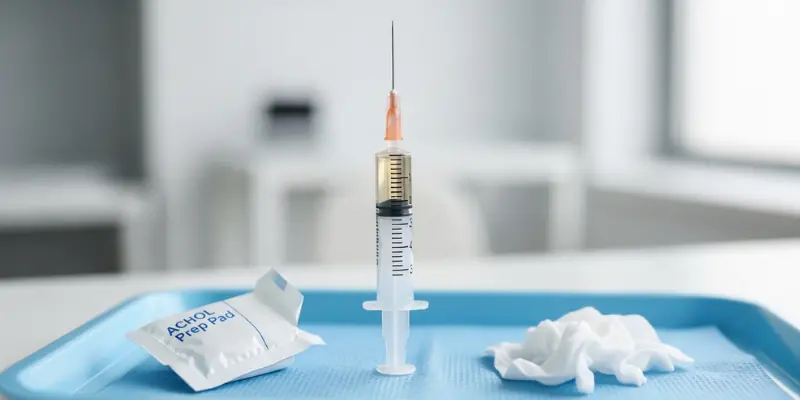
Injectable testosterone is the most widely used Testosterone Replacement Therapy formulation in the UK private sector. It is highly effective, cost-efficient, and provides reliable, reproducible dosing.
How Injections Work
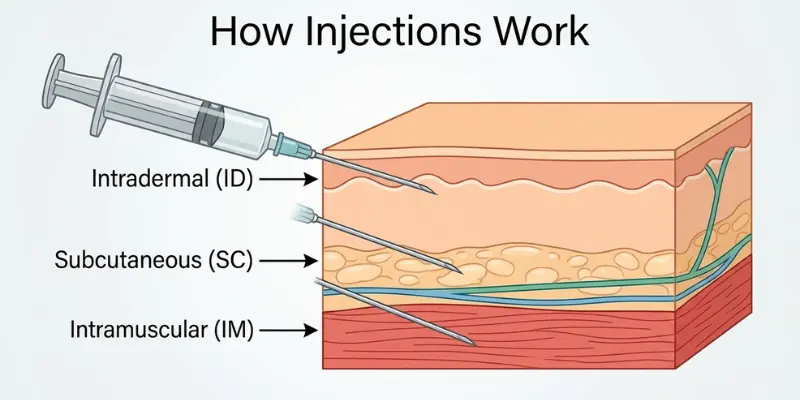
Testosterone for injection is dissolved in an oil carrier and administered via intramuscular (IM) or subcutaneous (SubQ) injection. Common esters used in the UK include testosterone enanthate and testosterone cypionate, both of which have a release half-life of approximately 4-8 days.
Typical TRT Injection Dose and Frequency

The most common TRT injection protocols involve:
- Weekly injections: typically 100-200mg per week of testosterone enanthate or cypionate
- Twice-weekly (every 3.5 days): typically 50-100mg per injection — this produces more stable levels
- Fortnightly (every 14 days): historically common but less favoured due to level fluctuations
The optimal dose per week is determined by your blood test results and clinical response. A common starting dose is 125-150mg per week, adjusted at follow-up based on testosterone, haematocrit, and oestradiol levels.
Advantages of Injectable TRT

- Most cost-effective formulation — often as little as GBP 20-50 per month for medication
- Highly predictable and reproducible levels when dosed consistently
- No risk of transference to partner or children
- Well tolerated by most patients
Considerations for Injectable TRT
- Requires self-injection, which some men find off-putting initially — though most find it straightforward with guidance
- Levels can fluctuate more with less frequent dosing — weekly or twice-weekly protocols are preferred
- Injection site soreness is possible, particularly initially
2. Testosterone Gels
Testosterone gels are the most commonly prescribed TRT formulation in NHS practice. Brands available in the UK include Testogel and Tostran.
How Gels Work
Testosterone gel is applied daily to the skin — typically the shoulders, upper arms, or abdomen. Testosterone is absorbed transdermally into the bloodstream, producing relatively stable daily levels when applied consistently.
TRT Gel Dosage
Standard starting doses are typically 40- 50 mg per day (1-2 gel sachets or pump doses), with adjustment based on blood levels at follow-up.
Advantages of TRT Gel
- Daily application is straightforward and needle-free
- Produces relatively stable testosterone levels
- NHS-prescribed and widely available
- Easy to adjust dose incrementally
Considerations for TRT Gel
- Skin transfer risk: gel testosterone can be transferred to partners or children through skin contact
- Daily application compliance is important — missed applications can cause level fluctuations
- More expensive than injectable testosterone
- Some men experience suboptimal absorption through the skin
3. Testosterone Creams
Testosterone cream is applied transdermally — similar to gel — but is available in higher concentrations and can also be applied to the scrotum, where absorption is significantly higher due to the thin skin in that region. Cream protocols typically involve twice-daily application of 100-200mg testosterone cream. Testosterone cream is compounded (custom-prepared by a specialist pharmacy) in the UK.
4. Testosterone Patches
Transdermal testosterone patches are applied to the skin daily and provide a steady, continuous release of testosterone. In the UK, patches are less commonly used than gels or injections due to higher cost and relatively common skin irritation at the application site.
5. Testosterone Pellets (Subcutaneous Implants)
Testosterone pellets are small crystalline implants inserted under the skin by a trained clinician. They release testosterone slowly over three to six months, eliminating the need for daily or weekly administration. Pellets are not widely used in UK private TRT practice due to their invasive nature and inability to rapidly adjust dosing.
Comparing TRT Methods: A Summary
Method | Frequency | Level Stability | Transfer Risk | Monthly Cost | UK Usage |
Injection | Weekly / 2x weekly | Good-Excellent | None | GBP 20-60 | Very Common |
Gel | Daily | Good | Yes | GBP 30-80 | Very Common |
Cream | Daily / 2x daily | Good | Yes | GBP 40-80 | Growing |
Patches | Daily | Good | Minimal | GBP 60-120 | Less Common |
Pellets | Every 3-6 months | Excellent | None | GBP 200-400/implant | Rare |
TRT Dosage: How Much Testosterone Do You Need?
TRT dosing is highly individual and should always be guided by blood test results. There is no universal correct dose. The goal is to bring testosterone into the mid-normal physiological range (typically 20-30 nmol/L total testosterone for most men), while keeping haematocrit, oestradiol, and PSA within safe parameters.
Starting doses are typically conservative and increased based on follow-up blood results and symptom response. Overdosing on TRT does not produce better results — it increases side effect risk without additional benefit.
Learn more about what is trt.
Frequently Asked Questions
What is the difference between TRT gels and injections?
Injections are more cost-effective, carry no transfer risk, and produce reliable levels with weekly or twice-weekly dosing. Gels are needle-free and convenient but require daily application, carry skin transfer risk, and are more expensive.
Is 1ml of testosterone a week enough?
This depends entirely on the concentration of the testosterone preparation. For testosterone enanthate at 250mg/ml, 1ml per week (250mg) would typically be a higher-than-standard dose for TRT — many protocols use 100-200mg per week. The right dose must be determined by your clinician.
What is the typical TRT dosage per week?
For injectable testosterone, a common therapeutic dose is 100-200mg per week, usually divided into two doses of 50-100mg to maintain stable levels.
What is a TRT gel and how is it used?
Testosterone gel is applied daily to clean, dry skin — typically the shoulders or upper arms. It is absorbed through the skin into the bloodstream. Clothing should cover the application area until the gel is fully absorbed.
Can TRT lower SHBG?
Yes. Exogenous testosterone can reduce SHBG (sex hormone binding globulin) levels, particularly with injectable testosterone. Lower SHBG means more testosterone is in its free (biologically active) form. This is generally beneficial, though very low SHBG can also cause hormonal imbalances requiring monitoring.
Get Expert Guidance on TRT Formulation Choice
Choosing the right TRT formulation is one of the most important steps in starting treatment effectively. At Vitalis Luxe Clinic, our clinicians take the time to understand your lifestyle, preferences, and clinical picture before recommending a protocol.