





Blood testing is the backbone of safe, effective TRT. It is how your clinician diagnoses low testosterone, determines whether TRT is appropriate, calibrates your dose, and monitors your health throughout treatment.
At Vitalis Luxe Clinic in Hull, comprehensive blood monitoring is built into every TRT programme. This guide explains exactly what we test, why we test it, and how results should be interpreted.
Table of Contents
Why Blood Testing Is Non-Negotiable in TRT
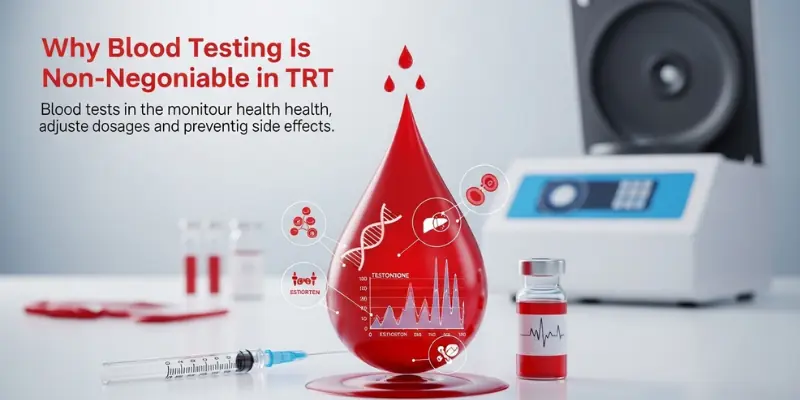
TRT affects multiple physiological systems simultaneously — not just testosterone levels. Without regular blood monitoring:
- Haematocrit can rise silently to dangerous levels, increasing clotting risk
- Oestradiol can elevate, causing fluid retention, mood instability, and gynaecomastia
- PSA changes may indicate prostate pathology requiring investigation
- Dosing remains guesswork rather than evidence-based optimisation
Any Testosterone Replacement Therapy provider that does not require regular blood monitoring is not providing safe clinical care. This is a minimum standard, not an optional extra.
Pre-Treatment TRT Blood Tests: What Is Tested Before Starting?

Before TRT can be prescribed, a comprehensive baseline blood panel is required. At Vitalis Luxe Clinic, our pre-treatment panel includes:
Testosterone (Total and Free)
Total testosterone is the primary diagnostic marker for hypogonadism. In the UK, the normal adult male range is approximately 10-35 nmol/L. Most clinicians use 12 nmol/L as the clinical threshold below which treatment should be considered, though symptoms are always considered alongside the result.
Free testosterone represents the fraction of testosterone not bound to proteins (primarily SHBG and albumin) and is biologically active. A man may have total testosterone in the normal range but low free testosterone if SHBG is elevated — making free testosterone a critical addition to the panel.
SHBG — Sex Hormone Binding Globulin

SHBG is a protein that binds testosterone and reduces its bioavailability. High SHBG is common in older men and can render total testosterone measurements misleading. Measuring SHBG allows calculation of free testosterone and provides a fuller picture of hormonal status.
LH — Luteinising Hormone

LH is the pituitary signal that tells the testes to produce testosterone. Measuring LH distinguishes between the two types of hypogonadism:
- Primary hypogonadism (testicular failure): low testosterone + high LH — the testes are not responding to pituitary signals
- Secondary hypogonadism (pituitary/hypothalamic dysfunction): low testosterone + low or normal LH — the signal is absent or insufficient
This distinction has important clinical implications, particularly for men concerned about fertility, and guides treatment decisions.
FSH — Follicle-Stimulating Hormone
FSH stimulates sperm production in the testes. FSH testing is particularly important for men who wish to preserve fertility. Very low FSH on TRT indicates complete suppression of spermatogenesis.
Full Blood Count (FBC) — Including Haematocrit
The full blood count measures red blood cell count, haemoglobin, haematocrit, white blood cell count, and platelet count. Haematocrit — the proportion of blood volume occupied by red blood cells — is the primary safety marker in TRT.
TRT stimulates red blood cell production. If haematocrit rises above 54%, blood viscosity increases to potentially dangerous levels and the dose should be reduced or treatment paused. This is the most medically significant ongoing monitoring parameter in TRT.
PSA — Prostate-Specific Antigen
PSA is a protein produced by prostate cells. TRT can cause a modest early rise in PSA, which is typically stable after the first three to six months. A PSA above 4 ng/mL, a significant rise from baseline, or a rapid increase may warrant urological investigation. This is checked at every monitoring visit.
Oestradiol (E2)
Testosterone is partly converted to oestradiol (oestrogen) in the body through aromatisation. Moderately elevated oestradiol is common and expected on TRT, but significantly elevated oestradiol can cause symptoms including fluid retention, mood changes, reduced libido, and gynaecomastia.
Liver and Kidney Function
Standard safety markers are checked to ensure there is no organ-level impact from TRT. Should be monitored as part of routine health screening.
Lipid Profile
TRT can influence cholesterol — typically reducing HDL (good cholesterol) slightly, particularly with injectable protocols. Monitoring lipid profiles enables the implementation of any necessary lifestyle or pharmacological interventions.
How Often Should Blood Tests Be Done on TRT?
The standard monitoring schedule at Vitalis Luxe Clinic is:
- Baseline: before starting TRT — comprehensive panel as described above
- 6-12 weeks after starting: first follow-up panel — checking testosterone levels and early safety markers
- 3 months post-initiation: full repeat panel — dose adjustment if required
- Every 6 months, once stable: ongoing monitoring — full safety panel
Men with specific risk factors (elevated haematocrit, high PSA, cardiovascular history) may be monitored more frequently.
How to Interpret Your TRT Blood Results
Key targets on optimised TRT:
- Total testosterone: typically 20-30 nmol/L (mid-normal physiological range)
- Haematocrit: should remain below 54%
- PSA: stable or minimal rise from baseline
- Oestradiol: typically 100-200 pmol/L — significantly elevated levels may require intervention
- SHBG: typically falls modestly on TRT — very low SHBG may affect dosing decisions
What Happens If Blood Results Are Outside Target Range?
If monitoring reveals out-of-range values, your clinician will take action appropriate to the clinical picture:
- High haematocrit: dose reduction, switch to more frequent smaller doses, or therapeutic phlebotomy
- High oestradiol: dose adjustment; aromatase inhibitor if significantly elevated and symptomatic
- Elevated PSA: urological review; pause of TRT pending investigation if clinically indicated
- Subtherapeutic testosterone: dose increase or formulation change
Expert TRT Monitoring at Vitalis Luxe Clinic, Hull
At Vitalis Luxe Clinic, blood monitoring is included as a structured part of every TRT programme. We do not prescribe and walk away — comprehensive, ongoing clinical oversight is how we ensure your treatment remains safe, effective, and personalised throughout your TRT journey.
Frequently Asked Questions About TRT Blood Tests
How often do you need blood tests on TRT?
At initiation: at 6-12 weeks, then at 3 months. Once stable: every 6 months. Annual monitoring is acceptable once treatment is well-established.
What blood tests are needed before starting TRT?
A full pre-treatment panel should include: total and free testosterone, SHBG, LH, FSH, FBC with haematocrit, PSA, oestradiol, liver and kidney function, lipid profile, and blood pressure measurement.
Can TRT lower SHBG?
Yes. Exogenous testosterone typically reduces SHBG. This is generally positive — lower SHBG means more free testosterone. However, very low SHBG can cause other hormonal disturbances and is monitored at every blood panel.
How can I interpret my TRT blood test results?
Key targets on TRT: total testosterone 20-30 nmol/L; haematocrit below 54%; PSA stable; oestradiol within acceptable range (usually 100-200 pmol/L). Your clinician should review all results in context.
What does a TRT blood test kit measure?
Home TRT test kits typically measure total testosterone, and sometimes SHBG and free testosterone. They are useful for an initial indication but are not comprehensive enough for full clinical assessment or ongoing TRT monitoring.