





You’ve probably heard the word ‘steroid’ thrown around in sports scandals or bodybuilding—almost always with a negative connotation. So when people learn that testosterone is technically classified as a steroid, it tends to raise a lot of eyebrows. This often leads people to ask: Is Testosterone a Steroid, and what does that actually mean in a medical and scientific context
But here’s the thing: the word “steroid” means something very different in a medical lab than it does in the headlines.
Let’s break it down clearly, honestly, and scientifically — so you can make informed decisions about your health.
Yes — testosterone is a steroid, but not in the way most people think. It is a natural steroid hormone your body produces on its own. The “steroids” associated with abuse and sports doping are synthetic versions with very different effects on the body.
Take More Information about trt Myths.
Table of Contents
What Exactly Is a Steroid?

In chemistry and medicine, a “steroid” is simply a class of organic compounds that share a specific four-ring molecular structure. This definition is purely structural — it says nothing about function, safety, or legality.
Steroids occur naturally throughout the body and in nature. They include:
- Sex hormones — testosterone, estrogen, and progesterone
- Corticosteroids — cortisol, a stress hormone made by your adrenal glands
- Mineralocorticoids — aldosterone, which helps regulate blood pressure
- Cholesterol — the very building block your body uses to make most steroid hormones
So when your doctor says “steroid,” they may be talking about a life-saving anti-inflammatory medication, a stress hormone, or your body’s own natural sex hormones. The word alone tells you very little without context.
Testosterone: Your Body’s Own Natural Steroid
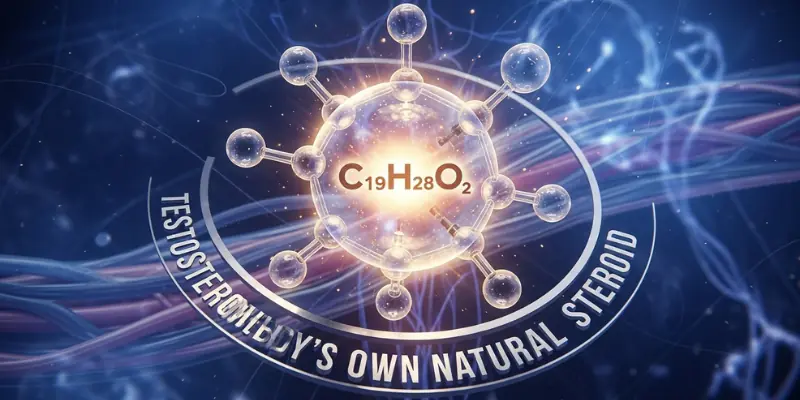
Testosterone is an endogenous (naturally occurring) anabolic-androgenic steroid hormone. In plain English: your body makes it, it promotes muscle and tissue growth (anabolic), and it drives sexual development (androgenic).
It is primarily produced in the:
- Testes in men — where roughly 95% of testosterone is made
- Ovaries in women — in smaller but vital amounts
- Adrenal glands in both sexes — contributing a smaller percentage
Testosterone doesn’t just affect your sex drive. It is a master regulator that touches nearly every system in your body.
What Testosterone Actually Does in Your Body

- Builds and maintains lean muscle mass and bone density
- Regulates mood, motivation, and mental clarity
- Controls libido and sexual function in both men and women
- Supports red blood cell production and cardiovascular health
- Influences fat distribution and metabolic rate
- Plays a role in insulin sensitivity and metabolic health
Natural Testosterone vs. Anabolic Steroids: A Critical Distinction

This is where the real confusion lives. When most people say “steroids,” they mean synthetic anabolic-androgenic steroids (AAS) — lab-made compounds designed to mimic or amplify testosterone’s effects.
These are not the same as natural testosterone.
Natural Testosterone
- Made by your own body naturally
- Regulates essential body functions
- Used in FDA-approved Testosterone Replacement Therapy(TRT)
- Delivered at physiological (replacement-level) doses
- Low risk when medically supervised
- Legal with a valid prescription
Synthetic Anabolic Steroids
- Lab-manufactured compounds
- Often used to enhance athletic performance
- Some are approved medically; many are not
- Often used at supraphysiological doses — 10 to 100 times the natural range
- Carry significant health risks
- Classified as Schedule III Controlled Substances in the USA
The synthetic anabolic steroids abused in sports are often chemically altered in ways the body doesn’t fully recognize — and that’s largely why they carry such serious health risks.
What Is Testosterone Replacement Therapy (TRT)?
TRT is a legitimate, FDA-approved medical treatment for people with clinically low testosterone levels — a condition called hypogonadism, or more commonly, “Low T.”
TRT uses bioidentical or FDA-approved forms of testosterone, delivered in carefully calibrated doses to restore levels to a normal, healthy range — not to push them beyond natural limits.
Common TRT delivery methods include:
- Intramuscular or subcutaneous injections (most common)
- Topical gels and creams are applied to the skin daily
- Transdermal patches
- Pellets are implanted under the skin every few months
Important: TRT and Steroid Abuse Are Not the Same Thing
TRT supervised by a qualified medical provider is fundamentally different from unsupervised steroid use. TRT restores hormones to healthy physiological levels under regular blood monitoring. Steroid abuse involves doses far exceeding natural ranges — without medical oversight — which is where serious health risks arise.
Signs You May Have Low Testosterone
Testosterone levels naturally decline with age — about 1 to 2% per year after age 30. But for many people, levels drop faster or lower than they should, causing real, noticeable symptoms.
Common signs of low testosterone include:
- Persistent fatigue and low energy
- Reduced sex drive
- Brain fog or difficulty concentrating
- Loss of muscle mass
- Increased body fat, especially around the abdomen
- Mood changes, irritability, or depression
- Poor sleep quality
- Erectile dysfunction (in men)
- Reduced bone density
- Low motivation and drive
These symptoms are not just “getting older.” They can be signs of a measurable hormonal imbalance — one that can often be effectively addressed with proper testing and, when appropriate, medical treatment.
The Bottom Line: Should You Be Concerned About Testosterone?
Not inherently — no. Testosterone is a vital, natural hormone your body needs to function well. The stigma around the word “steroid” has unfairly cast a shadow over a legitimate hormone that keeps you feeling energized, strong, and mentally sharp.
What you should be aware of :
- Get your levels tested if you’re experiencing symptoms — a simple blood test reveals a great deal
- Work with a qualified, licensed medical provider for any hormone therapy — never seek shortcuts
- Understand that TRT and steroid abuse are fundamentally different — in dose, intent, safety, and legality
- Know that lifestyle factors — sleep, stress, nutrition, and exercise — significantly impact your testosterone levels
Ready to Take Control of Your Hormone Health?
At Vitalis Luxe Clinic, our medical team specializes in comprehensive hormone evaluation and personalized optimization plans — for both men and women. Whether you’re experiencing symptoms of Low T or simply want to understand your hormone health better, we’re here to help.