


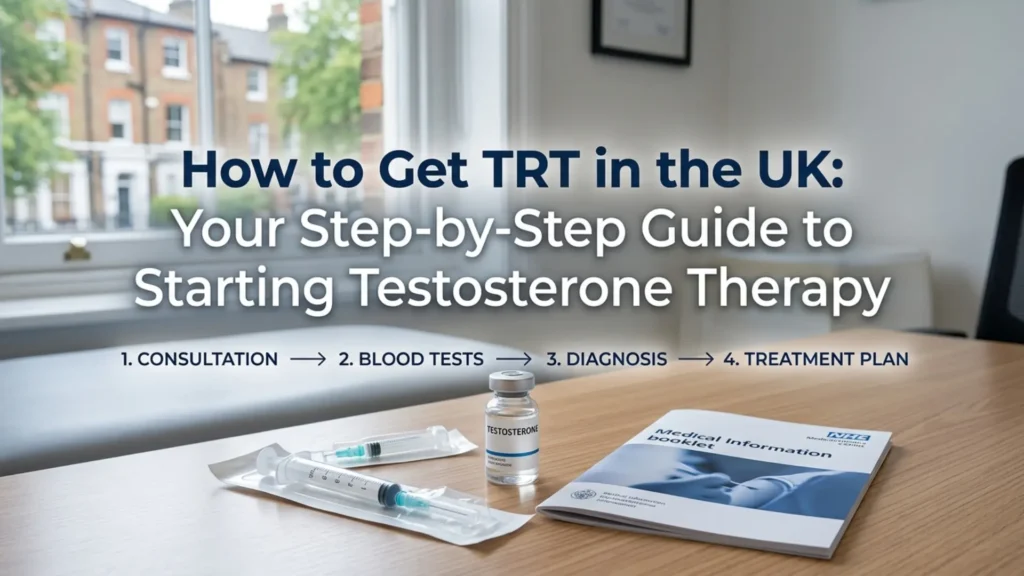

If you suspect you have low testosterone and want to explore treatment, knowing how to navigate the UK healthcare system is essential. The process is not as complicated as many men fear — but it does require the right information and the right clinical support from the start.
This guide walks you through every step of getting How to Get TRT in the UK — from recognising symptoms, to blood testing, to choosing between NHS and private treatment, to receiving your first prescription.
Table of Contents
Step 1: Recognise the Symptoms of Low Testosterone
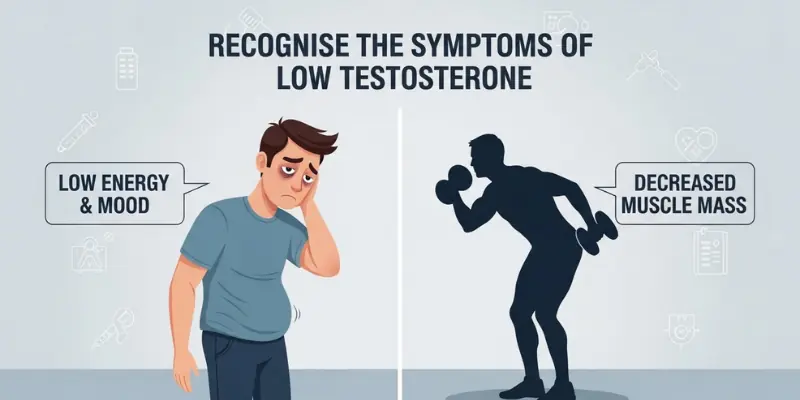
The starting point is identifying whether your symptoms are consistent with low testosterone (hypogonadism). Common symptoms include:
- Persistent fatigue and low energy, even after adequate sleep
- Reduced libido or loss of sex drive
- Erectile dysfunction or reduced spontaneous erections
- Low mood, depression, anxiety, or irritability
- Brain fog, poor concentration, or memory issues
- Reduced muscle mass and strength despite regular exercise
- Increased body fat, particularly around the abdomen
- Loss of body or facial hair
- Poor sleep quality
- Reduced bone density or increased fracture risk
No single symptom is diagnostic — low testosterone produces a constellation of symptoms across multiple systems. If you recognise several of the above, the next step is blood testing.
Step 2: Get a Testosterone Blood Test
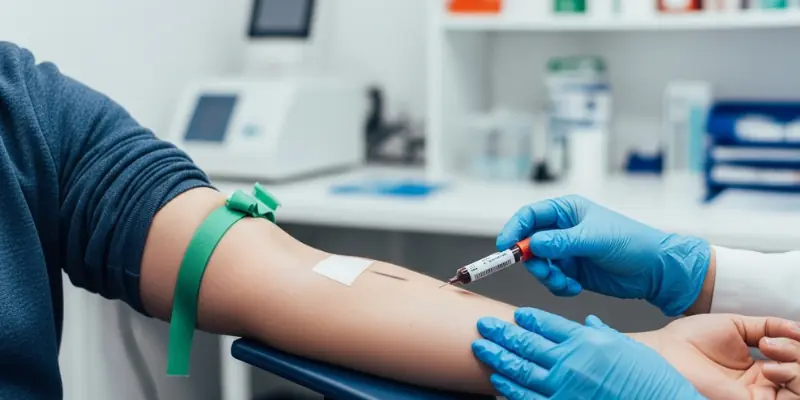
Low testosterone cannot be diagnosed by symptoms alone — a blood test is essential. In the UK, a standard testosterone blood test measures total testosterone in the blood, typically expressed in nmol/L (nanomoles per litre). The UK reference range is approximately 10-35 nmol/L, with most clinicians using 12 nmol/L as the lower threshold for action.
For a complete picture, a comprehensive TRT blood panel should also include:
- Free testosterone and SHBG (sex hormone binding globulin)
- LH (Luteinising Hormone) and FSH — to determine the cause of low testosterone
- Full blood count (FBC) — haematocrit and haemoglobin
- PSA (Prostate Specific Antigen) — prostate health baseline
- Oestradiol (E2)
- Liver and kidney function tests
- Lipid profile
Blood tests for testosterone should ideally be taken in the morning between 7 am and 10 am, when levels are at their daily peak. Low testosterone should be confirmed on at least two separate occasions before treatment is considered.
Step 3: Choose Your Route — NHS or Private?
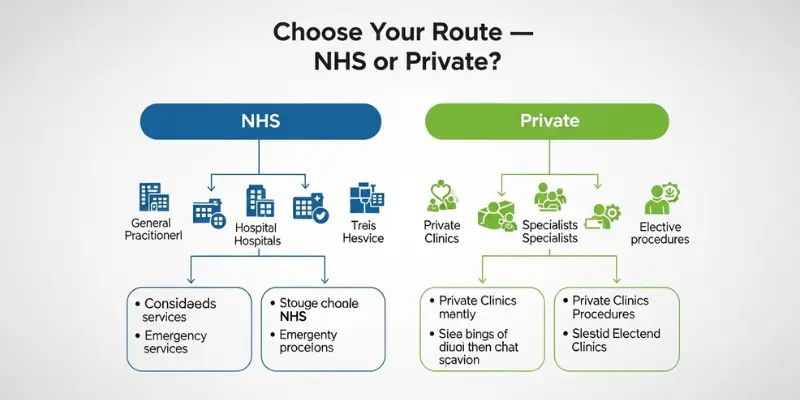
The NHS Route
If your GP confirms low testosterone, they may manage it directly or refer you to an endocrinologist or urologist. The NHS will typically prescribe Testosterone Replacement Therapy for men with confirmed hypogonadism (usually below 8-12 nmol/L with symptoms).
The NHS route is free at the point of use, but comes with real-world limitations:
- Specialist waiting times of 6-18 months are common in many areas
- Thresholds for qualifying are often strict — borderline results may be declined
- Formulation choices may be limited to certain gels or patches
- Symptom-led treatment is less common — the emphasis is on blood results
The Private TRT Route
Private TRT clinics offer faster access, more comprehensive assessment, more formulation choices, and a more patient-centred model of care. You do not need a GP referral to access private TRT.
The process at a quality private clinic such as Vitalis Luxe Clinic in Hull typically involves:
- Initial consultation: full symptom review and medical history
- Comprehensive blood panel: full hormone and health screening
- Clinical assessment and diagnosis by a GMC-registered physician
- Personalised treatment plan including formulation choice and dosing protocol
- Prescription issue and dispensing arrangement
- Structured follow-up and monitoring programme
Step 4: What Happens at a TRT Consultation?
Your TRT consultation at Vitalis Luxe Clinic is a thorough clinical appointment. You should expect:
- A detailed review of your symptoms — how long you have had them and their impact on your life
- A full medical history — including any conditions, medications, and family history relevant to TRT
- A review of your blood test results — interpreted in the context of your symptoms
- A discussion of treatment options, formulations, benefits and risks
- An opportunity to ask questions — we encourage patients to come prepared
- If appropriate: a personalised treatment plan and prescription
No pressure to start treatment is ever applied. If TRT is not appropriate for you, we will tell you honestly — and discuss what alternative approaches may help.
Step 5: Starting TRT — What to Expect
Once your prescription has been issued and your chosen formulation dispensed, you will begin treatment. Your clinician will explain exactly how to administer your chosen form of TRT — whether that is self-injection technique, gel application, or patch placement.
A follow-up blood test is typically performed at 6-12 weeks after starting, to check that levels are responding as expected and to screen for any early side effects (particularly haematocrit elevation). Dose adjustments are common and expected in the first few months.
Is TRT Legal in the UK?
Yes, TRT is completely legal in the UK. Testosterone is a licensed prescription-only medicine regulated by the MHRA (Medicines and Healthcare products Regulatory Agency). It can be legally obtained with a valid prescription from a GMC-registered physician, both via the NHS and through legitimate private providers.
Purchasing testosterone without a prescription is illegal and presents serious health risks. All prescriptions issued at Vitalis Luxe Clinic are compliant with MHRA regulations and GMC guidelines.
What Documents Do I Need to Start TRT?
At Vitalis Luxe Clinic, to complete your TRT consultation, you will need:
- Proof of identity (passport or driving licence)
- Any existing blood test results related to testosterone or hormone levels
- A list of any current medications and supplements
- Details of any relevant medical history or existing conditions
Frequently Asked Questions About Getting TRT in the UK
Is TRT legal in the UK?
Yes. TRT is a legal, licensed prescription medication in the UK. A valid prescription from a GMC-registered physician is required to obtain testosterone legally. Purchasing testosterone without a prescription is illegal.
Can I get TRT without seeing a doctor?
No. Testosterone is a prescription-only medicine in the UK and requires a prescription from a qualified medical practitioner. All legitimate TRT providers will require a clinical consultation and blood testing before prescribing.
Can you get TRT without the NHS?
Yes. Private TRT clinics can prescribe testosterone independently of the NHS. A private prescription from a GMC-registered doctor is fully legal and is increasingly the preferred route for men who want faster access and more comprehensive care.
Can I get TRT on the NHS?
Yes, but access is often limited by strict prescribing thresholds, long waiting times for specialist referral, and limited formulation options. Many men find private TRT to be a more practical, accessible option.
How do TRT clinics near me work?
TRT clinics such as Vitalis Luxe Clinic offer in-person consultations including blood testing, clinical assessment, and prescription management. We serve patients across Hull, East Yorkshire and the wider Yorkshire region.
Find Your Local TRT Clinic in Hull and Yorkshire
Vitalis Luxe Clinic is located at 45 Thwaite Street, Cottingham, Hull — easily accessible from across East Yorkshire, including Beverley, Anlaby, Willerby, Kirk Ella, Brough, and further afield including York and Leeds.