




Depression and anxiety in men are underdiagnosed, under-treated, and frequently misattributed. The cultural expectations around male emotional resilience create barriers to help-seeking that result in men suffering for years before receiving any support at all. When support is eventually sought, the standard pathway — antidepressants and talking therapy — addresses some men’s needs. For others, it falls persistently short.
A significant proportion of men with mood disorders have an underlying testosterone deficiency that has never been identified. These men are not treatment-resistant to antidepressants because their brains are particularly difficult to treat — they are treatment-resistant because the biological driver of their low mood is hormonal, and antidepressants do not treat hormone deficiency.
At Vitalis Luxe Clinic, we take mood seriously as a clinical symptom of hormonal health — not a separate psychological matter to be triaged elsewhere. In this article, we explain the neuroscience of how testosterone affects the brain and mood, why hormonal depression can be so effectively masked as standard depression, what the evidence shows about TRT and mood, and how to assess whether a hormonal component may be contributing to your own mental health picture.
Table of Contents
How Testosterone Affects the Brain: The Neuroscience
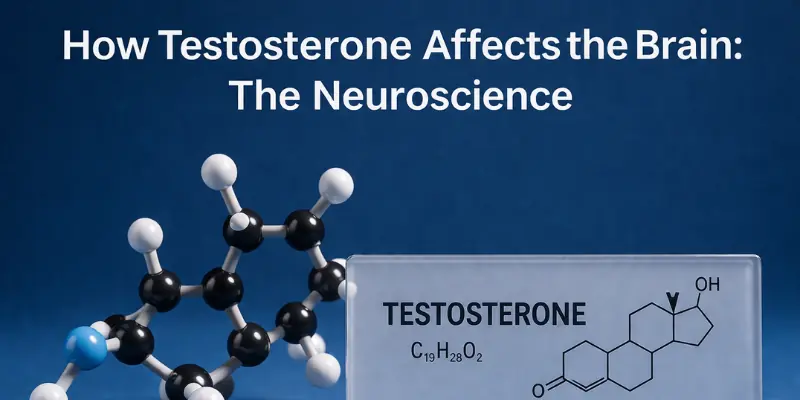
Testosterone is not simply a muscle and libido hormone. It has widespread, direct effects on the central nervous system — effects that are mechanistically relevant to mood, motivation, anxiety, and cognitive function. Understanding these mechanisms explains why deficiency can produce genuine, biologically mediated mental health symptoms.
Dopaminergic System

Testosterone modulates the dopaminergic reward and motivation pathways — the neural circuits that drive goal-directed behaviour, the experience of reward and pleasure, and the will to pursue activities. Testosterone upregulates dopamine receptor density and enhances dopaminergic signalling in key regions including the nucleus accumbens and prefrontal cortex.
Men with testosterone deficiency frequently describe not feeling pleasure in activities they previously enjoyed, reduced motivation to pursue goals, and a general sense of flatness or anhedonia — the inability to experience positive emotion. These are direct consequences of impaired dopaminergic function and are the hallmark of biologically mediated depression. They are also among the symptoms that respond most consistently to TRT in men with confirmed deficiency.
Serotonergic System

Testosterone has bidirectional interactions with the serotonergic system — influencing serotonin synthesis, receptor sensitivity, and the reuptake mechanisms that are the primary targets of SSRI antidepressants. Low testosterone is associated with reduced serotonergic tone in limbic regions involved in mood regulation.
This interaction explains part of why some men with hormonal depression appear to have serotonin-related symptoms (low mood, anxiety, poor sleep, appetite changes) — and why standard SSRIs may produce partial but incomplete relief. The serotonergic dysfunction in hormonally deficient men is downstream of the hormonal deficiency; treating the serotonin without treating the testosterone is like mopping the floor without turning off the tap.
Serotonergic System

Testosterone and its metabolites — particularly allopregnanolone (derived from progesterone, itself influenced by testosterone’s precursors) — modulate GABA-A receptor sensitivity. GABA is the primary inhibitory neurotransmitter in the brain; reduced GABAergic tone is associated with increased anxiety, irritability, and difficulty relaxing.
Men with testosterone deficiency frequently report not just low mood but persistent background anxiety, tension, and an inability to switch off — symptoms consistent with reduced GABAergic inhibition. These symptoms are often attributed to stress or personality rather than recognised as a biological consequence of hormonal deficiency.
The HPA Axis: Testosterone and Cortisol

Testosterone has an antagonistic relationship with cortisol at multiple levels. In men with testosterone deficiency, cortisol activity is relatively elevated — partly because the counterbalancing androgenic tone that normally modulates stress reactivity is absent. Chronic relative hypercortisolism contributes to the anxiety, sleep disruption, cognitive impairment, and emotional hyperreactivity that characterise testosterone deficiency in many men.
TRT’s restoration of testosterone reduces this cortisol dominance — improving stress resilience, reducing anxiety reactivity, and normalising the HPA axis response to stressors. Many men on Testosterone Replacement Therapy describe feeling more able to handle pressure and less reactive to everyday stressors — an effect that reflects this hormonal rebalancing.
Recognising Testosterone-Driven Depression and Anxiety
Testosterone deficiency can produce a clinical picture that closely resembles standard depressive disorder and generalised anxiety, which is why it is so frequently misdiagnosed and mistreated. The following features, particularly in combination, should raise the index of suspicion that a hormonal component may be contributing:
Feature | Suggests Hormonal Component | Standard Depressive Presentation |
|---|---|---|
Mood character | Flat, anhedonic, motivationally empty — loss of drive and engagement rather than sadness | Sadness, hopelessness, and tearfulness aremore prominent |
Energy profile | Profound, bone-deep fatigue unresponsive to rest; ‘running on empty’ | Fatigue present but variable; sleep often disrupted |
Physical symptoms | Low libido, erectile dysfunction, muscle loss, increased abdominal fat, reduced strength | Physical symptoms less systematic or hormonally characteristic |
Response to antidepressants | Partial or absent — mood improves slightly but never fully resolves; often described as ‘taking the edge off’ | Partial or absent — mood improves slightly but never fully resolves; often described as ‘taking the edge off.’ |
Time of onset | Often insidious and progressive over the years; often attributed to ‘getting older.’ | Typically, a better response to SSRIs/SNRIs over 4–8 weeks |
Cognitive symptoms | Any age; prior mood history is common | Cognitive symptoms present but less dominant |
Age and demographics | Often insidious and progressive over the years, often attributed to ‘getting older.’ | Typically 35+ with no prior mood history; may have a family history of late-onset mood issues |
No single feature distinguishes hormonal from non-hormonal depression definitively — only a blood test can do that. But the pattern of profound anhedonia, motivational flatness, physical symptoms of hypogonadism, and poor response to antidepressants in a man in mid-life is a clinical picture that should trigger testosterone assessment as a priority, not an afterthought.
The Antidepressant Gap: Men Who Fall Through
A particularly important clinical pattern that we see regularly at Vitalis Luxe Clinic is the man who has been on antidepressants — sometimes for years — with a partial but persistently incomplete response. He feels somewhat better on medication, but never truly himself. He may have tried several different antidepressants or combinations. He may have been told he is treatment-resistant.
For a proportion of these men, the explanation is not treatment resistance in the psychiatric sense. It is that the underlying biological driver of their mood disorder has never been addressed, because no one has measured their testosterone. A blood test at this stage — even after years of treatment — can be the turning point.
An Important Clinical Point Antidepressants do not treat testosterone deficiency. For men whose depression is driven by or significantly contributed to by low testosterone, SSRIs and SNRIs may produce partial relief — the serotonergic and noradrenergic components of their mood disruption are partially addressed — but the underlying hormonal biology remains unaddressed. TRT does not replace antidepressants in men who need them; but for men with confirmed deficiency, TRT addresses a cause that antidepressants cannot. |
What the Evidence Shows: TRT and Mood
The evidence for TRT’s effects on mood in men with testosterone deficiency is substantial and consistently positive, with important caveats:
Randomised Controlled Trials
Multiple placebo-controlled trials of TRT in men with confirmed testosterone deficiency have demonstrated significant improvements in depressive symptoms, measured using validated depression rating scales (PHQ-9, HAM-D, Beck Depression Inventory). The most consistent findings are improvements in energy, motivation, anhedonia, and general psychological well-being — the ‘positive affect’ dimensions of mood that are most closely linked to dopaminergic function.
The Testosterone Trials (TTrials) — a landmark series of randomised controlled trials involving over 700 men aged 65 and over with low testosterone — demonstrated significant improvements in mood and depressive symptoms in men randomised to testosterone treatment compared to placebo, with benefits emerging over the first three to six months.
Meta-Analyses
Meta-analyses of RCTs have found that TRT produces significant improvements in depressive symptoms in men with testosterone deficiency, with effect sizes comparable to those seen with antidepressant treatment in mild to moderate depression. The evidence is strongest in men with confirmed low testosterone; evidence for mood benefit in men with normal testosterone is considerably weaker.
The Important Caveat
TRT is not an antidepressant and is not appropriate for all men with depression. Men with severe depressive illness, active suicidal ideation, bipolar disorder, or psychotic depression require specialist psychiatric assessment and treatment regardless of testosterone status. TRT is a component of comprehensive hormonal health management in deficient men, not a replacement for mental health care. Many men benefit from both.
The Timeline of Mood Improvement on TRT
Setting realistic expectations about the timing of mood improvement is important for men starting TRT with significant mood symptoms. The following reflects the typical pattern in men with confirmed deficiency:
- Weeks 2–4: Some men notice early improvements in energy, motivation, and a subtle lifting of the flatness — these early signs are encouraging but not the full picture
- Weeks 4–8: More consistent improvements in mood, particularly the anhedonic and motivational dimensions; reduced emotional reactivity in some men
- Months 2–4: Progressive improvement across mood, energy, libido, and cognitive function; the cumulative character of these changes becomes apparent
- Months 4–6: Full mood benefit typically achieved — the restoration of ‘feeling like oneself’ that many men describe as the most transformative aspect of treatment
- Beyond 6 months: Sustained mood benefit with maintained treatment; some men continue to see gradual further improvements up to 12 months
Men who do not see meaningful mood improvement after six months of properly managed TRT with optimised testosterone and oestradiol levels may have a concurrent mood disorder that requires separate psychological or psychiatric management — and this should be discussed with their clinician at that stage.
Men’s Mental Health: Breaking the Silence
We want to acknowledge something directly. The topic of mood, depression, and anxiety carries a weight for men that it does not carry for other clinical symptoms. Men are significantly less likely than women to disclose mood symptoms, seek mental health support, or describe their emotional experience to a clinician. The cultural narrative around male strength and self-sufficiency actively works against men getting the help they need.
If you have been experiencing persistent low mood, anxiety, emotional flatness, loss of motivation, or a sense of not being yourself, these are legitimate clinical symptoms that deserve investigation, not dismissal. They are not weaknesses. They are not inevitable features of getting older. They may have a biological cause that is identifiable and treatable.
At Vitalis Luxe Clinic in Hull, we see men every week who have been struggling silently for years. The consultation is confidential. The conversation is clinical, direct, and without judgment. We want to know how you actually feel — and we take it seriously.
Frequently Asked Questions
Can low testosterone cause depression?
Yes — testosterone deficiency is associated with genuine, biologically mediated depressive symptoms through its effects on dopaminergic, serotonergic, and GABAergic neurotransmitter systems. Men with confirmed testosterone deficiency frequently experience anhedonia, motivational flatness, reduced drive, emotional reactivity, and persistent low mood. These symptoms can improve significantly with TRT in men with confirmed deficiency.
How does low testosterone cause anxiety?
Testosterone modulates GABAergic inhibitory tone in the brain — the system that provides the neurological ‘braking’ that prevents excessive anxiety and stress reactivity. Low testosterone reduces this inhibitory tone, contributing to persistent background anxiety, tension, irritability, and difficulty relaxing. Testosterone also antagonises cortisol; deficiency leads to relative cortisol dominance, amplifying anxiety and stress responses.
Can TRT help with depression?
In men with confirmed testosterone deficiency and depressive symptoms, TRT consistently improves mood outcomes in randomised controlled trial evidence, with improvements in anhedonia, motivation, energy, and general psychological wellbeing. The evidence is strongest in men with confirmed low testosterone. TRT is not appropriate for all men with depression and should be considered alongside, not instead of, appropriate mental health support where needed.
Why do antidepressants not fully work for some men?
For some men — particularly those with underlying testosterone deficiency — antidepressants address the serotonergic and noradrenergic components of their mood disorder but leave the hormonal driver unaddressed. The result is partial improvement rather than resolution. In these men, measuring testosterone and treating deficiency where confirmed can produce the additional benefit that antidepressants alone could not.
What does testosterone do to the brain?
Testosterone has multiple effects on the central nervous system: it modulates dopaminergic reward and motivation pathways, influences serotonergic signalling, enhances GABAergic inhibitory tone, and antagonises cortisol activity. It also has direct neuroprotective effects and supports neuroplasticity. These mechanisms collectively explain why testosterone deficiency can produce mood, cognitive, and anxiety symptoms — and why restoring it often produces significant psychological improvement.
Should I get my testosterone checked if I have depression?
Yes — particularly if you are a man in mid-life with depressive symptoms that have a physical character (profound fatigue, low libido, reduced strength, weight gain), have had a partial or poor response to antidepressants, or have an insidious onset without a clear psychological trigger. A morning testosterone blood test is a straightforward, low-risk investigation that can meaningfully change the clinical picture if deficiency is identified. At Vitalis Luxe Clinic in Hull, we see men in this situation regularly.
Does TRT cause mood problems?
Well-managed TRT typically improves mood in deficient men. Mood problems on TRT are usually related to oestradiol imbalance — either elevated (producing irritability, emotional lability) or suppressed (producing flat mood, anxiety). Protocol optimisation and oestradiol monitoring manage these effectively. Supraphysiological doses can also produce mood effects, which is a further reason why maintaining testosterone within the physiological range is the clinical standard.
Where can I discuss testosterone and mood concerns in Hull or Yorkshire?
Vitalis Luxe Clinic provides confidential, clinician-led consultations for men across Hull, East Yorkshire, Beverley, York, and throughout Yorkshire. We take mood symptoms seriously as a clinical component of hormonal health and include psychological well-being in our assessment and monitoring. No GP referral required — in-person or online consultations available.
Mood Is a Clinical Symptom. It Deserves a Clinical Answer.
If you have been living with persistent low mood, motivational flatness, anxiety, or a sense of not being yourself — and this has gone unaddressed or incompletely treated — a comprehensive hormone assessment may be the missing piece in your clinical picture. At Vitalis Luxe Clinic in Hull, we provide thorough, evidence-based hormone assessments and TRT programmes for men across Hull, East Yorkshire, and throughout Yorkshire. We take mood seriously. We ask about it. We monitor it. And where TRT can help, we ensure it does. Book your confidential consultation today. |