




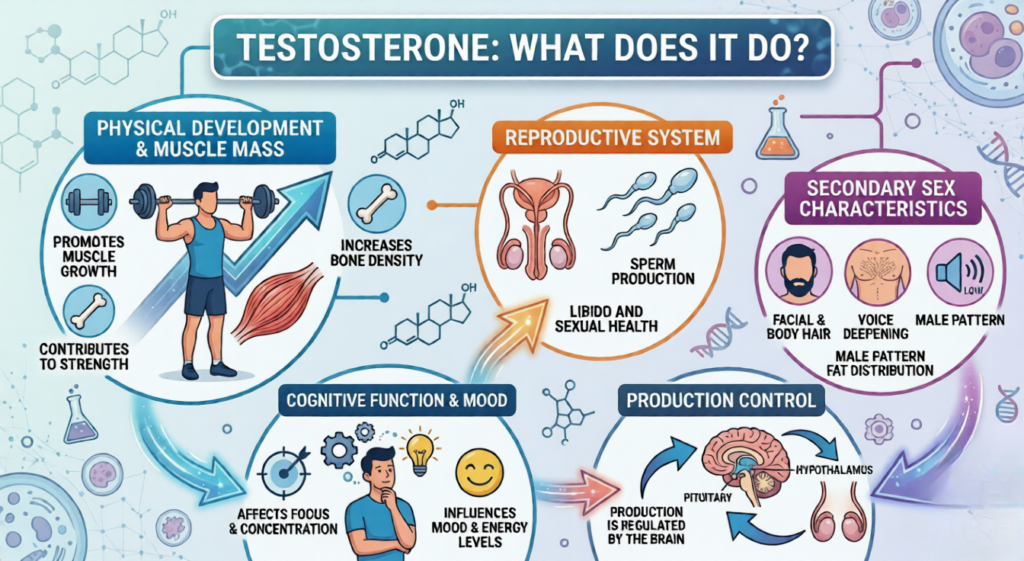

Testosterone supports muscle growth, strengthens bones, boosts energy, regulates mood, and helps maintain a healthy sex drive. It also aids sperm production and supports male physical characteristics such as body hair growth and a deeper voice. Healthy testosterone levels contribute to overall physical, sexual, and mental well-being.
Testosterone is a steroid hormone primarily produced in the testes (in males) and in smaller amounts in the ovaries and adrenal glands (in females). It drives the development of male reproductive tissues, muscle mass, bone density, and body hair. It also plays a key role in libido, mood, energy levels, and red blood cell production in both sexes.
Why Testosterone Matters More Than Ever for UK Men
The hidden reason so many men feel ‘off’ after 35
You wake up tired even after a full night’s sleep. Your gym sessions feel harder and deliver less. The drive that once pushed you through long days at work has quietly faded. You’re not as sharp, not as motivated, not quite yourself. Sound familiar?
Millions of British men experience exactly this, and far too many are told it’s ‘just ageing’. But here’s what the science increasingly confirms: what many men chalk up to growing older is, in fact, the measurable, addressable, and often reversible result of declining testosterone levels.
In the UK alone, studies suggest that up to 1 in 4 men over 40 may have testosterone levels below the optimal threshold — yet the vast majority remain undiagnosed and unsupported. Understanding what testosterone does, recognising the signs of low testosterone in men, and knowing when to seek professional help could be the single most important step you take for your health this decade.
What testosterone truly controls
Most people associate testosterone with bulging biceps and bedroom performance. While those are certainly within its remit, testosterone is far more powerful and wide-reaching than popular culture suggests. It influences your metabolism, mental clarity, cardiovascular health, bone strength, emotional resilience, and even your immune function.
Testosterone is not just a ‘male sex hormone’ — it is a master regulator of male vitality. When it falls below optimal levels, virtually every system in the body begins to feel the ripple effect.
How Vitalis Luxe Clinic is helping men reclaim their edge
At Vitalis Luxe Clinic, we specialise in evidence-based, personalised testosterone optimisation for men across the UK. Whether you’re exploring what testosterone is and whether it might be affecting your quality of life, or you’re already aware that you need low testosterone treatment, our expert clinical team is here to guide you — safely, professionally, and with measurable results.
What is testosterone, and how is it produced?
Testosterone is the primary anabolic androgenic steroid hormone produced naturally in the human body. In men, around 95% of testosterone is synthesised in the Leydig cells of the testes, with a small amount produced by the adrenal glands. The hypothalamic-pituitary-gonadal (HPG) axis tightly regulates this process: the hypothalamus releases GnRH (gonadotropin-releasing hormone), which signals the pituitary gland to release LH (luteinising hormone), which in turn stimulates testosterone production.
In women, testosterone is produced in smaller but equally significant amounts by the ovaries and adrenal glands, playing a role in libido, energy and bone health. However, male testosterone levels are typically 10 to 20 times higher than female levels, making it the defining hormonal driver of male physiology.
What happens after age 30
Here’s an uncomfortable biological reality: testosterone levels in men begin declining from around age 30, dropping by approximately 1–2% per year. By the time a man reaches his 50s or 60s, his testosterone may be significantly lower than it was in his prime — even if he feels ‘okay’. This gradual decline is known as andropause or late-onset hypogonadism, and it is increasingly recognised as a genuine medical concern rather than an inevitable consequence of ageing.
Importantly, however, lifestyle factors, chronic stress, poor sleep, obesity, and environmental endocrine disruptors can dramatically accelerate this decline — meaning some men in their late 30s or early 40s are experiencing testosterone levels typical of men in their 60s.
Key differences between total and free testosterone
When you undergo a testosterone blood test, your results will typically show two values:
- Total Testosterone: The entire amount of testosterone in the bloodstream, including that bound to proteins (SHBG and albumin).
- Free Testosterone: The small fraction (around 2–3%) that is unbound and biologically active — able to enter cells and exert hormonal effects.
Many men with ‘normal’ total testosterone still experience symptoms because their free testosterone is low — often due to elevated sex hormone-binding globulin (SHBG). This is why a comprehensive testosterone test, interpreted by a specialist, is far more informative than a single number.
What Does Testosterone Actually Do?
The question ‘testosterone, what does it do?’ has an answer that spans virtually every corner of male health. Here’s a comprehensive breakdown:
| Body System | What Testosterone Does | When Low: Symptoms |
| Muscles & Body Composition | Builds lean muscle, reduces fat | Muscle loss, weight gain |
| Energy & Metabolism | Powers cellular energy production | Chronic fatigue, sluggishness |
| Brain & Mood | Supports the heart muscle, red blood cells | Brain fog, low mood, anxiety |
| Libido & Sexual Health | Drives desire and function | Reduced libido, ED |
| Bone Density | Maintains skeletal strength | Weakened bones, fracture risk |
| Cardiovascular | Supports heart muscle, red blood cells | Poor stamina, fatigue |
| Sleep Quality | Regulates deep sleep cycles | Regulates dopamine, focus, and mood |
The Muscle & Strength Architect
Testosterone is the primary hormonal driver of muscle protein synthesis — the biological process through which your body builds and repairs muscle tissue. It activates androgen receptors within muscle cells, stimulating the development of lean mass and supporting recovery after training. It also inhibits cortisol’s muscle-wasting effects, making it doubly important for body composition.
When testosterone declines, men typically experience sarcopenia (age-related muscle loss), increased visceral fat — particularly around the abdomen — and a frustrating plateau in training progress despite consistent effort. The gym stops working, not because you’ve stopped trying, but because your hormonal environment has changed.
The Energy & Metabolism Engine
Testosterone plays a pivotal role in mitochondrial function — the cellular machinery responsible for converting nutrients into usable energy. Men with optimised testosterone levels tend to have higher basal metabolic rates, better insulin sensitivity, and more efficient fat metabolism.
Conversely, low testosterone is strongly associated with metabolic syndrome, type 2 diabetes risk, and chronic fatigue. If you’re sleeping well, eating reasonably, and still dragging yourself through the day, your testosterone levels deserve serious investigation.
The Mental Clarity & Mood Guardian
The brain is densely packed with androgen receptors. Testosterone directly influences the production of dopamine and serotonin — the neurochemicals responsible for motivation, pleasure, focus and emotional stability. This is why low testosterone frequently presents not just as physical symptoms, but as a persistent emotional flatness, low mood, difficulty concentrating, and a loss of zest for life.
Numerous studies have linked testosterone deficiency with increased risk of depression, anxiety and cognitive decline. Optimising testosterone levels has been shown to improve executive function, working memory, spatial reasoning and overall psychological wellbeing — outcomes that pharmaceutical antidepressants alone rarely achieve.
The Drive, Libido & Sexual Performance Director
This is perhaps testosterone’s most widely recognised role. Testosterone drives sexual desire (libido) in both men and women, and plays an essential role in achieving and maintaining erections via its action on nitric oxide pathways in penile tissue. It also influences sperm production and fertility.
Signs of low testosterone in men often begin in the bedroom — a gradual cooling of sexual interest, difficulty with arousal, or challenges with erectile function. These are not just embarrassing inconveniences; they are clinical signals that deserve medical attention.
The Long-Term Health Protector (bone density, heart health, etc)
Beyond the headline functions, testosterone quietly does some of its most important work in the background:
- Bone density: Testosterone stimulates osteoblast activity, maintaining skeletal strength and reducing fracture risk. Low testosterone is a significant risk factor for osteoporosis in men.
- Cardiovascular health: Testosterone supports healthy red blood cell production, healthy vasodilation, and cardiac muscle function. While the relationship is nuanced, emerging evidence suggests that optimised testosterone levels are associated with reduced cardiovascular risk.
- Immune function: Testosterone has immunomodulatory effects, helping to regulate inflammatory responses.• Sleep architecture: Testosterone promotes deeper, more restorative sleep — and poor sleep further suppresses testosterone, creating a destructive cycle.

Could Low Testosterone Be Affecting You?
Physical symptoms most men notice first
The body is remarkably good at communicating hormonal imbalance — if you know what to look for. The most common physical signs of low testosterone include persistent fatigue, unexplained weight gain (particularly central adiposity), reduced muscle tone, and sexual dysfunction.
Mental and emotional changes that sneak up on you
What makes low testosterone particularly insidious is that its psychological effects often arrive gradually and are easily rationalised. Men attribute brain fog to ‘being busy’, low mood to ‘work stress’, and loss of motivation to ‘getting older’. The cumulative effect can be profound — but because each symptom creeps in slowly, the connection to testosterone is rarely made without professional guidance.
When ‘normal ageing’ is actually low testosterone
One of the most damaging misconceptions in men’s health is that feeling progressively worse with age is simply inevitable. It is not. While some decline is biological, a significant proportion of what men experience in their 40s and 50s — the fatigue, the mood changes, the physical decline — can be directly attributed to suboptimal testosterone and is both measurable and treatable.
Common symptoms checklist for UK men
Use the table below as an honest self-assessment. If you identify with four or more symptoms across either column, a testosterone blood test is strongly advisable.
| Physical Symptoms | Mental & Emotional Symptoms |
| Persistent fatigue & low energy | Brain fog or poor concentration |
| Reduced muscle mass & strength | Low mood or mild depression |
| Increased body fat (especially belly) | Increased irritability or mood swings |
| Reduced sex drive (low libido) | Loss of motivation or drive |
| Erectile dysfunction | Reduced confidence or self-esteem |
| Poor sleep quality/insomnia | Anxiety or heightened stress response |
| Hair thinning or loss | Feeling ‘flat’ or emotionally blunted |
| Hot flushes or sweating | Difficulty making decisions |
Why Are So Many British Men Struggling With Low Testosterone Today?
Modern UK lifestyle factors
The modern British lifestyle is, in many ways, a perfect storm for hormonal disruption. Desk-bound working patterns, poor sleep hygiene, high-carbohydrate and processed-food diets, chronic psychological stress, and low physical activity collectively suppress the HPG axis and accelerate testosterone decline.
Cortisol — the primary stress hormone — is testosterone’s direct antagonist. The more chronically elevated cortisol is (as it often is in high-pressure careers and family life), the more testosterone production is suppressed. It’s not a character flaw; it’s biochemistry.
Environmental and health influences unique to the UK
The UK’s notoriously limited sunlight exposure creates widespread Vitamin D deficiency — a nutrient that plays a crucial role in testosterone synthesis. Research suggests that Vitamin D supplementation can meaningfully improve testosterone levels in deficient men, making this a particularly relevant intervention for British men.
Additionally, endocrine-disrupting chemicals (EDCs) found in plastics, pesticides and certain personal care products have been shown to interfere with hormone production. Obesity — increasingly prevalent in the UK — also significantly suppresses testosterone, as adipose tissue converts testosterone to oestrogen via the aromatase enzyme.
When it’s lifestyle vs. a medical issue
Not all low testosterone is pathological. Sometimes, significant improvements in sleep, nutrition, exercise and stress management are sufficient to restore hormonal balance. However, when testosterone levels fall below a clinically significant threshold — or when symptoms are severe and persistent — lifestyle changes alone are unlikely to be sufficient. A testosterone blood test is the only way to know for certain which camp you’re in.

How to Optimise Your Testosterone Naturally
The foundation: Sleep, training and nutrition
Before considering medical intervention, the foundational pillars of testosterone health deserve serious attention:
- Sleep: The majority of testosterone is produced during deep sleep, particularly in REM cycles. Consistently sleeping fewer than 7 hours significantly suppresses morning testosterone levels. Prioritising sleep hygiene — consistent bedtimes, cool dark rooms, no screens before bed — is foundational.
- Resistance Training: Compound, multi-joint exercises (squats, deadlifts, bench press, rows) are the most potent exercise-based stimulus for testosterone production. Aim for 3–4 sessions per week with progressive overload.
- Caloric Adequacy: Both chronic caloric restriction and obesity suppress testosterone. Eating sufficient protein (1.6–2.2g per kg of bodyweight), healthy fats, and complex carbohydrates supports hormonal production.
- Alcohol Reduction: Alcohol directly inhibits testosterone synthesis and disrupts sleep architecture. Reducing intake to below 14 units per week (the UK recommended limit) is a meaningful step.
Vitamin D, zinc and key nutrients every UK man needs
Several micronutrients play a critical role in testosterone synthesis, and deficiencies are common in UK men:
- Vitamin D3: Supplementing with 2,000–4,000 IU daily is recommended for most UK adults, particularly in autumn and winter. Research links adequate Vitamin D levels to significantly higher testosterone levels.
- Zinc: An essential cofactor in testosterone production. Found in red meat, shellfish, pumpkin seeds and legumes. Supplementation at 25–45mg daily can help men with deficiencies.
- Magnesium: Deficiency is widespread and associated with lower testosterone. Leafy greens, nuts and magnesium glycinate supplementation can help.
- Ashwagandha (KSM-66): One of the most evidence-backed adaptogenic herbs, shown in multiple randomised controlled trials to increase testosterone and reduce cortisol levels. Omega-3 Fatty Acids: Support cell membrane integrity and hormonal signalling pathways.
Lifestyle upgrades that deliver real results
Beyond nutrition and training, the following lifestyle modifications have meaningful evidence for supporting testosterone:
- Maintain a healthy body weight: Even losing 5–10% of body weight can meaningfully increase testosterone in overweight men.
- Manage stress actively: Mindfulness, cold water therapy (carefully), breathwork and adequate rest days all support cortisol regulation.
- Minimise plastic exposure: Use glass or stainless-steel containers, avoid microwaving food in plastic, and choose personal care products free of phthalates and parabens.• Optimise sun exposure: Aim for regular outdoor time — even in the UK’s grey climate — to support Vitamin D synthesis.
Tracking progress – what to measure and when
If you’re making lifestyle changes to increase testosterone, tracking progress helps you understand what’s working. Alongside subjective energy and mood assessments, a testosterone blood test every 3–6 months gives you objective hormonal data. Measure waist circumference, muscle mass, sleep quality (via a wearable device), and training performance as proxy markers.
Professional Testosterone Therapy
Understanding Testosterone Replacement Therapy (TRT) in UK
Testosterone replacement therapy UK is a medically supervised treatment that restores testosterone to physiologically optimal levels in men with clinically confirmed deficiency. It is not ‘steroids’ in the colloquial sense, nor is it a lifestyle indulgence — it is a legitimate medical intervention with a robust and growing evidence base.
Testosterone replacement can be administered in several forms, each with distinct advantages:
- Testosterone injections: Generally considered the most effective and cost-efficient option. Delivered intramuscularly or subcutaneously, typically every 1–2 weeks (or more frequently with shorter-ester preparations).
- Transdermal testosterone gels or creams: Applied daily to the skin. Convenient but requires care regarding transference to partners or children.
- Pellet implants: Inserted subcutaneously every 3–6 months, providing stable, sustained release.
- Oral or buccal preparations: Less commonly used but available for specific clinical scenarios.
Benefits, safety and what modern TRT looks like
Modern testosterone replacement therapy is a far cry from the poorly monitored protocols of previous decades. When administered by experienced clinicians with regular monitoring, TRT is both safe and highly effective. Documented benefits of optimised testosterone replacement include:
- Significantly improved energy levels and reduced fatigue
- Increased lean muscle mass and a reduction in body fat
- Restored libido and improved sexual performance
- Enhanced mood, motivation and cognitive function
- Improved bone mineral density and better cardiovascular risk markers in many patients
Safety monitoring under TRT typically includes regular haematocrit checks (to monitor red blood cell density), PSA assessment, and full hormonal panels to ensure optimal therapeutic range without supraphysiological levels.
Why private specialist clinics deliver better outcomes
NHS access to testosterone replacement therapy in UK is, in reality, significantly limited. GPs are often uncomfortable prescribing TRT, and NHS referral pathways to endocrinologists can involve lengthy waits and restrictive diagnostic thresholds. Private specialist clinics offer a significantly different experience:
- Comprehensive, nuanced hormonal assessment — not just a single testosterone test
- Expert interpretation of symptoms alongside biochemistry
- Personalised treatment protocols, not one-size-fits-all approaches
- Proactive monitoring and dose optimisation
- Access to the full range of TRT modalities
The Vitalis Luxe approach: Personalised, safe and clinically excellent
At Vitalis Luxe Clinic, we believe that every man deserves access to the kind of expert hormonal care that was previously available only to elite athletes and the very wealthy. Our approach to testosterone replacement combines the latest clinical science with genuinely personalised care:
- Full-spectrum testosterone blood test and hormonal panel on first consultation
- Detailed symptom assessment and health history review
- Evidence-based treatment protocols tailored to your biology and lifestyle
- Regular follow-up consultations and blood monitoring
- Ongoing support from our specialist clinical team
Comparing testosterone optimisation approaches:
| Approach | Best For | Expected Timeline |
| Lifestyle Optimisation | Mild decline/prevention | 3–6 months |
| Supplementation | Nutritional deficiencies | 8–12 weeks |
| Testosterone Injections (TRT) | Clinically low testosterone | 4–12 weeks for effects |
| Testosterone Gel / Cream | Mild-moderate deficiency | 4–8 weeks |
| Pellet / Implant (TRT) | Long-term stable therapy | 3–6 months (per implant) |
What Men Experience After Optimising Testosterone
Transformations in energy, body composition and confidence
The changes men report after optimising their testosterone levels are, in many cases, transformative. Within weeks of reaching therapeutic levels, the most common improvements include a dramatic uplift in energy — not the jittery stimulant kind, but a deep, sustained vitality that hadn’t been felt in years. Body composition shifts begin within months: lean muscle responds to training again, and stubborn abdominal fat begins to reduce. Confidence — the intangible but unmistakable quality that comes from feeling like yourself — quietly returns.
Improved relationships, focus and quality of life
Perhaps less expected but equally significant are the relational and professional improvements men describe. Restored libido improves intimacy and relationship satisfaction. Clearer thinking and a better mood make professional challenges feel manageable again. The ‘grey cloud’ that had been dismissed as stress or personality lifts. Men report being more present with their families, more engaged at work, and more interested in life.
Take Control of Your Vitality
Your testosterone levels don’t have to define your future
Testosterone decline is real, it is measurable, and in the majority of cases it is addressable. Whether through targeted lifestyle changes, intelligent supplementation, or medically supervised testosterone replacement therapy, there is a pathway back to the energy, strength, clarity and vitality you deserve — at any age.
The critical first step is awareness. Understanding what testosterone does, recognising the signs of low testosterone in men, and refusing to accept progressive decline as ‘just ageing’ places you firmly in the driving seat of your own health.
Getting tested and personalised support
If any part of this article resonated with you — if you recognised yourself in the symptom checklist, the patient stories, or the lifestyle risk factors — the most important action you can take right now is simple: get tested.
A comprehensive testosterone blood test at Vitalis Luxe Clinic will give you the clarity you need. Our specialist clinical team will interpret your results in the context of your symptoms, lifestyle and goals, and guide you toward the most appropriate, evidence-based next steps — whether that’s lifestyle optimisation, low testosterone treatment, or a personalised testosterone replacement therapy programme.
FAQs
What does testosterone do for a man?
Testosterone is the primary male hormone that controls muscle growth, bone density, sex drive, energy levels, and mood. It also regulates fat distribution, red blood cell production, and sperm development. Low levels can affect nearly every aspect of a man’s physical and mental health.
What will increasing testosterone do?
Boosting testosterone can improve muscle mass, strength, energy, and libido. It also enhances mood, sharpens focus, reduces body fat, and supports better sleep. Men with optimised testosterone levels often feel more confident, motivated, and physically stronger.
Why do men need to release testosterone?
Men need testosterone to maintain vital body functions, including muscle repair, bone strength, and reproductive health. It also regulates hormonal balance, supports heart health, and keeps energy and mental clarity at peak levels. Without proper testosterone release, the body struggles to perform at its best.
What happens when a man has low testosterone?
Low testosterone causes fatigue, reduced sex drive, muscle loss, weight gain, and depression. Men may also experience brain fog, poor sleep, weak bones, and decreased motivation. If left untreated, low testosterone can seriously impact quality of life and long-term health.
Is high testosterone good?
Moderate-to-optimal testosterone levels are highly beneficial for energy, strength, and overall health. However, abnormally high testosterone — especially from steroids — can cause aggression, heart problems, acne, and hormonal imbalance. Natural, balanced testosterone levels are always the healthiest goal.