


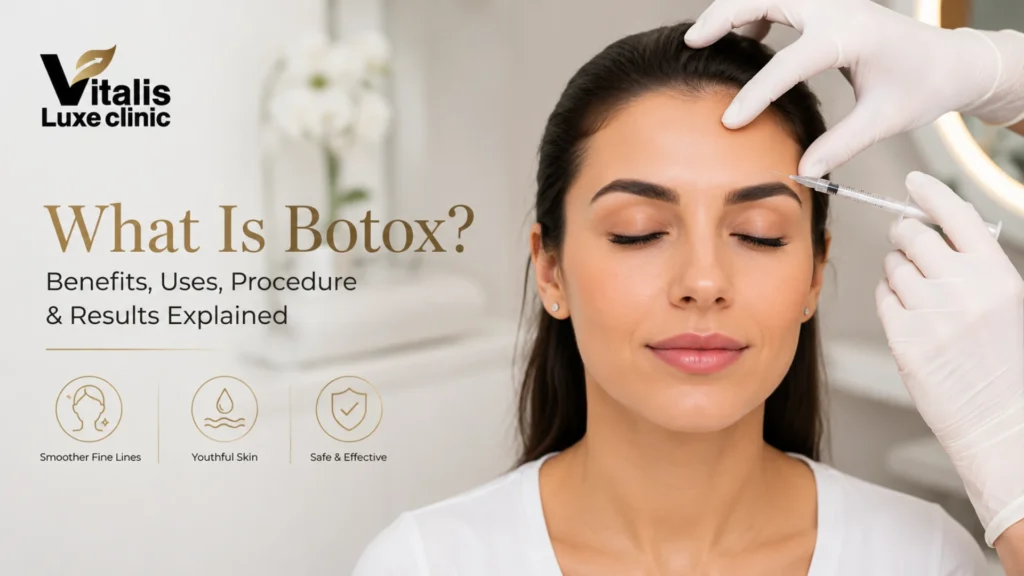

Botox is an injectable Medical Treatment made from botulinum toxin type A. It is used in small controlled amounts to temporarily relax selected muscles. Most people know Botox as an anti-wrinkle treatment, but it can also be used for medical concerns such as excessive sweating, chronic migraine, muscle spasms, and jaw-related problems in suitable patients.
Botox works by reducing nerve signals to targeted muscles. When those muscles relax, movement-related lines can look softer. This is why Botox is commonly used for forehead lines, frown lines, crow’s feet, facial wrinkles, and other expression lines.
Table of Contents
Botox Meaning
Botox is a brand name often used for botulinum toxin injections. In simple words, Botox is a muscle-relaxing injectable treatment.
People also search for Botox using terms such as Botox injection, Botox shots, Botox treatment, botulinum toxin injection, anti-wrinkle injections, facial Botox, and Botox injectables.
All these terms are connected to the same main idea: an injectable treatment that temporarily reduces muscle activity in selected areas.
What Is Botox Made Of?
Botox is made from a purified form of botulinum toxin type A. This substance comes from a bacterium called Clostridium botulinum, but medical Botox is purified, measured, and used in very small controlled doses.
Many people worry when they hear the word “toxin.” The important point is that Botox treatment uses a controlled amount in a specific area. The safety of treatment depends on the product, dose, placement, medical suitability, and the skill of the provider.
How Does Botox Work?
Botox works by temporarily blocking signals between nerves and selected muscles. When the treated muscle receives less signal, it relaxes. This can reduce the repeated movement that creates expression lines.
For example, raising your eyebrows can create forehead lines. Frowning can create lines between the eyebrows. Squinting can create crow’s feet. Botox helps reduce the movement that causes these lines.
What Is Botox Used For?
Botox is used for both cosmetic and medical concerns. In cosmetic treatments, it is mainly used to soften wrinkles and expression lines. In medical treatments, it may be used for concerns related to muscle activity, sweating, or nerve signals.
Common Botox uses include:
◆ Forehead lines
◆ Frown lines
◆ Crow’s feet
◆ Bunny lines
◆ Brow lift
◆ Chin dimpling
◆ Masseter jaw muscle
◆ Neck bands in suitable cases
◆ Excessive sweating
◆ Chronic migraine
◆ Muscle spasms
◆ Jaw clenching or teeth grinding in suitable case
Cosmetic Botox Treatment Areas
Cosmetic Botox is commonly used on the face to soften dynamic wrinkles. Dynamic wrinkles are lines caused by repeated facial movement.
Main facial Botox areas include:
◆ Forehead Botox for horizontal forehead lines
◆ Frown line Botox for lines between the eyebrows
◆ Crow’s feet Botox for lines around the eyes
◆ Bunny line Botox for small lines around the nose
◆ Chin Botox for chin dimpling
◆ Brow lift Botox for a subtle lifted look
◆ Masseter Botox for jaw tension or jawline slimming in suitable cases
Each area needs a different approach because every muscle works differently.
Forehead Botox
Forehead Botox is used to soften horizontal lines that appear when you raise your eyebrows. It can help the forehead look smoother, but it must be planned carefully to avoid heaviness.
Masseter Botox
Masseter Botox targets the jaw muscle. It may help people with jaw clenching, teeth grinding, jaw tension, or a square-looking jawline in suitable cases.
Baby Botox
Baby Botox is a lighter Botox approach that uses smaller amounts for a softer result. It is often chosen by people who want subtle changes, early line softening, or more natural facial movement.
Medical Uses of Botox
Botox is not only used for wrinkles. It also has medical uses when prescribed or provided by a qualified professional.
Medical Botox may be used for:
◆ Chronic migraine
◆ Excessive sweating
◆ Muscle spasms
◆ Cervical dystonia
◆ Overactive bladder
◆ Eye muscle conditions
◆ Jaw clenching in suitable cases
Medical Botox is different from cosmetic Botox because the purpose, dose, treatment area, and assessment may be different.
Botox Results
Botox results do not usually appear immediately. Early changes may start within a few days, but full results often appear around 1 to 2 weeks after treatment.
A simple Botox result timeline:
◆ First 24 hours: little visible change
◆ Days 3 to 5: early softening may begin
◆ Days 7 to 10: results become clearer
◆ Around 14 days: full result is usually visible
Results can vary depending on the treatment area, muscle strength, dose, and individual response.
How Long Does Botox Last?
Botox results are temporary. For many people, results last around 3 to 4 months, but this can vary.
Botox duration may depend on:
◆ Treatment area
◆ Dose used
◆ Muscle strength
◆ First-time or repeat treatment
◆ Metabolism
◆ Lifestyle
◆ Product response
◆ Treatment technique
Botox Side Effects
Botox can have side effects like any injectable treatment. Most side effects are mild and temporary, but some can be more serious.
Possible Botox side effects include:
◆ Redness
◆ Bruising
◆ Swelling
◆ Tenderness
◆ Headache
◆ Temporary heaviness
◆ Uneven results
◆ Drooping eyelid or brow in some cases
◆ Flu-like feeling in some people
Is Botox Safe?
Botox can be safe when it is used in the right dose, in the right area, for the right person, by a trained professional.
Safety depends on:
◆ Correct product
◆ Correct dose
◆ Correct injection area
◆ Clean technique
◆ Medical history check
◆ Suitable treatment plan
◆ Proper aftercare
Botox may not be suitable for everyone. A consultation is important before treatment.
Botox Aftercare
After Botox, your provider may advise you to avoid rubbing the treated area, lying flat too soon, heavy exercise, saunas, steam rooms, alcohol, or strong pressure on the area for a short time.
Aftercare helps the treatment settle properly and reduces the risk of unwanted effects.
Botox vs Fillers
Botox and fillers are both injectable treatments, but they are different.
Botox relaxes selected muscles. Fillers add volume, shape, or structure.
Botox is often used for movement lines such as forehead lines, frown lines, and crow’s feet. Fillers are often used for lips, cheeks, chin, jawline, and volume loss.
Botox Cost
Botox cost can depend on the treatment area, number of units, clinic location, provider experience, and whether the treatment is cosmetic or medical.
Common cost-related searches include Botox price, Botox injection price, Botox units cost, forehead Botox cost, and Botox treatment cost.
Botox Treatment at Vitalis Luxe Clinic
Vitalis Luxe Clinic provides Botox treatment for suitable clients who want clear advice, careful consultation, and safe aesthetic care.
Our Botox service can help with facial lines, forehead wrinkles, frown lines, crow’s feet, jaw concerns, and other suitable treatment areas. Before treatment, we assess your concerns, facial movement, goals, and suitability.
Final Thoughts
Botox is a controlled injectable treatment used to temporarily relax selected muscles. It is commonly used for facial lines, wrinkles, jaw concerns, excessive sweating, chronic migraine, and other suitable concerns.
This guide gives a simple overview of Botox, but each subtopic needs its own detailed blog. To fully understand Botox, you should also read about how Botox works, what Botox is made of, Botox side effects, treatment areas, aftercare, cost, and how long results last.
FAQs
What is Botox?
Botox is an injectable treatment made from botulinum toxin type A. It temporarily relaxes selected muscles and is commonly used for facial lines, wrinkles, sweating, migraines, and jaw-related concerns.
What does Botox do?
Botox reduces nerve signals to selected muscles. This relaxes muscle movement and can soften wrinkles caused by repeated facial expressions.
What is Botox used for?
Botox is used for forehead lines, frown lines, crow’s feet, jaw concerns, excessive sweating, chronic migraine, muscle spasms, and other suitable cosmetic or medical concerns.
How long does Botox take to work?
Botox may start showing early results within a few days, but full results usually appear around 1 to 2 weeks after treatment.
How long does Botox last?
Botox commonly lasts around 3 to 4 months, but results can vary depending on the treatment area, dose, muscle strength, and individual response.
Is Botox safe?
Botox can be safe when used by a trained professional in suitable patients. A consultation is important because Botox may not be suitable for everyone.
What are Botox side effects?
Possible side effects include redness, swelling, bruising, headache, tenderness, temporary heaviness, uneven results, and rare complications such as drooping eyelid or brow.
Is Botox permanent?
No, Botox is not permanent. Its effect gradually wears off as muscle movement returns.
Is Botox the same as fillers?
No. Botox relaxes selected muscles, while fillers add volume, shape, or structure.
What should I avoid after Botox?
You may be advised to avoid rubbing the area, lying flat, heavy exercise, saunas, steam rooms, alcohol, and pressure on the treated area for a short time.