




You’re sleeping enough, but waking up exhausted. Your drive has dropped off. The gym sessions that used to energize you now feel like a routine. Your mood shifts for no clear reason, and your sex drive is nowhere near what it used to be.
These aren’t just signs of getting older. They could be symptoms of low testosterone, a condition that affects more men than most people realize. A simple testosterone test can identify it within days.
This guide explains which signs to watch for, how to Check Testosterone Levels in the UK, what your results mean, and what to do if your levels are low. There’s no confusing language or guesswork just clear information to help you take action.
What Is a Testosterone Test and Why Does It Matter?
Testosterone is the main male sex hormone. It affects your energy, muscle mass, bone strength, mood, mental sharpness, and sexual function. It’s not just about libido; testosterone influences nearly every part of your health and how you feel.
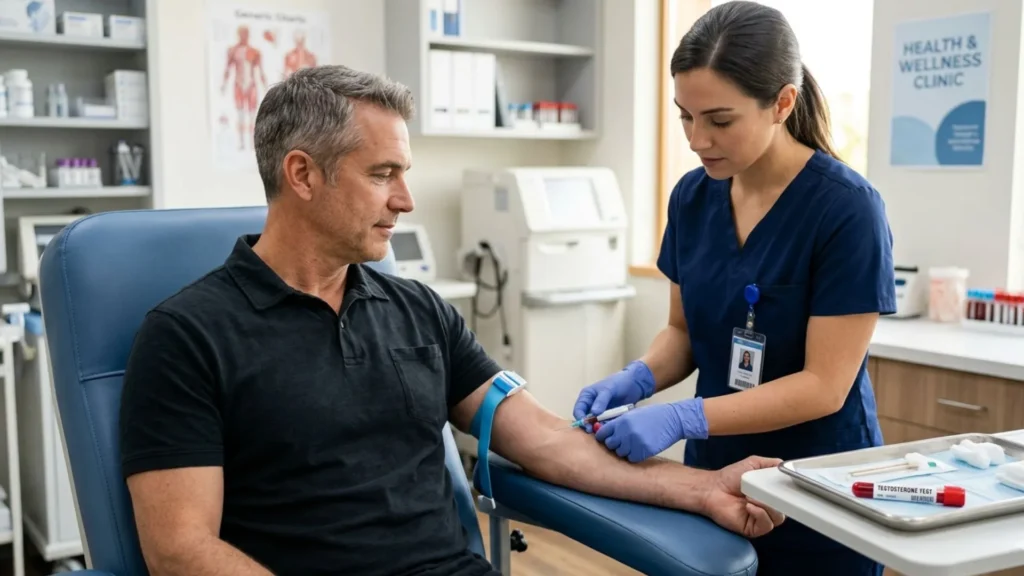
A testosterone test is a blood test that measures the amount of testosterone in your body. It’s the only reliable way to confirm whether your levels are healthy or have dropped enough to cause your symptoms.
What Does a Testosterone Blood Test Actually Measure?
A comprehensive testosterone blood test typically measures:
- Total testosterone: the overall amount of testosterone in your bloodstream
- Free testosterone: the biologically active portion that your cells can actually use
- SHBG (Sex Hormone Binding Globulin): a protein that binds to testosterone and reduces how much your body can access
- LH and FSH: pituitary hormones that regulate testosterone production and help identify the root cause of any deficiency
Many at-home kits measure only total testosterone. A full-panel private test, such as those at Vitalis Luxe Clinic, gives a much clearer and more useful picture of your hormone health.
Why Low Testosterone Gets Missed So Often
The low testosterone symptoms rarely appear all at once. They tend to develop slowly, such as fatigue one month and a bit of weight gain the next. These symptoms also overlap with stress, depression, thyroid problems, and poor sleep.
As a result, many men spend years normalizing genuinely treatable symptoms. They assume it’s just life or just age. It doesn’t have to be either.
Signs and Symptoms of Low Testosterone in Men
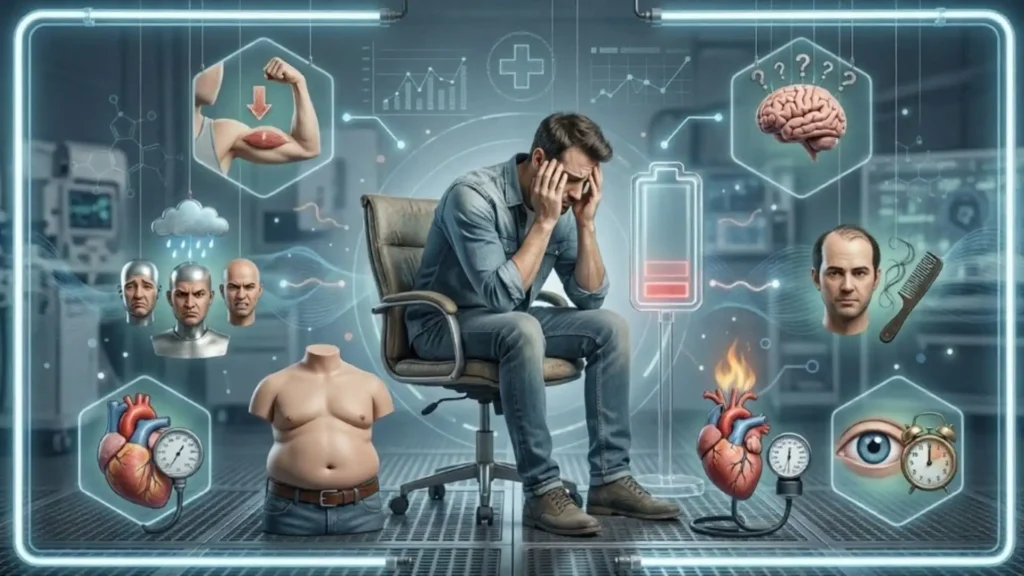
Recognizing the signs early is the first step. Low testosterone symptoms fall into three main areas: physical, mental, and sexual. These symptoms rarely appear alone, and the more you notice them, the more important it is to get tested.
Physical Signs of Low Testosterone
- Persistent fatigue despite adequate sleep
- Loss of muscle mass, even with regular training
- Increased body fat, particularly around the abdomen
- Reduced bone density, raising the long-term risk of fractures
- Thinning hair on the body or scalp
- Tender or swollen breast tissue (gynaecomastia)
- Reduced testicle size
- Hot flushes or unexplained sweating episodes
Mental and Emotional Symptoms of Low Testosterone
- Brain fog: difficulty concentrating, remembering things, or thinking clearly
- Low mood or depression with no obvious external trigger
- Reduced motivation and drive in work, training, and daily life
- Irritability or mood swings that feel disproportionate to the situation
- Poor sleep quality, including difficulty falling or staying asleep
- Reduced confidence and an overall decline in sense of well-being
Sexual Symptoms of Low Testosterone
- Significantly reduced sex drive (low libido)
- Erectile dysfunction or difficulty maintaining an erection
- Fewer or absent morning erections
- Reduced semen volume
- Concerns about fertility
You don’t need every symptom on this list for low testosterone to be the cause. If you have three or four of these, especially if they have developed slowly over months, it’s worth getting a testosterone blood test.
When Do These Symptoms Usually Start?
Testosterone peaks in your late teens and early twenties, then starts to decline slowly. After age 30, levels drop by about 1–2% each year. This process is sometimes called andropause or late-onset hypogonadism.
| Age Group | What’s Typically Happening |
| 30s | Early decline begins; symptoms are often subtle or dismissed |
| 40s | More noticeable changes: energy, mood, and libido are often affected |
| 50s | Significant drop; physical and sexual symptoms more pronounced |
| 60s+ | Levels can be 40–50% lower than peak; long-term health risks increase |
This decline is a normal part of aging. But if your levels drop too far or too quickly, the effects on your quality of life can be significant. Recognize these symptoms? Don’t wait and wonder. Book a confidential testosterone test at Vitalis Luxe Clinic and get answers that actually mean something.
How to Know If You Actually Have Low Testosterone
Here’s the truth: symptoms alone cannot confirm a diagnosis. They point strongly in the right direction, but only a testosterone level test tells you what your body is actually doing.
What Are Normal Testosterone Levels?
In the UK, testosterone is measured in nanomoles per liter (nmol/L). The British Society for Sexual Medicine (BSSM) provides the following clinical guidance for interpreting results:
| Total Testosterone Level | Clinical Interpretation |
| Below 8 nmol/L (230 ng/dL) | Clearly deficient — treatment strongly indicated |
| 8–12 nmol/L (230–346 ng/dL) | Borderline low — full panel and symptom context guide next steps |
| 12–25 nmol/L (346–720 ng/dL) | Generally, within the optimal range for most men |
| Above 25 nmol/L (720 ng/dL) | High-normal; symptoms are unlikely to be testosterone-related |
These are clinical guidelines, not strict cut-offs. A man with a level of 10 nmol/L and severe symptoms may benefit a lot from treatment, while another at the same level who feels fine may not need any intervention. Clinical decisions always depend on your situation, which is why seeing a specialist is important.
The Risk of Leaving Low Testosterone Untreated
Testosterone deficiency isn’t only about how you feel from day to day. Over time, chronically low testosterone is associated with:
- Increased risk of cardiovascular disease
- Osteoporosis and elevated fracture risk
- Type 2 diabetes and insulin resistance
- Worsening depression and anxiety
- Reduced life expectancy in men with confirmed hypogonadism
This isn’t meant to alarm you. It’s about giving you the full picture. Identifying and treating low testosterone is not about vanity; it’s an important step for your long-term health.

How to Check Your Testosterone Levels in the UK
You have several options for getting a testosterone test in the UK, each with different levels of speed, depth, and clinical support.
Getting Tested Through the NHS
Your GP can request a testosterone blood test, but access is not always simple. The NHS usually tests for testosterone only when symptoms are severe and other possible causes, such as thyroid problems or depression, have already been checked. Referrals to specialists can also lead to long waiting times.
NHS testing often measures only total testosterone. If your result is within the wide reference range, you might be told your levels are “normal,” even if they are low enough to cause symptoms. This is not the fault of individual GPs; it reflects the limits of a busy healthcare system.
Private Testosterone Testing — Faster, More Thorough Option
A private testosterone test delivers faster results, a more comprehensive hormonal panel, and direct access to a clinician who can interpret your findings in the context of how you actually feel.
Most reputable private clinics test total testosterone, free testosterone, SHBG, LH, FSH, and often include a metabolic panel that covers thyroid function, full blood count, and PSA. This gives you a complete hormonal picture, not just a single number.
At-Home Testosterone Tests: What You Need to Know
At-home finger-prick tests, available from providers like Boots and online health platforms, are easy to find and reasonably priced. They can be a helpful starting point if you want a general idea of your levels.
However, they carry important limitations:
- They typically measure only total testosterone, missing crucial free testosterone and SHBG data.
- Finger-prick samples are more prone to variability than a venous blood draw.
- Results arrive without clinical interpretation — leaving you with a number but no clear path forward.
- A borderline result puts you in the same position you started: uncertain about what to do next.
An at-home test might confirm your suspicion, but a private clinical test will show you what steps to take next.
Testosterone Testing at Vitalis Luxe Clinic
At Vitalis Luxe Clinic, the testosterone testing process is straightforward, thorough, and fully supported by clinical expertise from the first appointment through to your results and beyond.
Here’s what the process looks like:
- Initial consultation: A specialist reviews your symptoms, medical history, and health goals in a private, confidential setting
- Comprehensive blood draw: A full hormonal panel including total and free testosterone, SHBG, LH, FSH, and relevant metabolic markers
- Clear results, promptly delivered: Explained by a clinician, not just handed to you as a report of numbers.
- A personalized plan: If your levels are low, your specialist will explain your options and help you choose the best course of action
Appointments are never rushed, and you won’t feel pressured. You’ll receive expert care in a private, comfortable setting designed for your confidence and peace of mind. Ready for real clarity? Book your testosterone test at Vitalis Luxe Clinic for comprehensive results, expert interpretation, and a clear path forward.
What Happens After Your Testosterone Test?
Once your results are in, the next steps depend on where your levels sit and how they align with your symptoms and overall health picture.
Understanding Your Results
Your clinician will assess your results alongside your full symptom profile. A result below 12 nmol/L combined with clear clinical symptoms will typically indicate a strong case for testosterone replacement therapy (TRT). A borderline result may lead to a repeat test, a lifestyle review, or further investigation into contributing factors such as obesity, poor sleep, or medication interactions.
You will never be left to interpret numbers on your own.
Your Treatment Options If Levels Are Low
If testosterone replacement therapy is recommended, you’ll have several delivery methods to consider. Each has advantages depending on your lifestyle, preferences, and clinical needs.
| Treatment | How It Works | Frequency | Key Advantage |
| Testosterone gel | Applied to skin; absorbed transdermally | Daily | Easy to use; produces stable, consistent levels |
| Testosterone cream | Similar to gel; often compounded to a specific dose | Daily | Flexible, precise dosing |
| Testosterone injections | Injected intramuscularly; longer-acting formulations available | Every 1–12 weeks | Reliable, predictable results; minimal daily effort |
Testosterone gel for men is the most commonly prescribed starting point in the UK. It’s discreet, simple to apply, and produces stable testosterone levels when used consistently. Testosterone cream offers similar benefits with greater dosing flexibility.
Testosterone injections — such as Nebido or Sustanon — are preferred by many men for their convenience and consistency. Longer-acting formulations mean fewer dosing intervals, which suits those who find daily dosing inconvenient or prefer to receive each dose in a clinical setting.
Your specialist will recommend the approach that fits your needs, not a one-size-fits-all protocol.
What to Expect from Testosterone Replacement Therapy
Most men begin to notice meaningful improvements within 4 to 12 weeks of starting TRT, though the timeline varies depending on the individual, their starting levels, and the chosen delivery method. Energy and mood typically improve first; improvements in body composition, sexual function, and cognitive clarity follow over subsequent months.
TRT is not a quick fix. It’s a medically supervised, ongoing program with regular monitoring. You’ll have blood tests every 3 to 6 months to make sure your testosterone, hematocrit, PSA, and other health markers remain within the normal range.
When managed by qualified clinicians, testosterone replacement therapy is safe, evidence-based, and genuinely life-changing for the right candidates.
FAQs!
What are the most common signs of low testosterone in men?
The most common signs include persistent fatigue despite good sleep, loss of muscle mass even when training, increased belly fat, brain fog, low mood or irritability, reduced motivation, and a noticeable drop in libido or sexual performance. If several of these have developed gradually over months, they are classic low testosterone symptoms in men. At Vitalis Luxe Clinic, we see many men who recognize themselves in this list and finally get answers through proper testing.
What exactly does a testosterone test measure?
A comprehensive testosterone test UK measures total testosterone, free testosterone (the active portion your body can use), SHBG, LH, and FSH. Many at-home kits or basic NHS tests only check total testosterone, which often misses the full picture. A full panel at Vitalis Luxe Clinic gives you clear, clinically useful results so you understand exactly what’s happening.
Why do so many men with low testosterone never get diagnosed?
Low testosterone symptoms develop slowly and overlap with stress, poor sleep, or “just aging.” NHS testing is often limited to total testosterone only and uses strict cut-offs, so many men in the borderline 8–12 nmol/L range are told their levels are “normal.” A private, comprehensive test with expert interpretation changes that.
What are normal testosterone levels in the UK?
According to British Society for Sexual Medicine guidelines:
- Below 8 nmol/L = clearly deficient
- 8–12 nmol/L = borderline (symptoms matter most)
- 12–25 nmol/L = generally optimal for most men. At Vitalis Luxe Clinic, we don’t just look at the number — we assess your results alongside your symptoms to give you an honest, personalized explanation.
How can I get a testosterone test in the UK?
You can go through your GP on the NHS or choose a private clinic. The NHS route is free but often involves long waits and basic testing. Private testing is faster, more thorough, and includes full hormone panels with expert review. At Vitalis Luxe Clinic, the process is simple: book a consultation, have a morning blood draw, and receive clear results with a personalized plan — usually within days.
What happens after I get my testosterone test results?
Your clinician will explain the results in plain English and discuss whether treatment is appropriate. If levels are low, you’ll receive clear options including gels, creams, or injections. At Vitalis Luxe Clinic, you are never left with just a report — you get a full explanation and a tailored next-step plan with ongoing support.
How long until I feel better if I start testosterone treatment?
Most men notice improvements in energy and mood within 4–6 weeks, better libido and sexual function by 6–12 weeks, and clearer body composition and strength gains between 3–6 months. Results vary, which is why regular monitoring is essential. At Vitalis Luxe Clinic, we guide you through the entire journey with proper follow-up testing and adjustments.