






If you’ve received a very low testosterone result, or you’ve been experiencing symptoms of testosterone deficiency for a long time and are wondering how serious this actually is — this article is for you.
The word “dangerously” is not one we use lightly in clinical practice. But the truth is that severely and chronically low testosterone symptoms are not simply a quality-of-life issue. Left untreated over months and years, profoundly low testosterone levels are associated with a range of serious, measurable health consequences — including bone loss, increased cardiovascular risk, metabolic dysfunction, and significant psychological impact — that go well beyond feeling tired and flat.
At Vitalis Luxe Clinic in Hull, we see men who have been living with undiagnosed or untreated testosterone deficiency for years — sometimes decades. Understanding what constitutes a dangerously low level, what the clinical evidence says about the long-term consequences of untreated deficiency, and when to seek urgent assessment is genuinely important information for any man in this situation.
Table of Contents
What Level Is Considered Dangerously Low Testosterone?

“Dangerously low” is not a single number — it is a combination of a testosterone level, the severity of symptoms it is producing, and the duration of time the deficiency has been present. That said, there are clinical thresholds below which the risks of untreated deficiency become substantially more serious.
The Clinical Thresholds
| Total Testosterone | Clinical Classification | Clinical Urgency |
| Below 4 nmol/L | Severely deficient | High — significant long-term health risks; prompt clinical assessment and treatment warranted |
| 4–8 nmol/L | Markedly deficient | Significant — treatment strongly indicated in symptomatic men; risk of bone and metabolic consequences with ongoing untreated deficiency |
| 8–12 nmol/L | Clinically deficient | Moderate — treatment indicated with significant symptoms; ongoing monitoring essential if treatment deferred |
| 12–15 nmol/L | Low-normal / borderline | Context-dependent — symptomatic men at this level deserve full assessment of free T, SHBG and clinical picture |
| Above 15 nmol/L | Normal range for most men | Symptoms at this level are less likely to be primarily hormonal — investigation of other causes warranted |
A total testosterone level below 4 nmol/L represents profound deficiency. At this level, the body is operating with a fraction of the testosterone required for normal function, and the consequences — if left untreated — extend well beyond the symptoms most men associate with low T. Levels in the 4–8 nmol/L range are markedly low and carry meaningful risk with chronic exposure. The 8–12 nmol/L grey zone requires careful clinical assessment of the full picture — because in a symptomatic man, even this level can represent clinically significant deficiency.
Symptoms of Severely and Chronically Low Testosterone

The symptoms of testosterone deficiency exist on a spectrum. Men with borderline low levels may experience subtle changes that are easy to dismiss. Men with severely low testosterone — particularly those who have been deficient for years without treatment — typically present with a much more debilitating clinical picture.
Immediate and Ongoing Symptoms
- Profound, debilitating fatigue — beyond normal tiredness; described by many patients as a bone-deep exhaustion that does not improve with rest
- Severe loss of libido — often complete absence of sexual interest, not simply reduced drive
- Erectile dysfunction — particularly morning erections absent or very infrequent
- Significant mood disturbance — persistent low mood, emotional flatness, or frank depressive symptoms
- Marked cognitive impairment — serious difficulty concentrating, poor memory, mental fogginess that affects work and daily function
- Substantial muscle loss — noticeable reduction in muscle mass and strength despite maintained activity
- Significant fat gain — particularly abdominal and visceral fat accumulation even without clear dietary change
- Hot flushes — vasomotor symptoms similar to those experienced by menopausal women; more common in very severe deficiency
- Reduced body hair — thinning of body and facial hair over time
- Testicular atrophy — reduction in testicular size with prolonged severe deficiency
The Psychological Burden
One aspect of severely low testosterone that deserves particular emphasis — and that is frequently under-recognised by healthcare professionals — is the profound psychological impact. Men with severely low testosterone often describe feeling not simply sad or tired, but fundamentally unlike themselves. The loss of drive, ambition, engagement with life, and sense of identity can be devastating.
Many men in this situation are diagnosed with depression and treated with antidepressants — sometimes for years — without the underlying hormonal cause being identified or addressed. Antidepressants do not treat testosterone deficiency, and for some men, the persistent failure of this approach causes additional demoralisation. At Vitalis Luxe Clinic, we take the view that every man presenting with depressive symptoms deserves a hormonal assessment, not just a prescription.
The Long-Term Health Risks of Untreated Testosterone Deficiency

This is the section that answers the question of why we use the word “dangerous.” The following consequences are not hypothetical — they are documented in peer-reviewed clinical literature and represent measurable, objective health deterioration that occurs in men with chronic, untreated testosterone deficiency.
1. Bone Density Loss and Osteoporosis
Testosterone plays a critical role in maintaining bone mineral density in men — partly through its direct anabolic effects on bone, and partly through its conversion to oestradiol, which is the primary regulator of bone remodelling in both sexes. Men with chronically low testosterone experience accelerated bone loss, leading to reduced bone mineral density and significantly increased fracture risk.
Osteoporosis is not a condition most men associate with themselves — it is culturally framed as a women’s health issue. But male osteoporosis is a genuine and underdiagnosed clinical problem, and testosterone deficiency is one of its most significant modifiable causes. Hip fractures in older men carry a significantly worse prognosis than in women, with high rates of mortality and loss of independence in the year following the fracture.
Men with very low testosterone levels who have been deficient for years should be considered for DEXA bone density scanning as part of their clinical management — a step we incorporate into our comprehensive assessment at Vitalis Luxe Clinic when clinically indicated.
2. Cardiovascular Risk
The relationship between testosterone and cardiovascular health is complex — but the weight of evidence from large population studies suggests that chronically low testosterone is associated with increased cardiovascular risk, including higher rates of coronary artery disease, heart failure, and cardiovascular mortality.
The mechanisms are multiple: low testosterone is associated with adverse changes in body composition (increased visceral fat, reduced lean muscle), worsened insulin sensitivity, unfavourable lipid profiles (lower HDL cholesterol, higher triglycerides), increased inflammatory markers, and impaired endothelial function. Each of these represents a component of cardiovascular risk that accumulates over time in the context of persistent testosterone deficiency.
Importantly, evidence from multiple well-designed studies suggests that testosterone replacement therapy, when properly prescribed and monitored — is not associated with increased cardiovascular risk and may in fact be cardioprotective in men with confirmed deficiency. This is relevant context for men who have been advised to avoid TRT due to cardiovascular concerns.
3. Metabolic Syndrome and Type 2 Diabetes
Low testosterone and metabolic dysfunction have a bidirectional, self-reinforcing relationship. Testosterone deficiency promotes visceral fat accumulation, which worsens insulin resistance, which further suppresses testosterone through multiple mechanisms. Men with low testosterone are significantly more likely to develop metabolic syndrome — a cluster of cardiovascular risk factors including central obesity, elevated blood pressure, dyslipidaemia, and impaired glucose regulation.
Large epidemiological studies have found that men with low testosterone have substantially higher rates of type 2 diabetes. This is not simply an association — the hormonal relationship is mechanistically well-understood. For men with both low testosterone and pre-diabetic or diabetic metabolic markers, addressing the hormonal deficiency is an integral part of comprehensive metabolic management.
4. Depression and Mental Health Deterioration
As noted above, the psychological consequences of chronically low testosterone extend beyond the mood symptoms most men would attribute to “feeling low.” Testosterone has direct effects on the central nervous system — on dopaminergic reward pathways, serotonergic signalling, and neuroplasticity. Chronic testosterone deficiency impairs these systems in ways that produce genuine, biologically mediated depressive illness.
Men with untreated low testosterone who do not receive hormonal treatment are at a sustained elevated risk of clinical depression, anxiety disorders, and significantly reduced quality of life across all measured domains. The mental health consequences of prolonged, untreated deficiency are among the most damaging — and the most reversible with appropriate treatment.
5. Anaemia
Testosterone stimulates erythropoiesis — the production of red blood cells — through its effects on erythropoietin production and bone marrow activity. Men with chronically low testosterone often develop a mild to moderate normocytic anaemia (reduced red blood cell count with normal cell size), contributing to the fatigue and reduced exercise tolerance that are hallmarks of the condition. This form of anaemia does not respond to iron supplementation — it responds to testosterone replacement.
6. Sexual and Reproductive Consequences
Beyond the immediate impact on libido and erectile function, chronically low testosterone is associated with testicular atrophy, reduced sperm production and quality, and long-term impairment of sexual function that may become increasingly difficult to reverse the longer the deficiency persists without treatment. For younger men in particular, the fertility implications of prolonged, untreated hypogonadism are significant.
| The Cost of Waiting Every month that severely low testosterone goes untreated is a month during which bone mineral density is declining, cardiovascular risk factors are accumulating, visceral fat is increasing, and the psychological toll is compounding. Testosterone deficiency is not a condition that resolves on its own — in most cases it progresses. The case for prompt clinical assessment and treatment, when the diagnosis is confirmed, is strong. |
How Low Is Too Low? A Practical Framework
Rather than a single threshold, the clinical decision about whether a testosterone level requires urgent attention is based on three factors working together:
| Factor | Low Urgency | Moderate Urgency | High Urgency |
| Total testosterone | Above 12 nmol/L | 8–12 nmol/L | Below 8 nmol/L |
| Symptom severity | Mild / occasional | Moderate / frequent | Severe / debilitating |
| Duration of symptoms | Weeks to a few months | Several months to 1–2 years | Years — or unknown |
| Associated conditions | None identified | Borderline metabolic markers | Osteoporosis, CVD, diabetes risk |
| Age | Older men with gradual onset | Mid-life / perimenopausal range | Young men; rapid or unexplained decline |
Men who fall into the high-urgency column across multiple rows should seek prompt clinical assessment. Waiting to see whether things improve, or continuing to manage symptoms through lifestyle alone when the underlying deficiency is severe, is not in their long-term clinical interest.
Red Flag Symptoms: When to Seek Assessment Without Delay
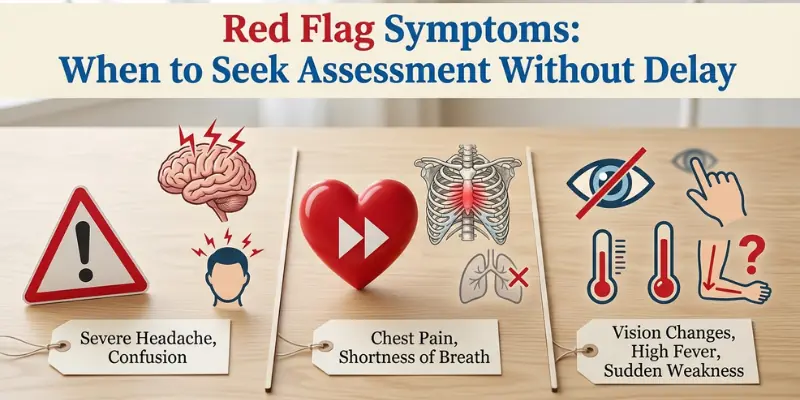
While all men experiencing significant symptoms of testosterone deficiency should receive a clinical assessment, the following presentations warrant particular urgency — both because they suggest more severe deficiency and because some may indicate an underlying condition requiring investigation beyond TRT:
- Total testosterone below 5 nmol/L on a morning blood test — this level is rarely seen in otherwise healthy men and may indicate primary testicular failure, pituitary pathology, or other significant medical cause
- Very low testosterone combined with very low LH and FSH — suggesting central (hypothalamic/pituitary) failure rather than testicular failure; warrants pituitary imaging in some cases
- Very low testosterone combined with markedly elevated LH and FSH — indicating primary testicular failure; may warrant genetic testing (e.g. for Klinefelter syndrome) in younger men
- Elevated prolactin alongside low testosterone — a pituitary adenoma must be excluded before proceeding to TRT
- Symptoms of severe bone loss — fracture from minor trauma, significant back pain, height loss — in the context of low testosterone
- Young men (under 30) with testosterone below 8 nmol/L — the cause requires thorough investigation, as primary pathology is more likely at younger ages
- Rapid onset of symptoms over weeks rather than months — may suggest an acute precipitating cause requiring investigation
| If You Are in This Situation If you have received a very low testosterone result — particularly below 8 nmol/L — and have not yet had a full clinical assessment including LH, FSH, prolactin, and pituitary evaluation where appropriate, please do not delay seeking that assessment. At Vitalis Luxe Clinic in Hull, we can arrange a comprehensive panel and clinician-led review promptly for men across Hull, East Yorkshire, and throughout Yorkshire. |
What Does Treatment for Severely Low Testosterone Look Like?

For men with confirmed, significantly low testosterone — particularly those in the below 8 nmol/L range with symptoms — testosterone replacement therapy is the primary evidence-based treatment. The approach at our Hull clinic follows a clear, structured pathway:
- Comprehensive baseline assessment — Full hormone panel, safety markers (haematocrit, PSA, liver function), bone density consideration where indicated, cardiovascular risk review.
- Investigation of underlying cause — LH/FSH pattern to distinguish primary from secondary hypogonadism; prolactin to exclude pituitary pathology; further investigation as clinically indicated.
- Clinician-led prescription — Choice of preparation (injection, gel, or other), dose, and frequency tailored to the individual’s clinical profile, lifestyle, and goals — not a one-size-fits-all template.
- Early follow-up monitoring — Blood test at 6–8 weeks to assess hormonal response, haematocrit, oestradiol, and safety markers; dose adjustment as needed.
- Ongoing regular monitoring — Regular reviews and blood tests throughout treatment to maintain therapeutic levels within the safe physiological range and ensure long-term safety.
Men with very severely low testosterone (below 4–5 nmol/L) may require more careful titration of initial doses and closer early monitoring, as rapid restoration of testosterone from a profoundly deficient baseline can sometimes require adjustment of oestradiol and haematocrit more actively than in men with less severe deficiency.
What to Expect When Treatment Begins
One of the most important things we tell patients at our Hull clinic who are starting TRT from a severely deficient baseline is to set realistic expectations — not because treatment does not work, but because it takes time, and because some consequences of prolonged deficiency are slower to reverse than others.
| Consequence of Low T | Typical Response to TRT |
| Fatigue and energy | Often improves within 3–6 weeks; significant improvement usually seen by 3 months |
| Mood and motivation | Gradual improvement over 4–12 weeks; full benefit may take 3–6 months |
| Libido | Often among the earlier responses, typically 3–6 weeks; may take longer in severely deficient men |
| Erectile function | Variable; may take 3–6 months for full improvement; adjunct treatment sometimes helpful |
| Muscle mass and strength | Improvement builds over 3–6 months with resistance training |
| Body composition | Fat redistribution occurs gradually over 6–12 months |
| Bone density | Measurable improvement on DEXA at 12–24 months; this is a slow process |
| Anaemia | Haematocrit typically rises within 3 months; RBC improvement may take 6 months |
| Cognitive function | Gradual improvement in concentration and mental clarity over 3–6 months |
Patience is essential. Men who have been severely deficient for years should not expect complete recovery in weeks. What they should expect is a progressive, measurable improvement across all these domains — one that continues to build over the first 6–12 months of well-managed treatment.
Frequently Asked Questions
What is considered a dangerously low testosterone level?
In clinical terms, total testosterone below 8 nmol/L is clearly deficient and warrants treatment in symptomatic men. Levels below 4–5 nmol/L represent severe deficiency and carry significant long-term health risks, including bone loss, cardiovascular risk, and metabolic deterioration if left untreated. The urgency of treatment increases with the severity of the deficiency and the presence of symptoms.
What happens if low testosterone goes untreated for years?
Chronically untreated testosterone deficiency is associated with progressive bone mineral density loss and increased fracture risk, worsened cardiovascular risk factors (increased visceral fat, adverse lipid profile, insulin resistance), increased risk of type 2 diabetes, sustained depressive illness, anaemia, testicular atrophy, and significantly reduced quality of life across all domains. These consequences are measurable, documented, and largely reversible with appropriate treatment — but the longer treatment is delayed, the more accumulated damage occurs.
Is a testosterone level of 5 nmol/L dangerous?
A total testosterone of 5 nmol/L is severely deficient and, in a symptomatic man, represents a level that requires prompt clinical assessment and treatment. At this level, the risks of ongoing bone loss, cardiovascular deterioration, metabolic dysfunction, and psychological harm are clinically significant. In a younger man, a result this low also warrants investigation of the underlying cause — including LH, FSH, and prolactin measurement.
Can very low testosterone cause depression?
Yes — and this is one of the most clinically underappreciated aspects of testosterone deficiency. Testosterone has direct effects on central nervous system function, including dopaminergic and serotonergic pathways. Chronically low testosterone can produce biologically mediated depressive illness that does not respond to antidepressant treatment alone. Men with treatment-resistant depression should receive a comprehensive hormone assessment before further antidepressant escalation is considered.
Does low testosterone affect bone density?
Yes, significantly. Testosterone — both directly and through its conversion to oestradiol — is essential for maintaining bone mineral density in men. Chronic testosterone deficiency accelerates bone loss and increases fracture risk. Men with severely low testosterone, particularly those who have been deficient for years, should be considered for DEXA bone density scanning. TRT is associated with measurable improvement in bone density over 12–24 months of treatment.
How quickly can dangerously low testosterone levels be treated?
At Vitalis Luxe Clinic in Hull, we can typically complete a comprehensive assessment, arrange blood testing, and have a clinician-led treatment decision made within a matter of days for men with urgent clinical need. If testosterone replacement therapy is indicated, treatment can begin promptly following the assessment. We serve men across Hull, East Yorkshire, and throughout Yorkshire with both in-person and online consultation options.
Can low testosterone cause heart problems?
Population studies consistently show an association between chronically low testosterone and increased cardiovascular risk — including higher rates of coronary artery disease, heart failure, and cardiovascular mortality. The mechanisms include adverse effects on body composition, lipid profiles, insulin sensitivity, inflammatory markers, and endothelial function. Well-managed TRT in men with confirmed deficiency is not associated with increased cardiovascular risk and may be cardioprotective.
Where can I get an urgent testosterone assessment in Yorkshire?
Vitalis Luxe Clinic provides prompt, comprehensive hormone assessments for men across Hull, East Yorkshire, and the wider Yorkshire region. If you have received a very low testosterone result or have significant symptoms suggesting severe deficiency, contact us directly to arrange a priority consultation. Both in-person appointments at our Hull clinic and online consultations with home blood testing are available.