






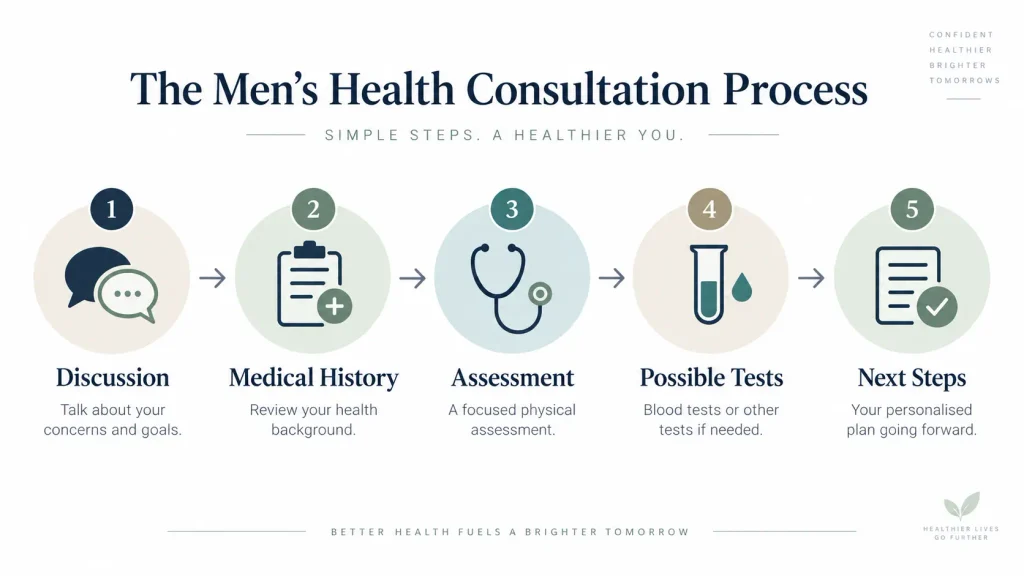
A men’s health consultation usually begins with a private discussion about your symptoms, medical history, current medicines, lifestyle and any specific concerns you would like to raise.
Depending on your individual circumstances, the clinician may then consider health measurements, a physical assessment or relevant tests before discussing appropriate next steps.
The purpose of the appointment is not to assume that you have a particular condition or that you automatically need treatment. It is to understand your concerns properly, gather relevant clinical information and decide whether reassurance, further assessment, testing, monitoring or treatment may be appropriate.
Table of Contents
What Is a Men’s Health Consultation?
A men’s health consultation is an appointment focused on understanding concerns that may affect a man’s physical health, sexual wellbeing, hormonal health or general quality of life.
Some men attend with one specific concern, while others may notice several changes that do not initially appear connected.
These may include changes in:
- energy levels
- sleep
- mood
- sexual function
- sex drive
- physical performance
- weight
- urinary health
- general wellbeing
You do not need to know what is causing your symptoms before attending.
The consultation gives the clinician an opportunity to understand what has changed, review your wider health and decide whether anything requires further investigation.
What Happens at the Start of the Consultation?
The appointment will usually begin with a conversation about why you decided to seek advice.
You may be asked:
- what symptoms or changes you have noticed
- when they first started
- whether they are constant or intermittent
- whether they have become better or worse
- how they affect your daily life
- whether anything appears to trigger them
- whether you have experienced similar symptoms before
- whether you have already received advice or treatment
This initial discussion helps the clinician understand which areas of your health may need closer attention.
For example, persistent tiredness can have many possible explanations. A consultation should therefore look at the wider clinical picture rather than assume that one symptom automatically points to one particular condition.
Will Your Medical History Be Reviewed?
Yes. Your medical history can provide important context when assessing new or ongoing symptoms.
The clinician may ask about:
- existing medical conditions
- previous illnesses
- previous operations or procedures
- medicines you currently take
- supplements
- allergies
- previous investigations
- previous blood-test results
- previous treatment
- relevant family medical history
This information can be important because existing conditions and medicines may sometimes contribute to symptoms or influence which investigations and treatments are appropriate.
A consultation therefore looks at more than the symptom that originally brought you to the clinic.
Will Lifestyle and General Wellbeing Be Discussed?
Lifestyle may also form part of the consultation where it is relevant to your concerns.
You may be asked about:
- sleep
- stress
- diet
- exercise and physical activity
- smoking
- alcohol
- work patterns
- recent weight changes
These questions help build a more complete picture of your health.
They do not mean that every health problem is caused by lifestyle. Instead, lifestyle is considered alongside your symptoms, medical history and other relevant factors.
For example, the NHS also considers information such as smoking, alcohol use, physical activity, blood pressure, weight and family history when assessing aspects of general health and cardiovascular risk. nhs.uk
Can You Discuss Sexual or Hormonal Health Concerns?
Yes.
Men’s health consultations may involve concerns that can sometimes feel difficult or embarrassing to discuss.
These might include changes involving:
- sex drive
- erectile function
- sexual performance
- reproductive health
- energy
- mood
- possible hormone-related symptoms
You do not need to diagnose the problem yourself before mentioning it.
For example, reduced libido or low energy does not automatically mean that someone has low testosterone.
Symptoms can overlap with a range of medical, psychological and lifestyle factors, which is why they should be considered alongside your medical history and wider health before conclusions are made.
Is a Men’s Health Consultation Confidential?
Men’s health appointments can involve personal and sensitive information.
Some men may delay seeking advice because they feel uncomfortable discussing sexual wellbeing, mood, reproductive concerns or other changes in their health.
A professional consultation provides a private setting in which relevant concerns can be discussed with a healthcare professional.
Being open about your symptoms can help the clinician understand your situation more accurately.
You can also ask why a particular question is being asked if you are unsure how it relates to your health.
Will You Have a Physical Examination?
Not necessarily.
A physical examination is not automatically required during every men’s health consultation.
Whether one is appropriate depends on factors such as:
- the symptoms being discussed
- your medical history
- your age
- existing health conditions
- relevant risk factors
- the clinician’s judgement
In some circumstances, basic measurements such as blood pressure, height or weight may provide useful clinical information.
More targeted examination may sometimes be considered where particular symptoms require further assessment.
The important point is that any examination should have a clinical reason and relate to the concern being investigated.
Will You Need Blood Tests?
Not every men’s health consultation requires blood testing.
Blood tests may be considered if the clinician believes they could help:
- investigate the possible cause of symptoms
- check aspects of general health
- assess the likelihood of certain conditions
- monitor an existing condition
- support a clinical decision
The NHS confirms that the type of blood test used depends on a person’s symptoms, existing health conditions and medicines. nhs.uk
This means there is no single set of blood tests that every man should automatically receive.
Where testing is appropriate, the tests selected should relate to the clinical question being investigated.
Does Every Consultation Include Testosterone Testing?
No.
Testosterone testing may be considered where symptoms and clinical circumstances make a hormonal assessment relevant, but it is not automatically required during every men’s health consultation.
Symptoms that are sometimes associated with testosterone concerns can overlap with other medical, psychological and lifestyle factors.
The clinician may therefore need to consider your:
- symptoms
- medical history
- medicines
- lifestyle
- general health
- other possible contributing factors
before deciding whether hormone testing is appropriate.
This helps keep the consultation focused on the individual rather than assuming that every men’s health concern is testosterone-related.
What Happens After the Initial Discussion?
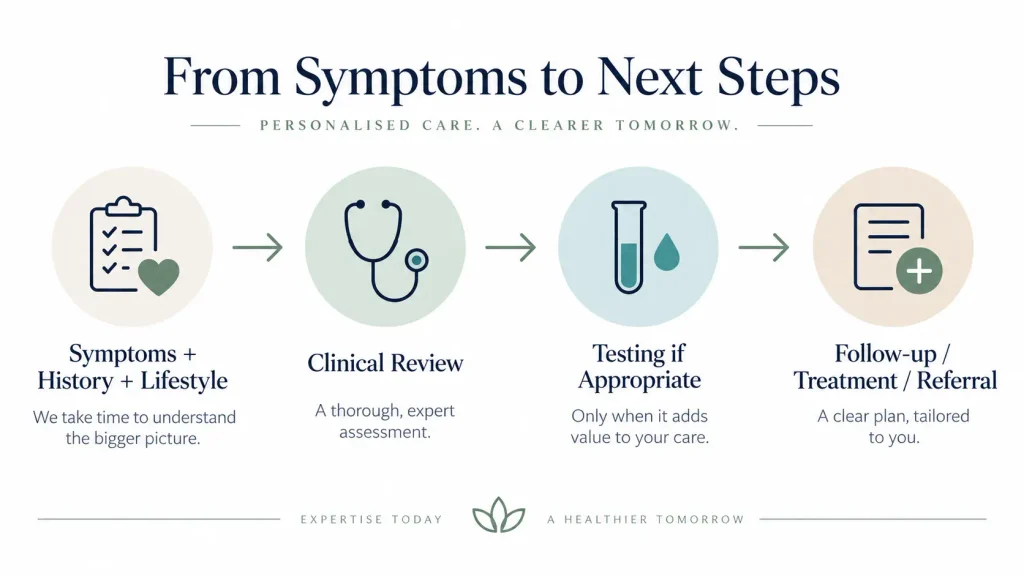
Once the clinician has discussed your concerns and reviewed the relevant background information, the next step depends on what has been identified.
This may include:
- reassurance
- lifestyle advice
- health measurements
- further clinical assessment
- blood tests or other investigations where appropriate
- review of previous results
- monitoring
- follow-up
- discussion of suitable treatment options
- specialist referral where appropriate
There is no identical pathway for every patient.
Some concerns may require more information before treatment decisions can be made, while in other situations monitoring, reassurance or another form of assessment may be more appropriate.
What Happens If Blood Tests Are Recommended?
If blood testing is considered appropriate, the clinician should explain why the test is being requested and what information it may provide.
Depending on the test, some preparation may be needed.
The NHS notes that certain blood tests may require instructions such as fasting or temporary changes around medicines, although this does not apply to every blood test. nhs.uk
After the results become available, they need to be interpreted in the context of why the test was requested.
This may involve considering:
- your symptoms
- medical history
- current medicines
- other test results
- age
- individual circumstances
The NHS also advises that blood-test results can sometimes require further explanation or additional testing, depending on the reason for the investigation. nhs.uk
Does a Men’s Health Consultation Automatically Lead to Treatment?
No.
Attending a consultation does not mean that treatment must begin.
The first purpose of the appointment is to understand your health concerns.
Depending on the findings, the next step could instead involve:
- reassurance
- monitoring
- lifestyle advice
- further assessment
- diagnostic testing
- follow-up
- referral
If treatment is appropriate, available options can then be discussed after the relevant clinical information has been considered.
This avoids treating a symptom before its wider context has been properly assessed.
What Happens at Your First Men’s Health Appointment?
If this is your first visit, you may be wondering whether you need to prepare anything beforehand.
It can be useful to know or bring information about:
- medicines you currently take
- supplements
- existing health conditions
- previous relevant test results
- when your symptoms started
- questions you want to discuss
You do not need to arrive with a diagnosis.
Your role is simply to explain what you have noticed and what is concerning you. The clinician can then assess that information and discuss appropriate next steps.
What Questions Can You Ask During the Consultation?
The consultation is also an opportunity for you to ask questions.
Depending on your concerns, useful questions may include:
- What could be contributing to my symptoms?
- Do I need further assessment?
- Would any tests provide useful information?
- What would a particular test help investigate?
- What happens after the results are available?
- Are there lifestyle factors I should consider?
- What options may be available if a condition is identified?
- Will I need follow-up?
- Should I see another healthcare professional?
Asking questions can help you understand why particular investigations or next steps are being considered.
When Should You Consider a Men’s Health Consultation?
You do not necessarily need to wait until a concern becomes severe before seeking professional advice.
You may consider arranging a consultation if:
- symptoms continue or repeatedly return
- you have noticed a change from your normal health
- a concern is affecting your everyday wellbeing
- you are worried about sexual health
- you have unexplained changes in energy or mood
- several symptoms appear together
- you have concerns about hormone health
- you want professional guidance about whether further assessment is appropriate
Some symptoms can require urgent rather than routine medical attention.
If you experience severe, sudden or potentially urgent symptoms, seek appropriate NHS urgent or emergency care rather than waiting for a routine private consultation.
Private Men’s Health Consultations at Vitalis Luxe Clinic
Vitalis Luxe Clinic provides private men’s health care from its clinic in Cottingham, near Hull, East Yorkshire.
The consultation process is focused on understanding your symptoms, medical history and individual health concerns before appropriate next steps are considered.
Depending on your circumstances, this may involve further assessment, relevant investigations, monitoring or discussion of suitable treatment options.
Learn more about the consultations, assessments and care available through the Men’s Health Clinic service or treatments.
Frequently Asked Questions
What happens at a men’s health consultation?
A men’s health consultation usually begins with a discussion about your symptoms, medical history, current medicines, lifestyle and health concerns. Depending on your circumstances, further assessment, examination or testing may then be considered before appropriate next steps are discussed.
Do I need to know what is causing my symptoms before booking?
No. You do not need to diagnose yourself beforehand. The consultation is designed to understand your symptoms in the context of your wider health and determine whether further investigation may be appropriate.
Will I need a physical examination?
Not necessarily. Whether an examination is appropriate depends on your symptoms, medical history and individual clinical circumstances.
Will I need blood tests?
Not every patient needs blood testing. Tests may be considered where they could help investigate symptoms, assess aspects of health or support a clinical decision.
Is testosterone always tested?
No. Testosterone testing may be considered when symptoms and clinical circumstances make hormonal assessment appropriate, but it is not a standard requirement for every men’s health consultation.
Can I discuss sexual health concerns?
Yes. Concerns involving libido, erectile function, sexual wellbeing and reproductive health can be discussed where relevant.
Does a consultation mean I have to start treatment?
No. A consultation does not commit you to treatment. Depending on the findings, appropriate next steps could include reassurance, monitoring, further testing, lifestyle advice, treatment discussion or referral.
What should I bring to my first appointment?
It may be useful to have information about your current medicines, existing conditions, previous relevant test results and when your symptoms started. You may also want to prepare any questions you would like to discuss.