

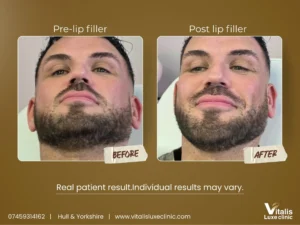



Choosing an aesthetic treatment is a personal decision, but choosing the right practitioner is equally important.
Aesthetic procedures can involve the skin, facial anatomy, injectable products and medical considerations. Before deciding on treatment, patients should understand who will be providing their care, what qualifications they hold and whether they have relevant aesthetic training and experience.
A good practitioner should take time to understand your concerns, assess your suitability, explain realistic outcomes and discuss possible risks before recommending a treatment.
This guide explains the main things to consider when choosing an aesthetic practitioner and how to make a more informed decision.
What Makes a Good Aesthetic Practitioner?
A good aesthetic practitioner should combine professional knowledge, relevant aesthetic training, practical experience and responsible patient care.
Qualifications matter, but they are only one part of the decision.
Patients should also consider:
- Professional background
- Relevant aesthetic training
- Treatment experience
- Knowledge of facial anatomy
- Consultation standards
- Patient safety
- Realistic treatment planning
- Complication awareness
- Aftercare and follow-up
A professional practitioner should also be willing to explain their background and approach clearly.
Check Professional Qualifications
Before choosing an aesthetic practitioner, look at their professional qualifications and clinical background.
Patients should be able to understand what education the practitioner has completed and whether they have additional training relevant to aesthetic medicine.
A healthcare or medical qualification can provide a strong clinical foundation, but aesthetic procedures often require further treatment-specific education.
This may include training in areas such as:
- Facial anatomy
- Injectable techniques
- Patient assessment
- Treatment planning
- Product knowledge
- Complication recognition
- Patient consent
- Aftercare
Professional certifications can provide useful evidence of this additional training when they are clearly presented and verifiable.
Check Professional Registration
Professional registration can also help patients verify the background of a practitioner.
In the UK, regulated healthcare professionals may be registered with organisations such as:
General Medical Council
Doctors practising in the UK can be checked through the General Medical Council (GMC).
Nursing and Midwifery Council
Nurses and midwives can be checked through the Nursing and Midwifery Council (NMC).
General Dental Council
Dentists and other registered dental professionals can be checked through the General Dental Council (GDC).
Patients may also come across aesthetic organisations and voluntary registers such as Save Face or the Joint Council for Cosmetic Practitioners (JCCP).
Professional registration and aesthetic training are not exactly the same thing.
Registration can help confirm someone’s professional status, while treatment-specific education and experience help show whether they have relevant competence in aesthetic procedures.
Both should be considered.
Look for Relevant Aesthetic Training
Aesthetic medicine requires more than simply learning how to perform an injection or use a particular product.
Relevant training can include understanding facial anatomy, recognising different patterns of ageing, assessing treatment suitability and identifying possible complications.
Practitioners may also complete additional education related to specific treatments and products.
Patients should therefore look beyond a single qualification and consider whether the practitioner continues to develop their knowledge within aesthetic medicine.
Professional certificates, continuing education and treatment-specific training can all provide useful supporting evidence.
Experience Matters Alongside Qualifications
Qualifications provide the foundation, while practical experience helps a practitioner apply that knowledge to different patients.
Every face is different.
Age, facial structure, skin condition, previous treatment and individual goals can all influence the treatment approach.
An experienced practitioner should understand that one standard treatment plan will not be appropriate for everybody.
Before proceeding, patients can ask questions such as:
- How long have you worked in aesthetic medicine?
- What aesthetic treatments do you regularly provide?
- What training have you completed?
- How do you decide whether a patient is suitable?
- How do you plan treatment for different facial structures?
- What happens if a complication occurs?
Clear answers can help patients better understand the practitioner’s level of experience and approach to care.
Why Knowledge of Facial Anatomy Matters
Facial aesthetic treatments can involve areas containing muscles, blood vessels, nerves and other important structures.
Understanding facial anatomy is therefore an important part of treatment planning.
The practitioner should consider more than the individual area a patient wants changed.
They may also assess:
- Facial proportions
- Existing volume
- Skin quality
- Muscle movement
- Previous procedures
- Surrounding facial structures
- Individual treatment goals
This broader assessment can help create a more balanced and personalised treatment plan.
A Proper Consultation Should Come Before Treatment
A consultation should be an important part of the aesthetic treatment journey.
It gives the practitioner an opportunity to understand the patient’s concerns and allows the patient to ask questions before making a decision.
A consultation may include discussion of:
- Your main concerns
- Desired outcome
- Relevant medical history
- Previous aesthetic treatments
- Medicines where appropriate
- Allergies
- Treatment options
- Expected results
- Possible side effects
- Potential complications
- Recovery
- Aftercare
A professional practitioner should also explain whether the treatment being considered is appropriate.
Sometimes the best recommendation may be a different procedure, delaying treatment or deciding that treatment is not needed.
Look for Realistic Treatment Advice
Aesthetic treatments should not be presented as a way to achieve perfection.
Results can vary between individuals.
Factors that may influence the outcome include:
- Facial anatomy
- Age
- Skin condition
- Treatment area
- Product used
- Previous procedures
- Individual response
A responsible practitioner should explain what treatment may realistically improve and where its limitations lie.
Patients should be cautious of guaranteed outcomes or promises that their result will look exactly like someone else’s.
Ask About the Products Being Used
Patients should know what products are being used during an aesthetic treatment.
It is reasonable to ask:
- What product will be used?
- Why has this product been selected?
- Is it appropriate for my concern?
- What should I expect from the treatment?
- What side effects may occur?
- What aftercare is required?
A practitioner should be able to explain the product and why it forms part of the treatment plan.
Transparency helps patients make more informed decisions.
Before-and-After Results Can Support Your Decision
Before-and-after photographs can be useful when reviewing a practitioner’s work.
They can show the types of concerns treated and the style of results achieved.
However, photographs should not be considered proof of professional competence on their own.
Lighting, camera angle, facial expression, make-up and editing can all affect how a result appears.
Before-and-after images should therefore be considered alongside:
- Qualifications
- Training
- Professional registration
- Experience
- Consultation quality
- Patient safety
A Good Practitioner Should Discuss Risks
No aesthetic procedure is completely free from risk.
Possible side effects and complications will vary depending on the treatment, product and individual patient.
A responsible practitioner should explain both potential benefits and relevant risks before treatment.
Patients should understand:
- Common expected reactions
- Possible side effects
- Important complications
- Warning signs
- When to contact the clinic
- What happens if further medical assessment is required
Open discussion of risks is an important part of informed treatment decisions.
Ask What Happens if Something Goes Wrong
Patients should know what support is available if they experience an unexpected problem.
Before treatment, ask:
- Who should I contact?
- Is follow-up available?
- How will concerns be assessed?
- What happens if a complication develops?
- When would further medical care be required?
A practitioner should have a clear approach to recognising concerns and providing appropriate support.
Aftercare Is Part of Aesthetic Treatment
Professional aesthetic care should not end as soon as the procedure is complete.
Depending on the treatment, patients may need guidance about:
- Swelling
- Bruising
- Skincare
- Exercise
- Touching the treated area
- Heat exposure
- Activities to avoid
- Expected recovery
- Warning signs
- Follow-up appointments
Clear aftercare helps patients understand what is normal following treatment and when they should seek further advice.
Don’t Judge a Practitioner Only by Social Media
Social media can help patients discover practitioners and view examples of aesthetic treatments.
However, follower numbers and attractive content do not prove professional competence.
Social media may be useful for seeing:
- Treatment examples
- Clinic environment
- Educational content
- Practitioner style
But professional qualifications, registration, relevant training and experience should still be checked separately.
Reviews Are Helpful but Should Not Be the Only Factor
Patient reviews can provide useful information about previous experiences with a practitioner or clinic.
Reviews may help patients understand:
- Communication
- Professionalism
- Appointment experience
- Clinic environment
- Customer service
- Aftercare
However, reviews are not a replacement for professional verification.
A practitioner should still be assessed based on their qualifications, training, experience and consultation approach.
Price Should Not Be the Only Deciding Factor
Treatment cost is naturally important, but choosing an aesthetic practitioner based only on the lowest price can overlook other important factors.
Patients should also consider:
- Practitioner qualifications
- Aesthetic experience
- Consultation quality
- Products being used
- Treatment planning
- Aftercare
- Follow-up
- Support if concerns arise
Good value should include appropriate professional care, not simply the lowest treatment cost.
Red Flags When Choosing an Aesthetic Practitioner
Knowing what to avoid can also help patients make better decisions.
Unclear Professional Background
Patients should be able to understand who is carrying out their treatment and what relevant qualifications they hold.
No Proper Consultation
Treatment should not be recommended without first understanding the patient’s concerns and suitability.
Unrealistic Promises
Guaranteed or perfect results should be approached carefully.
Pressure to Book
Patients should have enough time to consider their options without being pressured into immediate treatment.
No Discussion of Risks
A practitioner should explain important risks as well as potential benefits.
No Clear Aftercare
Patients should know who to contact if they have concerns following treatment.
Lack of Transparency
The practitioner should be willing to discuss their training, treatment approach, products and professional background.
Questions to Ask Before Choosing an Aesthetic Practitioner
Before treatment, consider asking:
- What professional qualifications do you hold?
- Are you registered with a relevant professional body?
- What aesthetic training have you completed?
- How much experience do you have in aesthetic medicine?
- How do you assess whether treatment is suitable?
- What result can I realistically expect?
- What are the potential risks?
- What product will be used?
- What aftercare will I receive?
- What happens if I experience a problem?
- Will follow-up be available?
- Are there alternative options I should consider?
A good practitioner should be comfortable answering these questions clearly.
How to Compare Aesthetic Practitioners
Rather than comparing practitioners using only reviews or price, consider several areas together.
Qualifications and Registration
Can their professional background be understood and independently verified where applicable?
Aesthetic Training
Have they completed relevant additional training?
Experience
Do they regularly work within aesthetic medicine?
Consultation
Do they take time to understand the patient’s concerns and suitability?
Communication
Do they explain benefits, limitations and risks clearly?
Safety
Do they understand potential complications and appropriate escalation?
Aftercare
Is appropriate support available following treatment?
Looking at these areas together gives patients a more complete picture of the practitioner responsible for their care.
Prof essional Standards in Practice: Dr Naveed Sheikh at Vitalis Luxe Clinic

The principles discussed above can also be considered when reviewing a real practitioner.
At Vitalis Luxe Clinic, aesthetic care is provided by Dr Naveed Sheikh, whose professional qualifications, registration and relevant certifications can be reviewed as part of the clinic’s practitioner information.
Patients should be able to clearly understand the professional background of the person responsible for their treatment.
For this reason, Dr Naveed’s profile can include his verified:
- Medical qualifications
- Professional registration
- Relevant aesthetic certifications
- Clinical background
- Aesthetic training
- Continuing professional development where applicable

Displaying this information gives patients an opportunity to review professional credentials rather than relying only on promotional claims.
Aesthetic Treatments at Vitalis Luxe Clinic
Vitalis Luxe Clinic provides a range of non-surgical aesthetic treatments for suitable patients looking to address facial lines, volume loss, skin quality and other aesthetic concerns.
Treatment begins with consultation and assessment so the most appropriate option can be considered according to your concerns, medical history and individual suitability.
Anti-Wrinkle Treatment
Our Botox and anti-wrinkle treatment is used to soften selected facial lines caused by repeated muscle movement while maintaining a natural-looking appearance.
Dermal Filler Treatment
Our dermal filler treatment is used to restore volume, enhance selected facial features and support facial balance.
Sculptra Treatment
Sculptra treatment is a collagen-stimulating injectable treatment designed to support gradual improvement in facial volume and structure.
Polynucleotide Treatment
Our polynucleotide treatment focuses on skin quality and may help support improvements in hydration, texture, elasticity and the appearance of fine lines.
Exosome Treatment
Our exosome treatment is offered as part of a personalised approach to selected skin, facial and hair-related concerns, depending on individual suitability.
PRP Treatment
Our PRP treatment uses platelet-rich plasma prepared from the patient’s own blood and may be considered for selected facial, under-eye, skin and hair concerns.
Microneedling Treatment
Our microneedling treatment uses controlled micro-channels to support the skin’s natural renewal response and may be considered for concerns such as uneven texture, fine lines and selected scarring.
Hyperhidrosis Treatment
Our hyperhidrosis treatment is available for suitable patients affected by excessive underarm sweating that interferes with everyday comfort or confidence.
The most appropriate treatment depends on your individual concern, treatment area, medical history and desired outcome. A consultation allows these factors to be assessed before a personalised treatment plan is recommended.
Why Professional Credentials and Patient Care Both Matter
Professional qualifications and registration are important trust signals, but they should be considered together with the practitioner’s approach to patient care.
Aesthetic treatment also involves:
- Individual assessment
- Appropriate treatment planning
- Clinical judgement
- Realistic expectations
- Patient communication
- Safety awareness
- Aftercare
Patients should feel confident that the person providing their treatment has both an appropriate professional background and a responsible approach to aesthetic care.
Final Thoughts
Finding the right aesthetic practitioner should involve more than comparing prices, photographs or social media profiles.
Look for clear qualifications, relevant professional registration where applicable, aesthetic-specific training and practical experience.
A good practitioner should also provide a proper consultation, explain realistic outcomes, discuss potential risks and provide appropriate aftercare.
Taking time to review these factors can help you make a more informed decision about both your practitioner and your treatment.
Frequently Asked Questions
How do I find a qualified aesthetic practitioner?
Review their professional qualifications, relevant aesthetic training, practical experience and professional registration where applicable. Consultation standards, patient safety and aftercare should also be considered.
What qualifications should an aesthetic practitioner have?
Appropriate qualifications depend on the practitioner’s professional background and the treatments they provide. Professional education should be supported by relevant aesthetic training and practical experience.
How can I check an aesthetic practitioner in the UK?
Doctors, nurses and dental professionals can be checked through their relevant UK professional registers, including the GMC, NMC and GDC where applicable.
Is professional registration enough to prove aesthetic expertise?
Professional registration confirms someone’s status within a regulated profession, but relevant aesthetic training and practical experience should also be considered.
What should I ask an aesthetic practitioner before treatment?
Ask about professional qualifications, registration, aesthetic training, experience, treatment suitability, realistic results, potential risks, products, aftercare and follow-up.
What are the signs of a good aesthetic practitioner?
Good signs include clear qualifications, transparent communication, a proper consultation, realistic treatment advice, discussion of risks and appropriate aftercare.
What are the red flags when choosing an aesthetic practitioner?
Warning signs may include unclear qualifications, no proper consultation, pressure to book, unrealistic promises, limited discussion of risks and no clear aftercare process.
Should price be the main factor when choosing an aesthetic practitioner?
No. Price should be considered alongside professional qualifications, aesthetic experience, consultation quality, products used, safety standards and aftercare.
Are patient reviews enough to choose an aesthetic practitioner?
Reviews can be useful, but they should be combined with professional verification, relevant experience and your own assessment during consultation.
Why is consultation important before aesthetic treatment?
A consultation allows the practitioner to understand your concerns, assess suitability, discuss treatment options and explain realistic outcomes, risks and aftercare.