
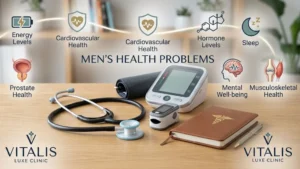






A men’s health assessment is a clinical review that looks at your symptoms, medical history, lifestyle and any specific health concerns you may have. The purpose is to understand your overall health, identify areas that may need further investigation and decide whether testing, monitoring, lifestyle changes or further medical advice may be appropriate.
Some men book an assessment because they have noticed a particular change, such as persistent tiredness, reduced libido or erectile difficulties. Others may want a broader review of their health or have concerns about hormones, cardiovascular risk or general wellbeing.
At Vitalis Luxe Clinic, a men’s health assessment forms part of a consultation-led approach rather than assuming that one symptom automatically points to one condition or treatment. You can learn more about our Men’s Health Clinic and the services available at our clinic in Cottingham, near Hull.
Table of Contents
What Can a Men’s Health Assessment Cover?
The exact assessment depends on why you have booked an appointment. There is no single checklist that will be appropriate for every man.
A clinician may discuss your current symptoms, how long they have been present, previous medical conditions, medicines, family history, sleep, stress, exercise, alcohol intake, smoking, weight and other lifestyle factors.
Depending on your concerns, the discussion may also cover sexual health, libido, erectile function, mood, energy levels or symptoms that could potentially have a hormonal component.
The assessment is designed to put these different pieces of information together. This is important because many common men’s health symptoms have several possible causes.
For example, the NHS explains that low libido can be associated with stress, anxiety, depression, sexual problems, medicines, alcohol use and certain long-term health conditions as well as hormonal changes. nhs.uk NHS guidance on low sex drive
Why Is Medical History Important?
Your medical history provides context for the symptoms you are currently experiencing.
A clinician may need to understand whether you have existing health conditions, whether you are taking prescription medicines, whether similar symptoms have occurred previously and whether particular conditions run in your family.
Even symptoms that appear straightforward can sometimes have several explanations.
Persistent erectile dysfunction, for example, may be associated with high blood pressure, high cholesterol, diabetes, depression, anxiety or hormone-related problems. Stress, tiredness, alcohol and certain medicines can also contribute. NHS guidance on erectile dysfunction
A proper assessment therefore looks beyond the symptom itself and considers what may be contributing to it.
What Happens During a Men’s Health Assessment?
Your appointment will usually begin with a conversation about why you have sought advice.
You may be asked when your symptoms started, whether they are persistent or occasional, whether they have changed over time and how they are affecting your daily life.
The clinician can then consider your symptoms alongside your medical history, lifestyle and any previous test results.
Depending on the concern, further checks or blood tests may be discussed. In other situations, the assessment may show that another type of evaluation would be more appropriate.
If you would like a more detailed explanation of the consultation process, read What Happens at a Men’s Health Consultation?.
Can a Men’s Health Assessment Include a General Health Review?
Yes. Some assessments may include discussion of wider health factors rather than focusing only on one symptom.
Weight, blood pressure, physical activity, smoking, alcohol consumption, cholesterol and blood sugar can all provide useful information about wider health risks when clinically appropriate.
These are also important components of established health-check programmes. The NHS Health Check, for example, considers blood pressure, cholesterol, diabetes risk, smoking, alcohol use, physical activity and family history when assessing cardiovascular health. nhs.uk NHS Health Check information
A private men’s health assessment is not the same as the NHS Health Check programme, but similar health factors may be relevant depending on your individual circumstances.
Can Hormone Health Be Discussed?
Hormone-related concerns can form part of a men’s health assessment when your symptoms or medical history make them relevant.
Men sometimes associate tiredness, low libido, reduced motivation, erectile difficulties or changes in body composition directly with low testosterone. However, these symptoms do not confirm testosterone deficiency on their own.
The NHS notes that symptoms sometimes associated with age-related testosterone changes can also result from stress, anxiety, depression, poor sleep, lifestyle factors and other health problems. Late-onset hypogonadism is a specific medical condition and is not simply a normal consequence of getting older. NHS information on testosterone-related symptoms and late-onset hypogonadism
This is why the correct sequence is to assess the symptoms first and then decide whether hormone testing or another investigation is appropriate.
Does Low Libido Mean Low Testosterone?
Not necessarily.
Low libido can occur for many reasons, and testosterone is only one possible factor. Psychological wellbeing, relationship difficulties, medicines, alcohol use, sexual problems and long-term health conditions may all affect sex drive. nhs.uk
If reduced libido is persistent or concerning, discussing it during a men’s health assessment can help establish whether further investigation is needed.
This distinction is particularly important because treating a presumed hormone problem without first considering other possible causes may overlook the actual reason for the symptom.
Can Erectile Difficulties Be Discussed?
Yes. Erectile function is a common men’s health concern and can be discussed confidentially as part of an appropriate assessment.
Occasional difficulties can occur because of stress, tiredness or alcohol. Persistent erectile dysfunction, however, may sometimes be associated with cardiovascular risk factors, diabetes, psychological health or hormonal conditions. nhs.uk
The assessment can therefore look at the symptom in the context of your wider health rather than immediately assuming that a particular medication or hormone treatment is required.
Are Blood Tests Always Required?
No. A men’s health assessment does not automatically mean that you need blood tests.
Testing should answer a relevant clinical question. The tests considered will depend on your symptoms, medical history, previous results and the areas of health being investigated.
For example, someone concerned about general metabolic health may require different tests from someone being assessed for possible testosterone deficiency.
Blood tests can provide useful objective information, but the results should be interpreted alongside symptoms and clinical context.
A test result on its own does not necessarily explain why someone feels unwell.
What About Testosterone Blood Testing?
If symptoms suggest that testosterone deficiency should be investigated, blood testing may form part of the assessment.
The NHS explains that late-onset hypogonadism is diagnosed using both symptoms and testosterone blood-test results. nhs.uk
That relationship is important:
Symptoms raise the question. Blood testing provides additional evidence. Clinical assessment brings the information together.
A men’s health assessment should therefore not be approached as simply ordering a testosterone test and treating whichever number appears on the result.
Is a Men’s Health Assessment the Same as Men’s Health Screening?
There can be overlap, but the terms do not always describe exactly the same process.
A health screening programme is often designed to identify health risks or early signs of disease, including in people who have no current symptoms.
A men’s health assessment may instead begin with a specific concern, such as persistent tiredness, reduced libido, erectile problems or possible hormone-related symptoms.
The NHS Health Check provides a good example of preventive screening. It is offered to eligible adults aged 40 to 74 and assesses the risk of conditions including heart disease, stroke, diabetes and kidney disease. nhs.uk
A private men’s health assessment may be more individually focused on the reason you have sought advice.
Why Should Symptoms Be Assessed Before Treatment?
Many men’s health symptoms are non-specific.
Fatigue can have several causes. Low libido does not automatically mean low testosterone. Erectile dysfunction is not always hormonal. Changes in mood or motivation may also have physical, psychological or lifestyle-related explanations.
For that reason, a sensible clinical pathway is:
Health concern → medical history → clinical assessment → relevant testing → interpretation → appropriate next steps
Starting with treatment before establishing what may be contributing to the problem can result in important factors being missed.
Assessment also allows care to be more individual. Two men experiencing similar symptoms may have very different underlying causes and therefore require different advice.
What Happens After a Men’s Health Assessment?
The next step will depend on what the assessment identifies.
Some men may receive reassurance or practical advice about lifestyle and general health. Others may benefit from blood testing, further investigation, monitoring or review of an existing health condition.
If the findings suggest that a particular condition requires treatment, the available options can then be discussed in the appropriate clinical context.
In some cases, another healthcare professional or specialist service may be more appropriate. A good assessment should identify when referral is preferable rather than attempting to treat every concern within one clinic.
When Might It Be Worth Booking a Men’s Health Assessment?
Consider seeking medical advice when you notice a persistent or unexplained change in your health, particularly when it is affecting your daily life, relationships or general wellbeing.
Concerns such as ongoing fatigue, reduced libido, recurring erectile difficulties, changes in mood, unexplained changes in physical wellbeing or questions about hormone health may all justify a conversation with an appropriate healthcare professional.
You do not have to know what is causing the problem before booking an assessment. Identifying the possible cause is part of the assessment process.
New, severe or rapidly worsening symptoms should be assessed through the appropriate urgent or emergency medical service where necessary.
How Should You Prepare for Your Assessment?
Before your appointment, it can be useful to think about when your symptoms started and whether anything has changed around the same time.
Consider whether there have been changes to medicines, sleep, stress, exercise, alcohol intake, relationships, work or your general health.
If you already have relevant blood-test results, medication information or previous medical correspondence, having these available may also help the clinician understand your history.
It is also worth being open about concerns involving libido, erections, mood or other sensitive issues. These details can be clinically relevant and may help build a clearer picture of your health.
Men’s Health Assessments at Vitalis Luxe Clinic
Vitalis Luxe Clinic provides private men’s health consultations for men who want to discuss symptoms, changes in wellbeing or specific health concerns.
Our approach begins with assessment. Symptoms, relevant medical history and existing health information can be considered before deciding whether further tests, monitoring or treatment discussions are appropriate.
Vitalis Luxe Clinic is based in Cottingham, near Hull, East Yorkshire. If you would like to understand the men’s health services available, visit our Men’s Health Clinic page.
Frequently Asked Questions
What is a men’s health assessment?
A men’s health assessment is a clinical review of your symptoms, medical history, lifestyle and relevant health concerns. It helps determine whether further testing, monitoring, advice or clinical investigation may be appropriate.
What can I discuss during a men’s health assessment?
You may be able to discuss concerns relating to general wellbeing, fatigue, libido, erectile function, hormone health, lifestyle or other persistent changes in your health, depending on the scope of the clinic and your individual circumstances.
Does a men’s health assessment include a testosterone test?
Not automatically. Testosterone testing may be considered when your symptoms and clinical history suggest that investigating testosterone deficiency is appropriate.
Can low libido be discussed during the assessment?
Yes. Persistent low libido can be discussed as part of a men’s health assessment. Because reduced libido can have several possible causes, the assessment should consider the wider clinical picture rather than assuming it is caused by testosterone deficiency. nhs.uk
Can erectile dysfunction be part of a men’s health assessment?
Yes. Erectile difficulties can have physical, psychological, lifestyle and hormonal causes. Persistent erectile dysfunction may therefore justify further assessment to help determine what could be contributing to it. nhs.uk
Are blood tests always necessary?
No. Tests should be selected according to the health concern being investigated. Some assessments may lead to blood testing, while others may require a different next step.
What happens after the assessment?
The next step depends on the findings and may involve advice, relevant testing, review of existing results, monitoring, further investigation or discussion of appropriate treatment options.
Where can I book a men’s health assessment near Hull?
Vitalis Luxe Clinic provides private men’s health services from its clinic in Cottingham, near Hull. You can explore the available services through the Vitalis Luxe Clinic Men’s Health Clinic page.