


Does smoking increase testosterone? It has been a topic of debate in medical research for years. Many men wonder whether smoking cigarettes affects their hormone levels, particularly testosterone. As a medical professional at Vitalis Luxe Clinic, I often encounter patients asking this question. The answer, based on current scientific evidence, is both surprising and complex.
In this article, we’ll explore what research tells us about smoking and testosterone levels, why the findings may seem contradictory, and what this means for your health.
What Research Shows About Smoking and Testosterone
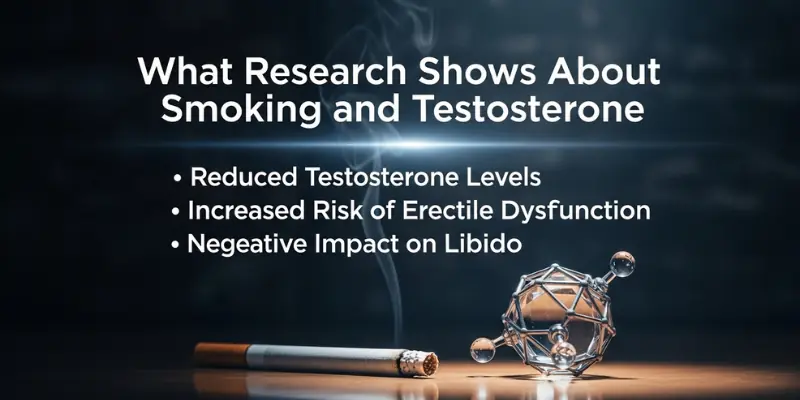
Studies on smoking and testosterone have produced mixed results, but many show a surprising pattern.
The Surprising Finding

Multiple research studies have found that men who smoke often show higher testosterone levels compared to non-smokers:
- A study of over 3,000 Norwegian men found smokers had 15% higher total testosterone and 13% higher free testosterone compared to non-smokers.
- Research analyzing more than 13,000 men confirmed smokers had higher average testosterone levels by approximately 1.53 nmol/L.
- Studies showed that testosterone levels increased with the number of cigarettes smoked per day.
However, before anyone considers smoking as a way to boost testosterone, it’s critical to understand what’s really happening.
Learn more about How to Increase Testosterone.
Why Does Smoking Appear to Increase Testosterone?
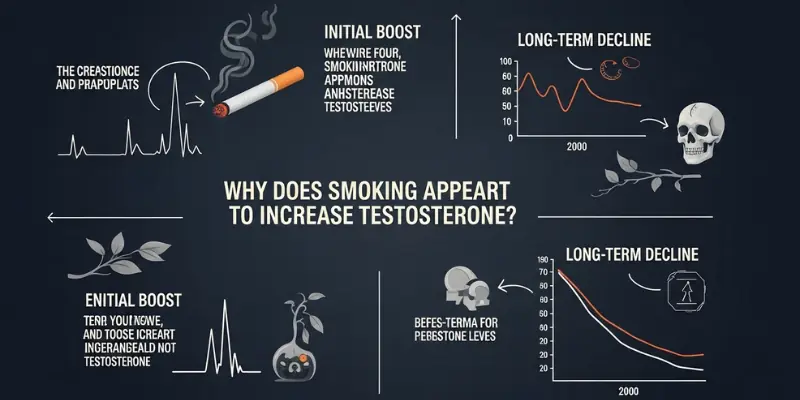
Scientists have proposed several mechanisms for why smokers might show higher testosterone readings:
1. Increased SHBG Levels
Smoking increases sex hormone-binding globulin (SHBG), a protein that binds to testosterone in the blood. While total testosterone may appear higher, the amount of biologically active (free) testosterone may not significantly change. This means the testosterone isn’t necessarily more available to your body.
2. Competitive Inhibition of Testosterone Breakdown
Cotinine, a metabolite of nicotine, may compete with testosterone during the breakdown process. The same enzymes that metabolize nicotine also break down testosterone. This competition can temporarily slow testosterone degradation, leading to higher blood levels.
The Other Side: Studies Showing Lower Testosterone

Not all research supports the idea that smoking increases testosterone. Several studies have found the opposite:
- An Egyptian study of 289 men found smokers had significantly lower testosterone levels (4.09 ng/ml) compared to non-smokers (5.61 ng/ml).
- Some research suggests smoking enhances liver metabolism of testosterone, potentially decreasing serum levels.
- Long-term smoking is associated with damage to testosterone-producing cells in the testicles.
These conflicting results highlight how complex the relationship between smoking and hormones truly is.
Understanding the Findings: A Quick Comparison
Here’s a summary of how different studies have reported the effects of smoking on testosterone:
| Study Finding | Mechanism | Reality |
|---|---|---|
| Higher testosterone in smokers | Increased SHBG and competitive enzyme inhibition | Temporary elevation, not truly beneficial |
| Lower testosterone in smokers | Enhanced liver metabolism and testicular damage | Long-term hormonal disruption |
The Health Reality: Why Smoking Is Never the Answer
Even if smoking does temporarily increase testosterone measurements, the health consequences far outweigh any perceived hormonal benefit. Here’s what smoking does to male reproductive health:
Documented Harms of Smoking
- Reduced sperm count and quality – Smoking damages sperm DNA and reduces fertility
- Erectile dysfunction – Smoking damages blood vessels, reducing blood flow to the penis
- Testicular damage – Long-term smoking harms the cells that produce testosterone
- Cardiovascular disease – Smoking is a major risk factor for heart disease and stroke
- Cancer risk – Including prostate, lung, and other cancers
Any temporary testosterone increase is not worth these serious health risks.
What Happens When You Quit Smoking?
Some men worry their testosterone will drop after quitting smoking. Here’s what actually happens:
Short-Term Adjustment
Initially, testosterone levels may dip slightly as your body adjusts to life without nicotine. This is a normal rebalancing process as your hormones return to their natural state.
Long-Term Benefits
Over time, quitting smoking improves:
- Blood flow to reproductive organs
- Testicular health and function
- Overall hormone balance
- Sperm quality and fertility
Your body’s natural testosterone production will stabilize at healthier levels without the toxic effects of cigarette chemicals.
My Clinical Perspective
At Vitalis Luxe Clinic, we regularly see patients concerned about their testosterone levels. Some ask whether smoking could be a way to boost their hormones naturally. My answer is always clear: the risks far exceed any potential benefit.
If you’re concerned about low testosterone, there are safe, evidence-based approaches we can explore together. These include lifestyle modifications, nutritional optimization, stress management, and when appropriate, medical interventions under proper supervision.
Healthy Ways to Support Testosterone Levels
Instead of smoking, focus on these proven strategies:
- Regular exercise – Particularly strength training and high-intensity interval training
- Quality sleep – Aim for 7-8 hours per night
- Balanced nutrition – Include healthy fats, lean proteins, and plenty of vegetables
- Stress management – Chronic stress elevates cortisol, which can lower testosterone
- Maintain a healthy weight – Excess body fat can convert testosterone to estrogen
- Limit alcohol – Excessive alcohol consumption can suppress testosterone production
The Bottom Line
Does smoking increase testosterone? The research suggests it might cause a temporary, artificial elevation in measured testosterone levels. However, this is not a true increase in biologically active hormone and comes with devastating health consequences.
Smoking damages your reproductive health, cardiovascular system, and overall wellbeing. Any perceived hormonal benefit is insignificant compared to the serious risks including erectile dysfunction, reduced fertility, cancer, and heart disease.
If you’re concerned about your testosterone levels, please schedule a consultation at Vitalis Luxe Clinic. We can perform proper testing and develop a safe, personalized treatment plan that supports your hormonal health without compromising your overall wellbeing.
Frequently Asked Questions
1. Does smoking really increase testosterone levels?
Some studies have found that smokers show higher measured testosterone levels, but this is not a true or beneficial increase. It is largely caused by enzyme competition and elevated SHBG levels — not genuine hormonal improvement. Other studies show the opposite, with smokers having significantly lower testosterone than non-smokers.
2. Should I start smoking to boost my testosterone?
Absolutely not. Even if smoking temporarily elevates testosterone readings, the health consequences far outweigh any perceived benefit. Smoking is linked to erectile dysfunction, reduced sperm quality, testicular damage, cardiovascular disease, and cancer — none of which are worth a marginal and artificial hormone reading.
3. Will my testosterone drop after I quit smoking?
There may be a slight short-term dip as your body readjusts, but this is a normal part of hormonal rebalancing. Long-term, quitting smoking improves blood flow to reproductive organs, supports testicular health, stabilises hormone production, and enhances sperm quality and fertility.
4. Why do some studies show higher testosterone in smokers while others show lower?
The conflicting results reflect how complex the relationship between smoking and hormones truly is. Factors such as nicotine metabolism, liver function, SHBG levels, and long-term testicular damage all interact differently depending on the individual, making the overall picture genuinely mixed in the research.
5. What are the safest ways to naturally support testosterone levels?
Evidence-based strategies include regular strength training and high-intensity exercise, getting 7–8 hours of quality sleep per night, maintaining a balanced diet rich in healthy fats and lean proteins, managing chronic stress, keeping a healthy body weight, and limiting alcohol consumption. For personalised guidance, a consultation at Vitalis Luxe Clinic can help identify the right approach for your specific hormonal profile.