


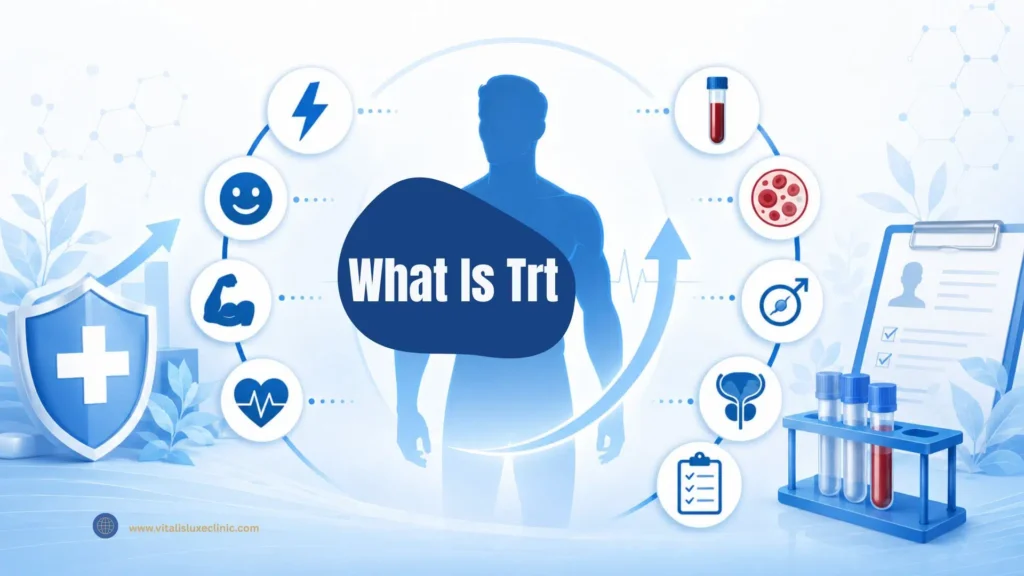

TRT stands for testosterone replacement therapy. It is a medically prescribed treatment for men who have symptoms of testosterone deficiency and repeatedly low testosterone levels confirmed through blood testing.
TRT provides the body with testosterone through treatments such as injections or gels. Its purpose is to restore testosterone to an appropriate range and reduce symptoms associated with clinically low testosterone, also called male hypogonadism.
TRT is not a general energy booster, bodybuilding programme or anti-ageing treatment. A safe treatment pathway requires proper testing, a medical assessment and ongoing monitoring because testosterone treatment can affect fertility, red blood cell production, sleep, prostate health and other areas of the body.
To understand the hormone being replaced, read our guide explaining what is testosterone is and what it does.
Medical disclaimer: This article provides general information and does not replace personal medical advice, diagnosis or treatment. Speak with a qualified healthcare professional about symptoms or concerns relating to testosterone.
Table of Contents
What Is TRT and How Does It Work?
TRT, or testosterone replacement therapy, is a treatment that gives the body testosterone when it cannot produce enough naturally. It is mainly used for men with symptoms and medically confirmed testosterone deficiency.
The treatment aims to bring testosterone into an appropriate physiological range. This means restoring a deficient hormone level rather than pushing testosterone above the normal range for increased muscle growth or athletic performance.
What Does TRT Stand For?
TRT stands for testosterone replacement therapy.
You may also see similar terms, including:
- Testosterone therapy
- Testosterone treatment
- Androgen replacement therapy
- Male hormone replacement therapy
These terms are often used interchangeably. However, medically supervised TRT specifically refers to prescribed testosterone used to treat a diagnosed deficiency.
The medical term for testosterone deficiency is hypogonadism. It can develop when the testicles do not produce enough testosterone or when the pituitary gland or hypothalamus does not send the correct hormonal signals to the testicles.
How Does Testosterone Replacement Therapy Work?
TRT introduces testosterone from outside the body. Once absorbed, it enters the bloodstream and acts on androgen receptors in tissues such as the muscles, bones, brain and reproductive system.
In a suitable patient, restoring a low testosterone level may help improve symptoms involving sexual health, physical strength, mood, bone health and general well-being.
TRT replaces missing testosterone, but it does not always cure the underlying reason why testosterone became low. A man with a permanent problem affecting his testicles or pituitary gland may therefore require long-term treatment.
How TRT Affects Natural Hormone Production
The brain normally controls testosterone production through hormones called luteinising hormone, or LH, and follicle-stimulating hormone, or FSH.
When testosterone is supplied from outside the body, the brain may reduce these signals. This can lower natural testosterone production inside the testicles and reduce sperm production. Fertility should therefore be discussed before treatment begins.
Why Is TRT Used?
TRT is primarily used to treat men with symptomatic testosterone deficiency.
Treatment should normally be considered only when relevant symptoms are present and low testosterone has been confirmed through appropriate blood testing. A low result without symptoms, or symptoms without low results, may not be enough to support a diagnosis.
What Is Hypogonadism?
Hypogonadism is a condition in which the body does not produce an adequate amount of testosterone.
There are two main forms:
Primary Hypogonadism
Primary hypogonadism begins in the testicles. The testicles do not respond normally to hormonal signals and cannot produce enough testosterone.
Possible causes can include testicular injury, infection, genetic conditions, medical treatment or damage to testicular tissue.
Secondary Hypogonadism
Secondary hypogonadism involves the pituitary gland or hypothalamus. These areas of the brain normally send signals that tell the testicles to produce testosterone.
When those signals are reduced or interrupted, testosterone production can fall even when the testicles themselves are capable of working.
Low testosterone may also be associated with obesity, type 2 diabetes, excess alcohol use, sleep problems, certain medicines and previous anabolic steroid use. Some potentially reversible causes should be addressed before long-term testosterone treatment is considered.
What Are the Symptoms of Low Testosterone?
Symptoms associated with testosterone deficiency can affect sexual health, physical health and emotional well-being.
Possible symptoms include:
- Reduced sex drive
- Fewer spontaneous or morning erections
- Erectile difficulties
- Persistent tiredness
- Reduced strength
- Loss of muscle mass
- Increased body fat
- Lower exercise tolerance
- Low mood
- Reduced motivation
- Irritability
- Difficulty concentrating
- Reduced facial or body hair
- Lower bone density
- Fertility problems
These symptoms are not unique to low testosterone. They can also be related to stress, anxiety, depression, thyroid conditions, diabetes, poor sleep, obstructive sleep apnoea, obesity, medication side effects and other medical problems.
Why Symptoms Alone Are Not Enough
Someone may experience fatigue, low mood or reduced libido while still having a healthy testosterone level.
Similarly, someone may have a testosterone result below a laboratory reference range without experiencing clear symptoms.
A clinician should therefore assess the symptoms, blood results, medical history and possible alternative causes together. TRT should not be prescribed solely because someone feels tired or believes their testosterone may be low.
How Is Low Testosterone Diagnosed Before TRT?
A safe TRT pathway begins with a full assessment.
This normally includes a discussion of symptoms, medical history, medication, lifestyle, fertility goals and previous hormone or anabolic steroid use.
Morning Testosterone Blood Tests
Testosterone levels naturally change during the day and are generally higher in the morning.
For this reason, testing is usually carried out in the morning. The NHS patient information reviewed for this article advises that low testosterone should be shown on at least two morning blood tests before replacement treatment is considered.
One blood test should not be interpreted in isolation. Illness, lack of sleep, calorie restriction, medication, alcohol and other temporary factors may affect a result.
Additional Blood Tests
A clinician may also assess markers such as:
- Total testosterone
- Free or calculated free testosterone
- Sex hormone-binding globulin, or SHBG
- Luteinising hormone, or LH
- Follicle-stimulating hormone, or FSH
- Prolactin
- Full blood count
- Haemoglobin and haematocrit
- Liver and kidney function
- Cholesterol and metabolic health
- Prostate-specific antigen, or PSA, where appropriate
These tests can help identify the possible cause of low testosterone and provide baseline results for future monitoring.
Who May Be Suitable for TRT?
TRT may be considered for an adult man who:
- Has symptoms consistent with testosterone deficiency
- Has repeatedly low testosterone results
- Has completed an appropriate medical assessment
- Has discussed treatment benefits and risks
- Has no untreated condition that makes treatment unsuitable
- Understands the possible effect on fertility
- Is willing to attend follow-up appointments and blood tests
The decision should be individual. Two men with similar testosterone results may receive different recommendations because their symptoms, medical histories, fertility plans and health risks are different.
Who May Need Further Assessment?
TRT may be unsuitable or require specialist assessment in men with certain conditions.
These can include:
- A current desire to father children
- Elevated red blood cell levels or haematocrit
- Untreated severe obstructive sleep apnoea
- Untreated heart failure
- A recent heart attack or stroke
- Prostate or male breast cancer concerns
- An unexplained prostate lump
- Significant urinary symptoms
- A history of blood-clotting problems
These factors do not always lead to the same decision for every patient. A qualified clinician must consider the person’s individual risks and circumstances.
Is Age-Related Decline Enough to Start TRT?
Testosterone levels can decline gradually with age. However, ageing alone does not automatically mean that a man has hypogonadism or needs treatment.
The NHS describes late-onset hypogonadism as a specific medical condition rather than a normal or inevitable part of ageing. Mayo Clinic also notes that evidence does not support using testosterone simply to promote youth or vitality in otherwise healthy older men.
What Types of TRT Are Available?
TRT is available in several forms. The appropriate option depends on the patient’s medical history, lifestyle, preferences, treatment response and ability to follow the required routine.
Testosterone Injections
Testosterone injections deliver the medication into a muscle or, with certain preparations and appropriate training, under the skin.
Some injections are given relatively frequently, while longer-acting formulations may be administered several weeks apart.
Possible advantages include reliable delivery and less frequent daily treatment. However, some injection schedules may produce changes between higher levels after an injection and lower levels before the next dose. This can sometimes be associated with changes in mood, energy or symptoms.
Testosterone Gels
Testosterone gel is applied to clean, dry skin, usually once each day.
It can provide regular absorption without injections, but it must be applied consistently. Patients also need to take precautions to prevent wet gel from transferring to another person through skin contact.
Hands should be washed after application, and the treated area may need to be covered once the gel has dried. Patients should follow the instructions for their specific medication.
Other Testosterone Preparations
Depending on availability and clinical circumstances, other forms can include:
- Skin patches
- Oral testosterone
- Buccal preparations placed near the gum
- Nasal gel
- Testosterone pellets or implants
Not every preparation is commonly available or routinely prescribed in the UK.
Which TRT Method Is Best?
There is no single method that is best for every patient.
The choice may depend on:
- Lifestyle and daily routine
- Preference for or avoidance of injections
- Skin sensitivity
- Risk of gel transfer
- Treatment availability
- Cost
- Stability of testosterone levels
- Side effects
- Monitoring results
Read our detailed comparison of testosterone gel versus injections.
What Are the Potential Benefits of TRT?
In men with confirmed testosterone deficiency, TRT may improve some symptoms and health measures.
Possible benefits include:
- Improved sexual desire
- Improvement in some aspects of sexual function
- Increased lean muscle mass
- Improved muscle strength
- Better bone density
- Improved mood and well-being
- Restoration of facial or body hair in some patients
- Improvement in anaemia associated with testosterone deficiency
The response varies between patients. TRT does not guarantee that every symptom will disappear, especially when symptoms have more than one cause.
Can TRT Improve Erectile Dysfunction?
TRT may help sexual function when low testosterone is contributing to the problem.
However, erectile dysfunction can also be caused by cardiovascular disease, diabetes, medication, stress, anxiety, nerve damage and circulation problems. Restoring testosterone may not resolve erectile dysfunction caused by another condition.
Can TRT Improve Energy and Mood?
Some men with testosterone deficiency report improvements in mood or general well-being after treatment.
However, evidence for using testosterone to improve energy or vitality in otherwise healthy older men is limited. Other causes of tiredness or low mood should be investigated rather than assuming that testosterone is responsible.
What Are the Risks and Side Effects of TRT?
TRT can cause side effects, even when it is prescribed for a genuine medical reason.
Possible side effects include:
- Acne or oily skin
- Headaches
- Fluid retention
- Weight gain
- Breast tenderness or enlargement
- Skin irritation from topical treatment
- Mood changes
- Painful or prolonged erections
- Increased red blood cell production
- Elevated haematocrit
- Reduced sperm production
- Reduced testicular size
- Worsening sleep apnoea
- Prostate enlargement or urinary symptoms
The likelihood and severity of side effects depend on the patient, treatment form, dose and testosterone level achieved. Regular follow-up helps identify problems and allows treatment to be adjusted.
TRT and Fertility
TRT can significantly reduce sperm production.
When testosterone is supplied from outside the body, LH and FSH signals can fall. These hormones are needed to support testosterone production within the testicles and normal sperm production.
Possible effects include:
- Lower sperm count
- Reduced testicular size
- Subfertility
- Temporary or prolonged infertility
Men who want children now or in the future should discuss fertility before starting TRT. They may need specialist advice or a different treatment approach.
Read our complete guide to TRT and male fertility.
TRT and Red Blood Cells
Testosterone can increase red blood cell production.
If haematocrit becomes too high, the clinician may reduce the dose, change the treatment schedule, switch to another preparation or temporarily stop treatment. This is why a full blood count forms an important part of TRT monitoring.
TRT and Prostate Health
Testosterone treatment may increase prostate size or worsen urinary symptoms in some men.
PSA testing and prostate assessment may be appropriate depending on age, symptoms and individual risk factors. An unexplained prostate concern should be investigated before starting treatment.
TRT and Cardiovascular Health
Research into testosterone treatment and cardiovascular risk has produced mixed findings. A clinician should consider personal risk factors such as cardiovascular disease, blood pressure, obesity, smoking, clotting history and elevated haematocrit when deciding whether treatment is appropriate.
For a deeper safety discussion, read TRT side effects, risks and warning signs.
Is TRT the Same as Steroids?
Testosterone is technically a steroid hormone. However, medically supervised TRT is different from non-medical anabolic steroid misuse.
| Medically supervised TRT | Non-medical steroid use |
|---|---|
| Treats a diagnosed testosterone deficiency | Often used for muscle growth or performance |
| Aims for an appropriate physiological range | May create testosterone levels far above the normal range |
| Requires medical assessment | May begin without proper diagnosis |
| Uses prescribed medication | May involve unregulated products |
| Includes regular blood monitoring | Monitoring may be absent |
| Uses an individual treatment plan | May involve cycles and multiple substances |
TRT should not be marketed or used as a bodybuilding cycle. Cleveland Clinic specifically advises that testosterone replacement is intended for medical purposes rather than non-medical bodybuilding or preventing normal ageing changes.
How Long Does TRT Take to Work?
TRT does not produce all its effects immediately.
Some symptoms may begin to change within the first several weeks, while physical changes involving muscle, body composition or bone health generally take longer.
The treatment timeline depends on:
- The cause and severity of the deficiency
- The chosen treatment method
- The prescribed dose
- How consistently treatment is followed
- Other medical conditions
- Sleep and general health
- Diet and physical activity
- Whether low testosterone was the true cause of the symptoms
Patients should not increase or alter treatment based only on how they feel during the early stages. Symptoms, blood results and side effects must be reviewed together.
What Monitoring Is Required During TRT?
TRT requires ongoing medical monitoring.
Follow-up is used to determine whether treatment is effective, whether testosterone levels are appropriate and whether side effects are developing.
Monitoring may include:
- Testosterone blood levels
- Full blood count
- Haemoglobin and haematocrit
- PSA where appropriate
- Blood pressure
- Liver and metabolic markers
- Sexual symptoms
- Mood and general well-being
- Sleep symptoms
- Urinary symptoms
- Skin reactions
- Fertility concerns
Once treatment is stable and no adverse effects have been identified, the timing of ongoing reviews will be decided by the clinician. Monitoring requirements may differ according to the treatment type and individual risk.
Is TRT Legal in the UK?
TRT is a recognised medical treatment in the UK. Testosterone medication can be supplied lawfully through an appropriate prescription.
Testosterone and other anabolic steroids are controlled Class C medicines. Patients should avoid obtaining testosterone from unverified websites, gyms, social-media sellers or any source operating outside proper medical and pharmacy controls. Unregulated medication may have an incorrect dose, unknown ingredients or unsafe contamination.
Can You Get TRT Through the NHS?
A GP may arrange testosterone testing when symptoms suggest a possible deficiency.
When results and symptoms indicate hypogonadism, the patient may be referred to an endocrinologist or another relevant specialist. If the diagnosis is confirmed, testosterone replacement may be offered as an injection or gel.
NHS pathways and eligibility can vary between areas.
What About Private TRT Treatment?
Vitalis Luxe Clinic provides doctor-led testosterone assessment and TRT care for men who are concerned about symptoms of low testosterone.
The process is designed to determine whether symptoms are connected to testosterone deficiency and whether treatment is medically appropriate.
Testosterone Blood Testing
Blood testing is used to assess testosterone and other relevant health markers.
Testing may include:
- Total testosterone
- Free or calculated free testosterone
- SHBG
- LH
- FSH
- Prolactin
- Full blood count
- Haematocrit
- Liver and kidney function
- PSA where appropriate
The results are reviewed together rather than relying on one testosterone number.
Medical TRT Consultation
During the consultation, the clinician reviews:
- Current symptoms
- Medical history
- Medication
- Previous blood results
- Lifestyle
- Sleep
- Sexual health
- Fertility plans
- Possible TRT risks
- Treatment expectations
This assessment helps identify whether another health condition may be causing the symptoms.
Personalised Treatment Planning
When TRT is clinically appropriate, the clinician explains:
- Available treatment options
- How the treatment is used
- Expected benefits
- Possible side effects
- Fertility implications
- Monitoring requirements
- Treatment costs
- When follow-up is required
Treatment is based on the patient’s blood results, symptoms, medical history and treatment goals.
Ongoing TRT Monitoring
TRT should not end with a prescription.
Ongoing monitoring is used to review:
- Testosterone levels
- Symptom response
- Haematocrit
- Treatment side effects
- Blood pressure
- Prostate health where appropriate
- Sleep symptoms
- Fertility concerns
- Whether the dose remains suitable
The treatment plan may be adjusted according to blood results, symptoms and safety.
At Vitalis Luxe Clinic, our doctor-led testosterone replacement therapy service is designed to confirm whether your symptoms are connected to testosterone deficiency and whether TRT is medically appropriate for you.
Is TRT a Lifelong Treatment?
TRT is often long term when the underlying testosterone deficiency is permanent.
If treatment is stopped, testosterone levels may return towards their previous level and symptoms may return. The body may take time to restart natural testosterone production after external testosterone is withdrawn.
Treatment should not be stopped suddenly without discussing the decision with the prescribing clinician.
Frequently Asked Questions About TRT
What does TRT stand for?
TRT stands for testosterone replacement therapy. It is a prescribed medical treatment that provides testosterone to people whose bodies do not produce enough of the hormone naturally.
What is TRT used for?
TRT is mainly used to treat symptomatic testosterone deficiency or hypogonadism. Treatment is considered when symptoms are supported by repeatedly low testosterone blood-test results and a medical assessment.
What does TRT do to the body?
TRT increases the amount of testosterone available to body tissues. In suitable patients, it may support sexual function, muscle mass, bone density, mood and well-being. It can also reduce natural testosterone and sperm production.
Who is TRT for?
TRT is generally intended for men with symptoms of testosterone deficiency and consistently low levels confirmed through appropriate testing. It is not intended as a general anti-ageing or bodybuilding treatment.
Is TRT safe?
TRT can be appropriate for carefully selected and monitored patients, but it is not risk-free. It can affect fertility, haematocrit, sleep apnoea, prostate symptoms and other areas of health. Individual assessment and follow-up are essential.
Is TRT a steroid?
Testosterone is a steroid hormone, but medical TRT is different from a non-medical steroid cycle. TRT aims to restore deficient testosterone to an appropriate range under medical supervision.
Does TRT affect fertility?
Yes. TRT can reduce LH and FSH signals and significantly lower sperm production. Men who want biological children should discuss this before beginning treatment.
How long does TRT take to work?
Some men may notice early symptom changes within several weeks, while improvements in body composition, muscle or bone health can take longer. Results vary according to the patient and treatment plan.
Can TRT be stopped?
TRT can be stopped under medical guidance. Testosterone levels and symptoms may return towards their previous baseline, and natural production may take time to recover.
Is TRT legal in the UK?
Yes. Medically prescribed TRT is legal in the UK. Testosterone should be obtained through an appropriate prescriber and regulated pharmacy rather than an unverified seller.
Can you get TRT on the NHS?
TRT may be available through the NHS when testing and specialist assessment confirm a testosterone deficiency. Access and referral pathways can differ between local NHS areas.
Is TRT normally a lifelong treatment?
It may be long term when the cause of testosterone deficiency is permanent. The expected treatment duration should be discussed during the medical assessment and reviewed over time.
Is TRT Right for You?
TRT is a medical treatment for people with symptoms and clinically confirmed testosterone deficiency. It may provide meaningful benefits for suitable patients, but it can also affect fertility, red blood cell production, sleep and other areas of health.
The correct first step is not to buy testosterone or begin treatment without assessment. It is to discuss your symptoms, complete appropriate blood testing and identify whether another health condition may be responsible.
Conclusion
Understanding TRT can help you ask the right questions about your health, but the decision to start treatment should be based on your own symptoms, blood-test results, medical history and fertility plans. Instead of relying on online claims or other people’s experiences, speak with a qualified clinician who can explain your options and help you make an informed decision.