





Testosterone is essential for men’s health. It influences:
- Muscle mass and strength
- Bone density
- Mood and mental clarity
- Energy levels
- Sexual function and libido
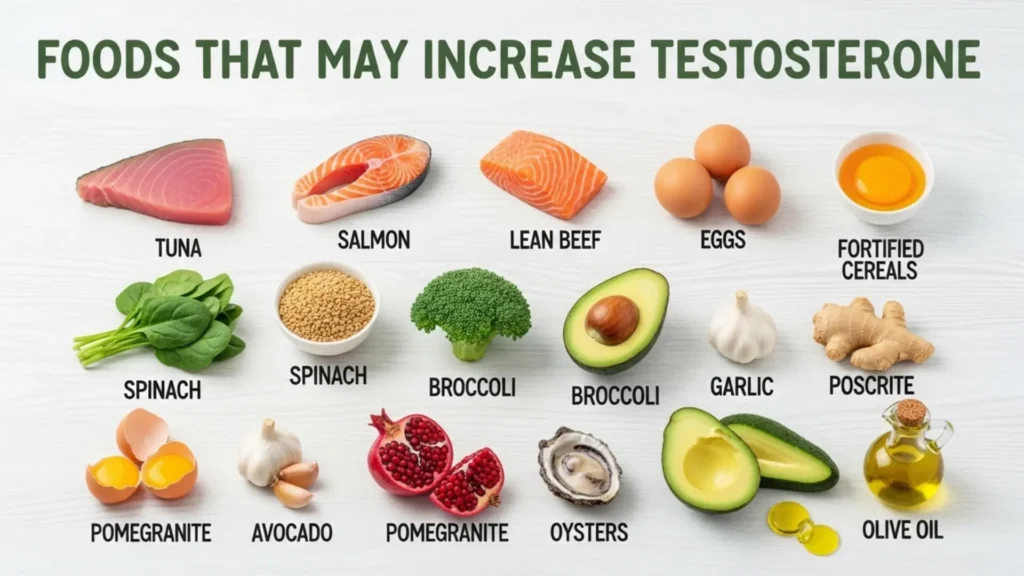
While many factors affect testosterone, your diet plays a significant role. If you’re wondering What Foods Increase Testosterone, the answer lies in choosing the right nutrients that support your body’s natural hormone production. Foods rich in healthy fats, protein, vitamins, and minerals can help maintain and even boost testosterone levels naturally.
Table of Contents
Understanding the Diet-Testosterone Connection
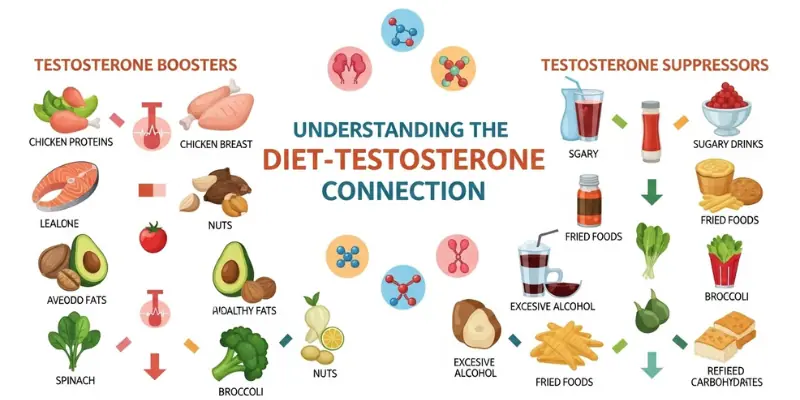
Your body needs specific nutrients to produce testosterone efficiently:
- Zinc – Essential for testosterone synthesis
- Vitamin D – Directly linked to hormone levels
- Magnesium – Supports testosterone production, especially with exercise
- Healthy Fats – Building blocks for hormone creation
- Antioxidants – Protect against oxidative stress
Strategic dietary choices can make a meaningful difference in supporting healthy testosterone levels.
Top 10 Testosterone-Boosting Foods
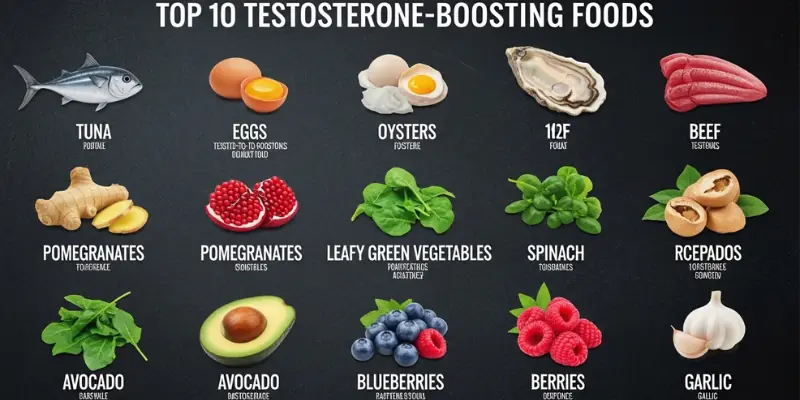
Here’s a quick reference guide to the best foods for supporting healthy testosterone levels:
| Food | Key Nutrients | Primary Benefit |
|---|---|---|
| Fatty Fish (Salmon, Mackerel) | Omega-3, Vitamin D, Zinc | Hormone production support |
| Oysters | Zinc, Selenium | Direct testosterone synthesis |
| Eggs (Whole) | Cholesterol, Vitamin D, Protein | Testosterone building blocks |
| Leafy Greens (Spinach, Kale) | Magnesium, Vitamins | Hormone balance |
| Extra Virgin Olive Oil | Monounsaturated Fats | Increased testosterone levels |
| Pomegranates | Antioxidants | Reduced oxidative stress |
| Garlic & Onions | Allicin, Quercetin | Luteinizing hormone support |
| Ginger | Gingerol | Enhanced testosterone production |
| Brazil Nuts | Selenium | Sperm health & testosterone |
| Avocados | Healthy Fats, Boron, Magnesium | Hormone production |
Now let’s explore each food in detail.
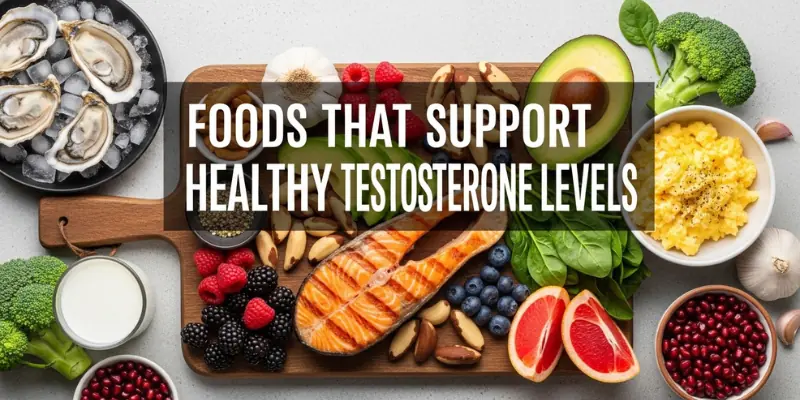
Foods That Support Healthy Testosterone Levels
1. Fatty Fish
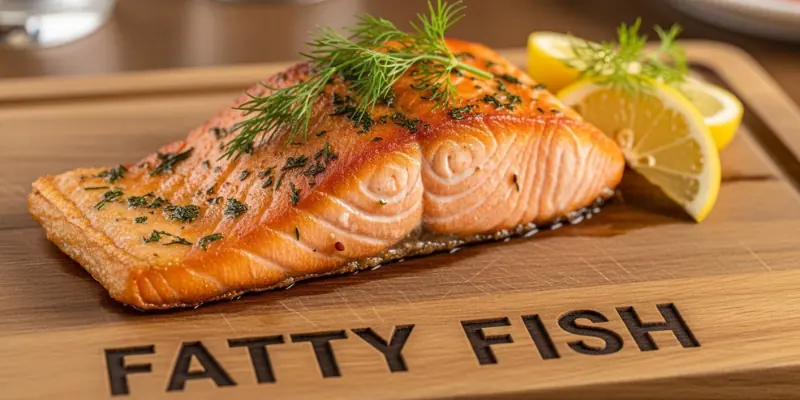
Best choices: Salmon, mackerel, sardines, herring
Fatty fish are exceptional for testosterone support. They provide three critical nutrients:
- Omega-3 fatty acids – Reduce inflammation and support hormone production
- Vitamin D – Directly linked to testosterone levels
- Zinc – Essential for testosterone synthesis
UK relevance: Many British men have low vitamin D, especially in the winter months. Fatty fish helps bridge this gap.
How to include it:
- 2-3 servings weekly
- Grilled salmon with vegetables
- Tinned sardines on wholegrain toast
- Mackerel salad
2. Oysters and Shellfish
Best choices: Oysters, crab, mussels, prawns
Oysters are nature’s testosterone superfood. The science backs up their aphrodisiac reputation.
Key benefits:
- Extraordinarily high in zinc
- Six medium oysters = 500% of daily zinc needs
- Essential for testosterone and sperm production
Other shellfish like crab, mussels, and prawns also provide excellent zinc content.
How to include it:
- Fresh oysters at restaurants
- Seafood platters
- Prawn stir-fries
- Crab salads
Ready to Boost Your Testosterone?
3. Eggs (Whole)
Important: Don’t skip the yolk—that’s where the testosterone-supporting nutrients live.
Why eggs work:
- Healthy cholesterol (testosterone building block)
- High-quality protein
- Vitamin D
- Selenium
How to include it:
- Scrambled, poached, or boiled
- Omelettes with vegetables
- Hard-boiled eggs as snacks
4. Leafy Green Vegetables
Best choices: Spinach, kale, Swiss chard, collard greens
Dark leafy greens are magnesium powerhouses.
Benefits:
- Support testosterone levels (especially with exercise)
- May help reduce excess estrogen in men
- Rich in vitamins and minerals
How to include it:
- Spinach in smoothies
- Sautéed kale as a side dish
- Mixed green salads daily
- Steamed Swiss chard
5. Extra Virgin Olive Oil
Quality matters: Choose cold-pressed, extra virgin in dark bottles.
Regular olive oil consumption has been linked to increased testosterone levels.
Key nutrients:
- Monounsaturated fats
- Powerful antioxidants
- Anti-inflammatory compounds
How to include it:
- Primary cooking oil
- Salad dressings
- Drizzle over vegetables
- Bread dipping
6. Pomegranates
This ancient fruit offers modern testosterone benefits.
Why it works:
- High in antioxidants
- Reduces oxidative stress
- May increase salivary testosterone
- Improves mood and well-being
How to include it:
- Fresh pomegranate seeds in salads
- Pure pomegranate juice (no added sugar)
- As a healthy snack
- In smoothies
7. Onions and Garlic
Not glamorous, but highly effective.
Benefits:
- May increase luteinizing hormone (triggers testosterone production)
- Contains allicin and quercetin
- Supports overall hormonal health
How to include it:
- Use fresh in cooking
- Raw in salads
- Roasted as side dishes
- Foundation of most savory meals
8. Ginger
This common spice shows real promise for testosterone support.
Research shows:
- May increase testosterone production
- Improves sperm health
- Reduces inflammation
How to include it:
- Fresh ginger in stir-fries
- Ginger tea (hot or iced)
- Added to smoothies
- Grated into soups
9. Brazil Nuts
Caution: Don’t overdo it. 3-4 nuts daily are enough.
Why they work:
- Extremely high in selenium
- Supports testosterone production
- Improves sperm quality
- Supports thyroid function
How to include it:
- As a convenient snack
- Chopped in yogurt or porridge
- Mixed into the trail mix
10. Avocados
Rich in hormone-supporting healthy fats.
Key nutrients:
- Monounsaturated fats
- Boron
- Magnesium
- Vitamin E
How to include it:
- Avocado toast
- In salads
- As guacamole
- Blended in smoothies
Foods to Limit for Optimal Testosterone
What you avoid is just as important as what you eat.
| Food/Drink | Why to Limit | Impact on Testosterone |
|---|---|---|
| Excessive Alcohol | Reduces production, increases estrogen | High negative impact |
| Processed Foods | High trans fats, low nutrients | Moderate negative impact |
| High-Sugar Foods | Spikes insulin, disrupts hormones | Moderate negative impact |
| Excessive Soy | May impact hormone balance | Low to moderate (in excess) |
| Mint (Large Amounts) | May reduce testosterone | Low (very high consumption) |
Key points:
- Alcohol – Heavy drinking significantly reduces testosterone and increases estrogen
- Processed foods – Trans fats and lack of nutrients don’t support hormonal health
- Sugar – Elevated blood sugar and insulin negatively affect testosterone
- Soy – Moderate amounts are fine; excessive intake may be problematic for some men
- Mint – Only an issue with very large quantities of spearmint or peppermint
Beyond Diet: Supporting Healthy Testosterone Naturally
Nutrition is important, but other lifestyle factors matter too:
Exercise
- Resistance training (weight lifting)
- High-intensity interval training (HIIT)
- Regular physical activity
Sleep
- Aim for 7-9 hours nightly
- Poor sleep significantly reduces testosterone
- Quality matters as much as quantity
Stress Management
- Chronic stress elevates cortisol
- High cortisol suppresses testosterone
- Practice relaxation techniques
Healthy Body Weight
- Excess body fat converts testosterone to estrogen
- Maintaining a healthy weight supports hormone balance
- Even modest weight loss can help
Reduce Toxin Exposure
- Avoid BPA plastics when possible
- Choose natural personal care products
- Limit exposure to endocrine disruptors
When Diet Alone Isn’t Enough
For some men, lifestyle changes aren’t sufficient to address clinically low testosterone.
Signs you may need professional help:
- Persistent fatigue and low energy
- Reduced libido and sexual function
- Difficulty building or maintaining muscle
- Mood changes (irritability, depression)
- Decreased motivation and focus
- Brain fog and memory issues
- Increased body fat despite diet and exercise
Important: If you’re experiencing these symptoms, have your testosterone levels properly assessed by a qualified medical professional.
Professional testosterone replacement therapy can be transformative for men with diagnosed low testosterone, restoring energy, vitality, and quality of life when dietary and lifestyle interventions haven’t provided adequate results.
The Bottom Line
Key Takeaways:
✓ Include testosterone-supporting foods regularly in your diet
✓ Focus on zinc, vitamin D, magnesium, and healthy fats
✓ Combine good nutrition with exercise, sleep, and stress management
✓ Limit alcohol, processed foods, and excessive sugar
✓ Monitor your symptoms and energy levels
Remember: No single food is a miracle cure. Think of these dietary choices as part of a comprehensive approach to men’s health.
However, if you suspect low testosterone, dietary changes should complement—not replace—professional medical evaluation and treatment when necessary.