



Why Testosterone Matters More Than You Think
Testosterone. It’s the hormone most associated with masculinity, but its role in men’s health goes far deeper than muscle and sex drive. Testosterone governs your energy, your mood, your metabolism, your bone density, your sleep quality, and even the sharpness of your thinking.
And in the UK today, millions of men are walking around with levels that are clinically or subclinically low — without even knowing it.
According to data from the British Society for Sexual Medicine and NHS clinical reviews, testosterone deficiency (hypogonadism) affects an estimated 1 in 5 men over the age of 45 in the United Kingdom. More concerningly, lifestyle-driven low testosterone is increasingly being observed in men in their 20s and 30s — a trend that has alarmed endocrinologists and men’s health specialists alike.
Table of Contents
The question is: what can you do about it?
This is the most comprehensive, up-to-date guide on how to increase testosterone available in the UK. Whether you’re looking for natural lifestyle strategies, dietary changes, evidence-based supplements, or want to understand when medical treatment like Testosterone Replacement Therapy (TRT) may be appropriate, everything you need is in this article.
What Is Testosterone?
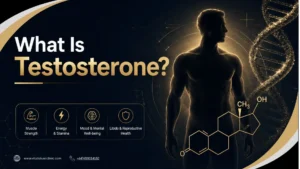
Testosterone is a steroid hormone produced primarily in the Leydig cells of the testes in men, with small amounts also produced by the adrenal glands. It belongs to the androgen family and is regulated by the hypothalamic-pituitary-gonadal (HPG) axis — a feedback loop that continually monitors and adjusts hormonal output.
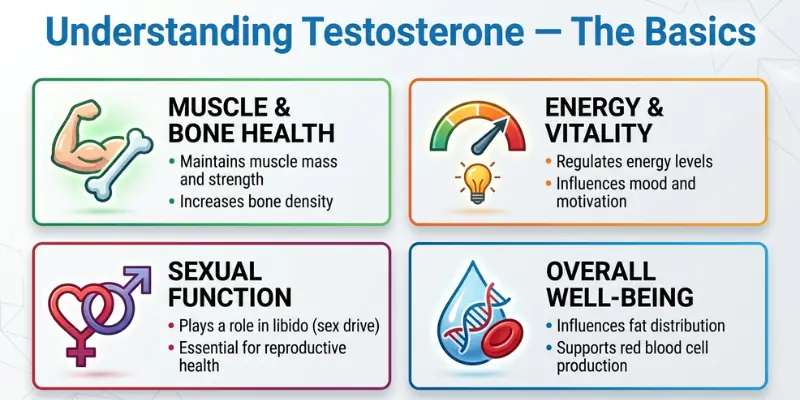
In men, testosterone is responsible for:
- Development of primary and secondary sexual characteristics
- Sperm production and male fertility
- Libido and sexual function
- Muscle mass, strength, and physical performance
- Bone mineral density
- Red blood cell production
- Fat distribution and metabolic rate
- Mood, motivation, cognitive function, and confidence
- Sleep quality and circadian rhythm regulation
- Cardiovascular health (in complex, nuanced ways)
In short, there is almost no system in the male body that testosterone does not influence.
What Are Normal Testosterone Levels in the UK?
In the UK, testosterone levels are typically measured in nanomoles per litre (nmol/L) — note this differs from the US, which uses ng/dL. Here’s a conversion guide and reference ranges:
| Classification | nmol/L (UK) | ng/dL (US equivalent) |
| Low (hypogonadal) | Below 8 nmol/L | Below ~230 ng/dL |
| Low-normal (borderline) | 8–12 nmol/L | ~230–345 ng/dL |
| Normal range | 12–30 nmol/L | ~345–865 ng/dL |
| Optimal | 15–25 nmol/L | ~430–720 ng/dL |
According to NHS England and the Endocrine Society, a diagnosis of hypogonadism typically requires a morning total testosterone below 8–12 nmol/L confirmed on two separate readings, combined with clinical symptoms. However, many men experience significant symptoms even in the “normal” range, particularly with total testosterone below 15 nmol/L.
Free testosterone — the biologically active fraction not bound to proteins — is also an important measure. SHBG (sex hormone-binding globulin) levels significantly affect how much testosterone is biologically available.
Why Do Testosterone Levels Decline?
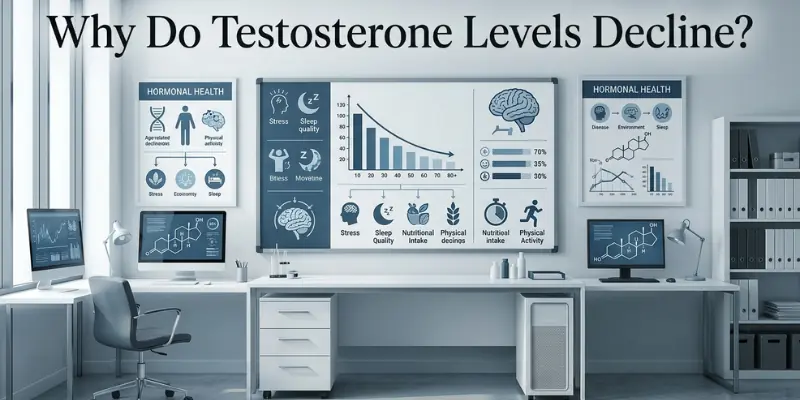
Testosterone levels naturally peak in the late teens and early twenties and begin declining at roughly 1–2% per year from age 30. By age 40, many men have experienced a 10–20% decline. By age 50–60, the decline is often 20–50% below peak levels.
However, this is not purely an ageing story. A landmark 2020 study published in the Journal of Clinical Endocrinology & Metabolism confirmed that testosterone levels in men today are significantly lower than in men of the same age measured in the 1980s and 1990s — at virtually every age bracket. This is not explained by ageing alone.
The drivers of this population-wide decline include chronic stress, disrupted sleep, sedentary lifestyles, obesity, ultra-processed food consumption, endocrine-disrupting chemicals in the environment, and chronically elevated cortisol. These are all, to varying degrees, modifiable — and that’s the good news.
Signs and Symptoms of Low Testosterone
Before exploring how to increase testosterone, it’s worth understanding how low testosterone actually feels. Many men live with these symptoms for years without connecting them to a hormonal cause.
Physical Symptoms of Low Testosterone
- Persistent fatigue and low energy — not relieved by sleep
- Reduced muscle mass — difficulty building or maintaining muscle even with training
- Increased body fat — particularly abdominal or visceral fat
- Reduced physical strength and exercise performance
- Decreased bone density — increased risk of fractures (diagnosed via DEXA scan)
- Reduced body and facial hair
- Gynaecomastia — development of breast tissue in men
- Testicular atrophy — reduced testicular size
- Joint aches and reduced recovery from exercise
- Anaemia — testosterone supports red blood cell production; low levels can cause mild anaemia
Sexual Symptoms of Low Testosterone
- Reduced libido — diminished sexual desire or drive
- Erectile dysfunction (ED) — difficulty achieving or maintaining erections
- Fewer spontaneous (morning) erections
- Reduced semen volume
- Infertility or reduced sperm count
- Decreased sexual satisfaction
Psychological and Cognitive Symptoms
- Depression or persistent low mood
- Anxiety and irritability
- Brain fog — difficulty concentrating or thinking clearly
- Memory problems
- Reduced motivation and drive
- Loss of competitiveness and confidence
- Emotional blunting — feeling “flat” or disconnected
- Social withdrawal
Metabolic and Systemic Symptoms
- Weight gain and difficulty losing fat despite diet and exercise
- Elevated blood sugar or developing insulin resistance
- Worsening cholesterol levels
- Poor sleep quality or insomnia
- Night sweats (less commonly recognised in men)
- Hot flushes — yes, these occur in men with low testosterone too
If you recognise five or more of these symptoms, particularly in combination, it is strongly advisable to seek a comprehensive hormone assessment with a qualified clinician. At Vitalis Luxe Clinic, we offer thorough hormonal blood panels with same-day or next-day results.
How to Increase Testosterone Naturally
The good news for men with low-normal or borderline testosterone is that lifestyle modification can produce meaningful — sometimes dramatic — improvements in testosterone levels. These strategies are evidence-based and appropriate for any man looking to optimise his hormonal health.
1. Optimise Your Sleep — The Single Biggest Natural Testosterone Booster
If you only make one change, make it this one. Sleep is when the vast majority of testosterone production occurs. The body’s testosterone is released in pulses primarily during deep sleep (slow-wave sleep), with a pronounced surge occurring during REM sleep in the early morning hours — which is why healthy men experience morning erections.
Research published in the Journal of the American Medical Association (JAMA) found that sleeping just 5 hours per night for one week reduced testosterone levels in young healthy men by 10–15% — equivalent to ageing 10–15 years overnight.
Evidence-based sleep strategies to boost testosterone:
- Aim for 7–9 hours of uninterrupted sleep per night
- Maintain a consistent sleep schedule — same bedtime and wake time, including weekends
- Sleep in a cool, dark, quiet room (room temperature of 16–18°C is optimal)
- Avoid screens (blue light) for 60–90 minutes before bed
- Limit alcohol — it suppresses REM sleep and directly impairs testosterone synthesis
- Address sleep apnea if present — it causes severe testosterone suppression and is very common in overweight men
2. Resistance Training — The Best Exercise to Increase Testosterone
Not all exercise is equal when it comes to testosterone. Resistance training — particularly heavy compound movements — is the most potent exercise-based stimulus for testosterone production.
Studies consistently demonstrate that heavy resistance training acutely raises testosterone levels for 15–30 minutes post-workout and, over time, supports higher baseline testosterone levels through improved body composition, reduced visceral fat, and improved insulin sensitivity.
Best exercises to boost testosterone:
- Squats — the single most testosterone-stimulating exercise
- Deadlifts — full-body compound movement with massive hormonal response
- Bench press — heavy chest pressing recruits large muscle groups
- Pull-ups and rows — upper body pulling movements
- Overhead press — compound shoulder and tricep engagement
- Hip thrusts — posterior chain training linked to testosterone response
Training principles that maximise testosterone response:
- Prioritise compound multi-joint movements over isolation exercises
- Train with heavy weights — 70–85% of your one-rep max — in the 3–6 rep range
- Keep rest periods between 60 and 120 seconds for maximal hormonal stimulus
- Train 3–5 times per week — consistency matters more than volume
- Avoid chronic overtraining — excessive training without adequate recovery elevates cortisol and suppresses testosterone
3. High-Intensity Interval Training (HIIT)
HIIT — short bursts of maximal effort exercise followed by brief recovery — has been shown to significantly boost testosterone while simultaneously reducing cortisol more effectively than long-duration steady-state cardio.
A 2012 study in the European Journal of Applied Physiology found that HIIT produced significantly higher testosterone responses than moderate-intensity continuous exercise. Sprint intervals, cycling sprints, rowing intervals, and battle rope circuits are all excellent HIIT modalities.
Note: Chronic endurance training (marathon running, long-distance cycling) at high volumes is associated with lower testosterone in men. If you’re a high-volume endurance athlete, this is an important consideration.
4. Optimise Your Diet to Increase Testosterone
What you eat profoundly influences testosterone production. Several key dietary principles apply:
Eat Enough Calories (Don’t Crash Diet)
Severe caloric restriction — crash dieting — is one of the fastest ways to tank testosterone. The body interprets extreme energy deficits as a survival threat and down-regulates testosterone production as a result. A 2021 study in the Journal of Strength and Conditioning Research confirmed that aggressive caloric restriction suppresses testosterone even when protein intake is maintained.
Aim for a modest caloric deficit (no more than 300–500 kcal/day) if weight loss is your goal.
Get Sufficient Dietary Fat
Testosterone is synthesised from cholesterol. Diets that are too low in fat — particularly saturated fat and monounsaturated fat — have been associated with lower testosterone in multiple studies. A landmark 1984 study in Metabolism found a direct positive correlation between dietary fat intake and testosterone levels.
Testosterone-boosting fats:
- Extra virgin olive oil
- Avocados and avocado oil
- Eggs (including the yolk)
- Fatty fish (salmon, mackerel, sardines)
- Full-fat dairy (for men without sensitivity)
- Nuts (Brazil nuts, walnuts, almonds)
- Red meat (in moderation)
Prioritise Protein — But Don’t Overdo It
Adequate protein intake is essential for maintaining muscle mass and supporting testosterone. However, very high protein diets (above 2.5–3g per kg of body weight) with correspondingly low carbohydrate and fat intakes may actually suppress testosterone.
Aim for 1.6–2.2g of protein per kg of body weight per day from quality sources including eggs, meat, fish, dairy, and legumes.
Don’t Fear Carbohydrates
Carbohydrates — particularly around exercise — play an important role in blunting cortisol and supporting testosterone during training. Intense training in a carbohydrate-depleted state significantly increases cortisol, which suppresses testosterone. Whole food carbohydrate sources (oats, sweet potato, rice, fruits) support optimal hormonal response to exercise.
5. Testosterone-Boosting Foods: What to Eat More Of
Specific foods have strong evidence for supporting testosterone production:
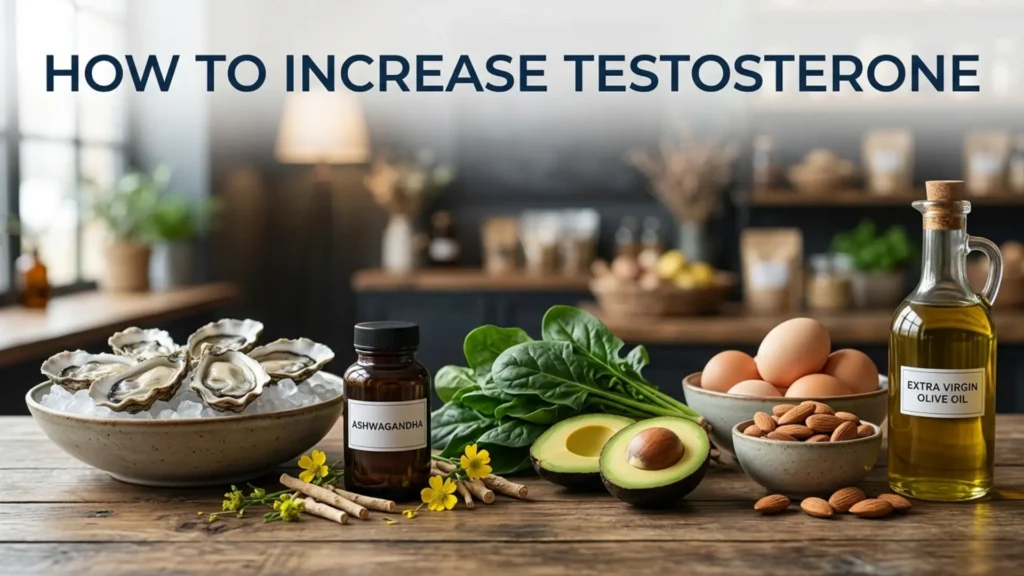
Eggs — One of the most complete testosterone-supporting foods. Rich in cholesterol (testosterone precursor), saturated fat, zinc, vitamin D, and selenium. Don’t skip the yolk.
Oysters — The richest dietary source of zinc, which is critical for testosterone production and sperm health. A single serving of oysters contains more than the daily recommended intake of zinc.
Pomegranate — A 2012 study in the Endocrine Abstracts journal found that drinking pomegranate juice daily for 14 days increased salivary testosterone by an average of 24% and improved mood and blood pressure.
Oily Fish (Salmon, Mackerel, Sardines) — Rich in omega-3 fatty acids and vitamin D. Both are strongly correlated with testosterone production.
Leafy Greens (Spinach, Kale, Swiss Chard) — Rich in magnesium, which is strongly associated with higher free testosterone — particularly in physically active men.
Ginger — A 2012 study in Fertility and Sterility found that daily ginger supplementation increased testosterone levels in infertile men by approximately 17% over 3 months.
Garlic — Contains allicin, which has been shown in animal studies to reduce cortisol levels, indirectly supporting testosterone. Human evidence is more limited but promising.
Cruciferous Vegetables (Broccoli, Cauliflower, Brussels Sprouts) — Contain indole-3-carbinol (I3C), which helps the body metabolise excess oestrogen — important for maintaining a healthy testosterone-to-oestrogen ratio.
Beef and Lamb (Grass-Fed) — Rich in zinc, saturated fat, B12, and creatine — all of which support testosterone and anabolic processes.
Brazil Nuts — Two to three Brazil nuts per day provide the daily recommended intake of selenium, which is essential for testosterone synthesis and sperm quality.
Extra Virgin Olive Oil — A landmark study in the Moroccan Journal of Nutritional Research found that men who switched to extra virgin olive oil as their primary fat source saw a 17% increase in testosterone over 3 weeks.
6. Foods That Kill Testosterone: What to Avoid
Equally important is knowing what suppresses testosterone:
Alcohol — Ethanol is directly toxic to Leydig cells (testosterone-producing cells in the testes). Even moderate alcohol consumption has been shown to suppress testosterone. Heavy drinking significantly reduces testosterone and raises oestrogen.
Processed and Ultra-Processed Foods — Seed oils, trans fats, high-fructose corn syrup, and refined carbohydrates all contribute to inflammation, insulin resistance, and obesity — all of which suppress testosterone.
Soy Products (in excess) — Soy contains phytoestrogens — plant compounds that mimic oestrogen. While moderate soy consumption is unlikely to cause problems, very high soy intake has been associated with lower testosterone in some studies.
Flaxseed (in large amounts) — Rich in lignans, which have oestrogenic activity. Moderate amounts are fine; daily high-dose supplementation is not advisable for men concerned about testosterone.
Liquorice Root — Has been shown in clinical studies to significantly reduce testosterone levels. Glycyrrhizin (the active compound) inhibits testosterone synthesis enzymes.
Spearmint Tea — Has anti-androgenic properties and has been shown in studies to reduce testosterone. Peppermint is less potent but worth moderating.
BPA-Containing Plastics — Bisphenol A is an endocrine disruptor that mimics oestrogen. Minimise plastic food containers, particularly for hot foods or drinks. Use glass, stainless steel, or BPA-free alternatives.
7. Manage Stress and Lower Cortisol
Cortisol — the primary stress hormone produced by the adrenal glands — is the most potent natural suppressor of testosterone. Cortisol and testosterone exist in an antagonistic relationship: when cortisol goes up, testosterone goes down, and vice versa.
Chronic psychological stress produces chronically elevated cortisol, creating a hormonal environment that systematically suppresses testosterone production. This is not a minor effect. Research consistently shows that men with high perceived stress have significantly lower testosterone than men with low stress, independent of age, weight, or sleep.
Evidence-based stress reduction strategies:
- Mindfulness meditation — Even 10–15 minutes daily has been shown to measurably lower cortisol levels
- Breathwork — Techniques such as 4-7-8 breathing and box breathing activate the parasympathetic nervous system and acutely lower cortisol
- Cold exposure — Cold showers or cold-water immersion have been shown to improve stress resilience and HPA axis regulation
- Nature exposure — Research consistently shows that time outdoors in natural settings reduces cortisol and improves hormonal balance
- Social connection — Strong social bonds are independently associated with higher testosterone and lower cortisol
- Reducing workload and boundaries — Chronic overwork is one of the most underappreciated drivers of low testosterone in professional men
8. Lose Excess Body Fat — Especially Visceral Fat
Body fat — particularly visceral (abdominal) fat — is metabolically active tissue that produces aromatase, an enzyme that converts testosterone into oestradiol (oestrogen). The more visceral fat you carry, the higher your aromatase activity, and the lower your available testosterone.
This creates a vicious cycle: low testosterone promotes fat gain, and fat gain further reduces testosterone. Breaking this cycle through diet, exercise, and sleep optimisation is the most important lifestyle intervention for overweight men with low testosterone.
Research shows that even modest weight loss of 5–10% of body weight can produce meaningful increases in testosterone levels in overweight and obese men.
9. Vitamin D — The Sunshine Hormone That Boosts Testosterone
Vitamin D is technically a prohormone rather than a vitamin, and its role in testosterone production is well-established. Testosterone-producing Leydig cells have vitamin D receptors, and studies have consistently found that men with higher vitamin D levels have higher testosterone levels.
A landmark randomised controlled trial published in Hormone and Metabolic Research found that men who supplemented with 3,332 IU of vitamin D daily for 12 months had significantly higher testosterone levels than placebo — approximately 25% higher.
The UK has a particular problem with vitamin D deficiency. Due to its latitude, sunlight in the UK is insufficient to produce meaningful vitamin D between October and April. Public Health England recommends all UK adults supplement with vitamin D during autumn and winter — but for men concerned about testosterone, year-round supplementation is advisable unless blood testing confirms adequate levels.
Recommended supplementation: 2,000–4,000 IU of vitamin D3 daily (with vitamin K2 to ensure proper calcium metabolism). Test your levels via a blood test to optimise your dose.
10. Zinc — The Testosterone Mineral
Zinc is essential for testosterone synthesis. It is required at multiple points in the biosynthetic pathway that produces testosterone, and deficiency has been shown to dramatically suppress testosterone levels.
Zinc deficiency is more common in the UK than many people realise, particularly in:
- Men who eat little red meat or shellfish
- Vegetarians and vegans
- Men who sweat heavily through exercise (zinc is lost in sweat)
- Men who drink alcohol regularly
A landmark study in Nutrition found that zinc-deficient men who supplemented with zinc for 6 months saw testosterone levels approximately double.
Dietary sources of zinc: Oysters (richest source), beef, lamb, pumpkin seeds, hemp seeds, cashews, and legumes.
Supplementation: 25–45mg of zinc (as zinc picolinate or zinc gluconate) daily is effective for correcting deficiency. Don’t exceed 40mg long-term without medical guidance, as high zinc can deplete copper.
11. Magnesium — The Most Underrated Testosterone Nutrient
Magnesium deficiency is remarkably common — estimated to affect up to 60–70% of UK adults based on dietary surveys. Magnesium plays a critical role in testosterone production and has a particularly important relationship with free testosterone.
A 2011 study in Biological Trace Element Research found that magnesium supplementation significantly increased both free and total testosterone levels in both sedentary men and athletes — with greater effects seen in those who also exercised.
Dietary sources: Leafy green vegetables, dark chocolate (70%+), nuts and seeds, legumes, whole grains, and avocado.
Supplementation: 300–400mg of magnesium glycinate or magnesium citrate daily, ideally taken in the evening (magnesium also improves sleep quality).
12. Ashwagandha — The Most Evidence-Backed Testosterone Supplement
Ashwagandha (Withania somnifera) is an adaptogenic herb with a remarkably strong evidence base for testosterone enhancement. Unlike many supplements that rely on theoretical mechanisms, ashwagandha has been tested in multiple high-quality randomised controlled trials specifically looking at testosterone in men.
A 2019 study in Medicine (an AMA-affiliated peer-reviewed journal) found that men who took 600mg of ashwagandha root extract daily for 8 weeks experienced:
- 14.7% increase in testosterone
- Significant improvements in muscle recovery and strength
- Reductions in cortisol
- Improvements in sexual function and libido
The cortisol-lowering mechanism is likely central to ashwagandha’s testosterone-enhancing effect — by reducing stress hormones, it removes a key suppressor of testosterone production.
Recommended dose: 300–600mg of KSM-66 or Sensoril ashwagandha extract daily. Look for products standardised to ≥5% withanolides.
13. Other Supplements Worth Considering
Fenugreek — Contains furostanolic saponins that may inhibit the enzyme that converts testosterone to oestrogen (aromatase) and DHT. Multiple studies show improvements in testosterone and libido. Dose: 500–600mg daily.
D-Aspartic Acid (DAA) — An amino acid that stimulates the release of LH and FSH, which in turn signal the testes to produce testosterone. Most effective in men with clinically low testosterone. Studies show 30–60% increases in testosterone in hypogonadal men over 12 days. Dose: 3g daily.
Boron — A trace mineral that has been shown in studies to significantly reduce SHBG (which binds testosterone and renders it inactive), resulting in increased free testosterone. Dose: 6–10mg daily from boron glycinate.
Tongkat Ali (Longjack / Eurycoma longifolia) — A Southeast Asian herb with multiple human trials showing improvements in testosterone, sperm quality, libido, and stress parameters. Particularly effective in men with stress-related testosterone suppression. Dose: 200–400mg of standardised extract daily.
DHEA — A precursor hormone that can be converted into testosterone. Prescription in the UK but available as a supplement. Most beneficial in men with documented low DHEA-S levels. Consult a physician before use.
Creatine Monohydrate — While not directly a testosterone booster, creatine significantly enhances training performance, muscle mass, and has been shown to increase DHT (dihydrotestosterone — the most potent androgen) through inhibition of 5-alpha reductase. 5g daily.
Note: All supplements work best as part of a comprehensive lifestyle approach. They are not a substitute for addressing the foundational pillars of sleep, diet, exercise, and stress management.
When Lifestyle Changes Aren’t Enough — Medical Options
For some men, lifestyle optimisation alone is insufficient to restore testosterone to optimal levels. This is particularly true for men with primary hypogonadism (testicular failure), secondary hypogonadism (pituitary/hypothalamic dysfunction), or those whose testosterone remains below 12 nmol/L despite consistent lifestyle changes.
In these cases, medical intervention may be both appropriate and life-changing.
Testosterone Replacement Therapy (TRT) in the UK
Testosterone Replacement Therapy (TRT) is the medical standard of care for clinically diagnosed hypogonadism. It involves supplementing the body’s testosterone with exogenous (externally administered) testosterone, with the goal of restoring levels to a healthy, optimal physiological range.
TRT is not a new or experimental treatment. It has been used medically for over 80 years and is supported by extensive peer-reviewed research. In the UK, it is available through the NHS (though access can be inconsistent and waiting times lengthy) and through specialist private clinics like Vitalis Luxe Clinic, which offer faster, more personalised care.
TRT Options Available in the UK
Testosterone Gel (Transdermal) — Applied daily to the skin (shoulders, upper arms, inner thighs). Brands include Testogel, Testim, and Tostran. The most commonly prescribed form in UK NHS practice. Convenient, non-invasive, and produces stable levels for most men.
Testosterone Injections — Testosterone undecanoate (Nebido) is injected deeply into muscle every 10–14 weeks — the most common injectable form prescribed on the NHS. Many private clinics prefer shorter-acting testosterone enanthate or cypionate, administered weekly or bi-weekly for more precise level management.
Testosterone Pellets — Crystalline testosterone implanted subcutaneously in a minor in-office procedure. Lasts 3–6 months. Not widely available on the NHS but available at specialist private clinics.
Nasal Testosterone Gel — Applied inside the nostrils three times daily. Useful for men who want to preserve fertility as it has less impact on sperm production.
Testosterone Patches — Applied to the skin daily. Less popular due to skin irritation but used in some cases.
How to Get TRT in the UK
NHS Route: Your GP can refer you to an NHS endocrinologist or urologist if you have two confirmed low testosterone readings (below 8–12 nmol/L) combined with clinical symptoms. NHS access is frequently reported as variable and inconsistent, with many GPs undertreating or declining to treat men with borderline levels (8–15 nmol/L) who nonetheless have significant symptoms.
Private Route: Private testosterone clinics like Vitalis Luxe Clinic offer a faster, more comprehensive service. A full hormonal blood panel, clinical assessment, and treatment plan can typically be completed within days rather than months. Private TRT clinics also tend to offer a wider range of treatment options, more regular monitoring, and more proactive optimisation.
What to Expect from TRT
Most men on TRT begin to notice improvements in specific areas within the following timelines:
| Benefit | Typical Onset |
| Improved mood and energy | 2–4 weeks |
| Increased libido | 3–6 weeks |
| Improved erectile function | 6–12 weeks |
| Increased muscle mass (with training) | 3–6 months |
| Reduced body fat | 3–6 months |
| Improved bone density | 6–12 months |
| Full hormonal optimisation | 6–12 months |
TRT Safety and Monitoring
Responsible TRT requires ongoing medical monitoring, including:
- Testosterone levels (total and free)
- Haematocrit and haemoglobin (red blood cell count)
- PSA (prostate-specific antigen)
- Oestradiol (E2)
- Lipid panel
- Liver function tests
At Vitalis Luxe Clinic, all TRT patients receive a comprehensive monitoring schedule with regular blood testing to ensure their protocol remains safe, effective, and optimised over time.
TRT Contraindications
TRT is not appropriate for men with:
- Active or suspected prostate cancer
- Active breast cancer
- Untreated severe sleep apnoea
- Polycythaemia (high red blood cell count)
- Desire for fertility without adjunctive therapy (TRT suppresses sperm production)
- Severe congestive heart failure
Clomiphene Citrate (Clomid) — An Alternative for Fertility Preservation
For men with secondary hypogonadism who wish to preserve fertility, clomiphene citrate (an off-label use in men) can stimulate the pituitary to release more LH and FSH, which in turn signals the testes to produce more testosterone naturally. It maintains sperm production — unlike TRT, which suppresses it. Results are variable but meaningful in appropriately selected patients.
HCG (Human Chorionic Gonadotropin)
HCG mimics LH and can be used either as a standalone treatment for secondary hypogonadism or alongside TRT to maintain testicular function, size, and sperm production. It is particularly valuable for men who want to remain fertile while on TRT.
Testosterone and Specific UK Health Contexts
Low Testosterone and the NHS: What You Need to Know
Many UK men find navigating the NHS for testosterone-related concerns frustrating. GPs may be unfamiliar with optimised hormonal ranges, may only test total testosterone (missing free testosterone and SHBG), and may decline to treat men with levels in the “normal” range despite significant symptoms.
If your GP dismisses your concerns:
- Request a comprehensive hormonal blood test including total testosterone, free testosterone, SHBG, LH, FSH, oestradiol, and prolactin
- Request an early morning blood draw (before 11am) — testosterone levels fluctuate throughout the day and are highest in the morning
- Confirm results on a second test before any diagnosis is made
- Request a referral to an NHS endocrinologist or consider a private specialist clinic
Testosterone and Mental Health in the UK
The UK faces a significant male mental health crisis. Suicide is the leading cause of death in men under 50 in the UK, and depression and anxiety are dramatically underdiagnosed in men. Low testosterone is a frequently overlooked contributor to male depression, anxiety, irritability, and emotional instability.
A growing body of research supports testosterone as a meaningful adjunctive treatment for male depression that doesn’t respond fully to antidepressants — particularly in hypogonadal men. If you are experiencing low mood or depression and haven’t had your testosterone checked, it is worth investigating.
Testosterone, Obesity, and Metabolic Syndrome in the UK
UK data from NHS Digital indicates that approximately 63% of adults in England are overweight or obese. Obesity is one of the most potent suppressors of testosterone — and low testosterone, in turn, promotes further weight gain. This bidirectional relationship makes hormonal optimisation a key component of metabolic health management.
Lifestyle Habits That Compound Over Time
Beyond the specific strategies discussed above, several broader lifestyle habits significantly influence testosterone over the long term:
Limit Exposure to Endocrine Disruptors: Use glass or stainless-steel water bottles, avoid microwaving food in plastic, choose natural personal care products without parabens or phthalates, and reduce pesticide exposure by choosing organic produce where feasible.
Maintain Social Connections: Research from the University of Michigan found that positive social interactions — particularly those involving competition, teamwork, or achievement — temporarily raise testosterone. Chronic social isolation is associated with lower baseline testosterone.
Sun Exposure: Natural sunlight (UV exposure to skin) is the most efficient way to produce vitamin D and has also been shown to directly stimulate testosterone production via sun-exposed skin. Even 20–30 minutes of midday sun exposure on arms and legs during UK summer months is beneficial. Use sunscreen judiciously — it blocks vitamin D production — and prioritise short, sensible sun exposure rather than prolonged burning.
Intermittent Fasting: Some research suggests that time-restricted eating (e.g., 16:8 — eating within an 8-hour window) may support testosterone levels by improving insulin sensitivity and promoting growth hormone release during fasting periods. It is not a necessity but may be a useful tool for men who also need to manage weight.
Competitive Activities: Engaging in competitive activities — sports, chess, business competitions, even video games — has been shown in studies to produce measurable testosterone increases. The competitive drive itself has a hormonal dimension.
Creating Your Testosterone Optimisation Plan
Having read this guide, here is a practical, prioritised action plan:
Week 1–2: The Foundations
- Fix your sleep schedule (7–9 hours, consistent timing)
- Begin resistance training 3–4 times per week with compound movements
- Start vitamin D3 (3,000 IU/day) and magnesium glycinate (400mg/night) supplementation
- Reduce alcohol intake significantly
- Remove ultra-processed foods and seed oils from your diet
Week 3–4: Dietary Optimisation
- Increase dietary fat from quality sources (eggs, olive oil, avocados, fatty fish)
- Add zinc-rich foods or supplement with 30mg zinc picolinate daily
- Increase leafy greens for magnesium
- Begin eating testosterone-boosting foods (pomegranate, garlic, Brazil nuts, oysters)
- Remove testosterone-suppressing foods (excess soy, flaxseed, processed foods)
Month 2–3: Advanced Strategies
- Add ashwagandha (600mg KSM-66 daily) and assess results over 8 weeks
- Consider boron (6mg daily) to reduce SHBG and increase free testosterone
- Introduce stress management practice (meditation, breathwork, or nature exposure)
- Get a comprehensive blood test to assess vitamin D, zinc, magnesium, and full hormonal panel
Month 4+: Assess and Escalate if Needed
- Review blood results and symptoms
- If testosterone remains low (below 12–15 nmol/L) despite consistent lifestyle changes, consult a specialist
- Discuss TRT or alternative medical options with a qualified clinician at a specialist clinic like Vitalis Luxe Clinic
Frequently Asked Questions (FAQ)
How long does it take to increase testosterone naturally?
Lifestyle changes take time to produce measurable hormonal shifts. Most men see noticeable improvements in energy, mood, and libido within 4–8 weeks of consistent sleep, exercise, and dietary changes. Full hormonal optimisation typically takes 3–6 months of sustained effort.
What is the fastest way to increase testosterone?
The single fastest natural method is improving sleep quality and duration — effects begin within days. Among supplements, D-aspartic acid and ashwagandha show meaningful results within 2–4 weeks. Medical TRT, if appropriate, begins working within 1–2 weeks for mood and energy.
Can I test my testosterone at home in the UK?
Yes. Several UK services offer postal blood test kits that include testosterone and related hormones. However, for a comprehensive hormonal assessment and clinical interpretation, an in-person evaluation at a specialist clinic is recommended.
Does masturbation reduce testosterone?
Short-term sexual activity and orgasm cause a brief, temporary fluctuation in testosterone, but no research supports the idea that normal sexual activity meaningfully reduces baseline testosterone levels. This is a myth.
Does creatine increase testosterone?
Creatine does not directly increase testosterone, but it has been shown to increase DHT (dihydrotestosterone), the most potent androgen, by up to 56% in one study of rugby players. It also significantly improves exercise performance, indirectly supporting hormonal optimisation.
Is TRT available on the NHS in the UK?
Yes, but access is variable. You need two confirmed low testosterone readings combined with clinical symptoms. Many men find private clinics offer faster, more comprehensive care.
Will TRT affect my fertility?
TRT suppresses sperm production in most men. Fertility can often be preserved or restored with adjunctive hCG therapy. Men who wish to father children should discuss fertility preservation with their clinician before starting TRT.
At what age should I worry about testosterone levels?
Testosterone naturally declines from age 30, but lifestyle-driven low testosterone can occur at any age. If you have symptoms consistent with low testosterone regardless of age, it is worth investigating.
What is Testosterone?
Testosterone is a natural hormone produced mainly in the testicles in males and in smaller amounts in the ovaries in females. It plays an important role in the development of male physical features such as muscle mass, body hair, deep voice, and reproductive functions. It also helps in maintaining energy levels, mood, bone strength, and overall health in both men and women.
How can we increase testosterone naturally?
Testosterone levels can often be supported naturally through healthy lifestyle habits that improve overall physical and mental well-being. Regular strength training and exercise, especially weightlifting and high-intensity workouts, can help stimulate testosterone production. Getting enough sleep is also very important, as poor sleep can lower hormone levels over time. Eating a balanced diet with enough protein, healthy fats, vitamins, and minerals such as zinc and vitamin D may support healthy testosterone levels. Managing stress is another key factor because long-term stress increases cortisol, a hormone that can negatively affect testosterone. Maintaining a healthy body weight, avoiding excessive alcohol and smoking, and staying physically active can also contribute to better hormonal balance.