
Crows Feet Botox for Softer Lines Around the Eyes
Are crow’s feet around your eyes becoming more noticeable when you smile, laugh or squint? These fine expression lines develop at the outer corners of the eyes and can gradually become more visible as repeated facial movement continues over time. Crow’s Feet Botox can temporarily reduce selected muscle activity around the outer-eye area, helping movement-related lines appear softer while keeping your expression looking natural.
At Vitalis Luxe Clinic, we provide personalised anti-wrinkle or Botox Treatments based on your facial movement, individual concerns and treatment goals. Vitalis Luxe Clinic is a UK-based aesthetic clinic located in Cottingham, near Hull, East Yorkshire, where suitability is assessed before any injectable treatment is recommended.
Why Do Crow’s Feet Appear When You Smile?
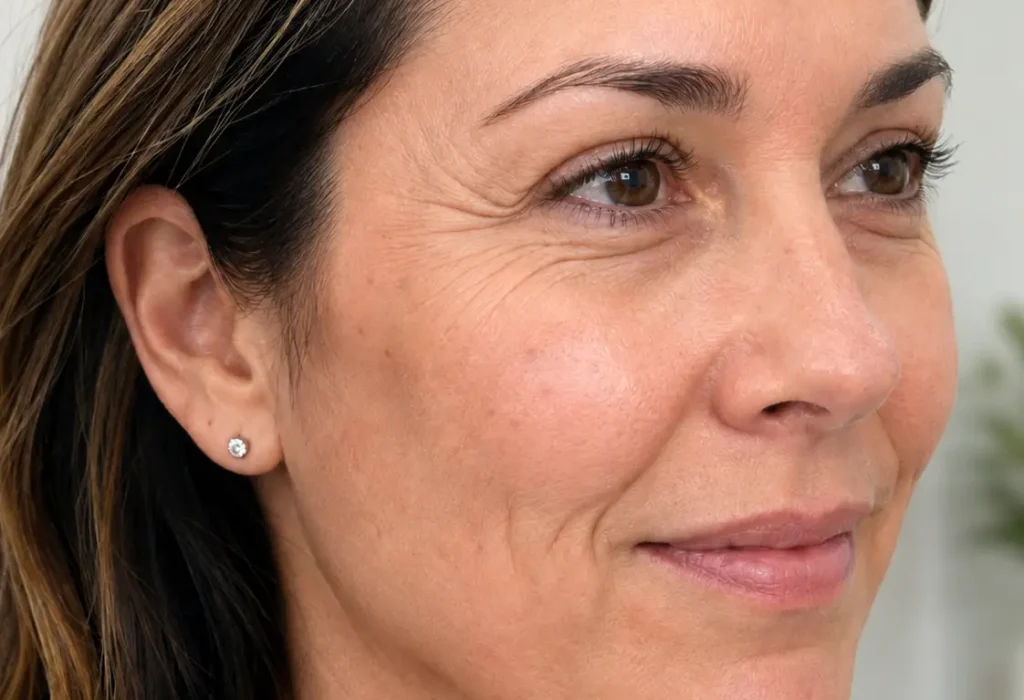
Crow’s feet are the fine lines that form around the outer corners of the eyes. They often become most noticeable when you smile, laugh or squint because the muscles around the eyes contract during these expressions.
One of the main muscles involved is the orbicularis oculi, which surrounds the eye and helps control movement around this area. Repeated contraction causes the skin at the outer corners of the eyes to fold again and again.
Over time, these movement-related lines can become more defined and may eventually remain visible even when your face is relaxed.
Can Botox Soften Crow’s Feet Without Changing Your Smile?
For suitable clients, Botox can be used to soften dynamic crow’s feet by temporarily reducing selected muscle movement around the outer eye.
The aim is not necessarily to stop you from smiling or remove every natural expression. Treatment should be planned around your individual facial movement so that the outer-eye lines are softened without creating an unnecessarily frozen appearance.
How much movement is reduced depends on your anatomy, muscle activity, desired outcome and individual treatment plan.
How Does Crows Feet Botox Work Around the Outer Eyes?
Crow’s Feet Botox works by temporarily reducing selected muscle activity responsible for creating movement-related lines around the outer eye.
The relationship is:
Smiling or squinting
→ orbicularis oculi contracts
→ skin repeatedly folds
→ crow’s feet become visible
When selected muscle activity is temporarily reduced:
less contraction
→ less repeated folding
→ softer-looking dynamic lines
This is why Botox is more closely associated with expression-related crow’s feet than with every type of wrinkle or skin concern around the eyes.
Crow’s Feet When Smiling vs Lines Visible at Rest
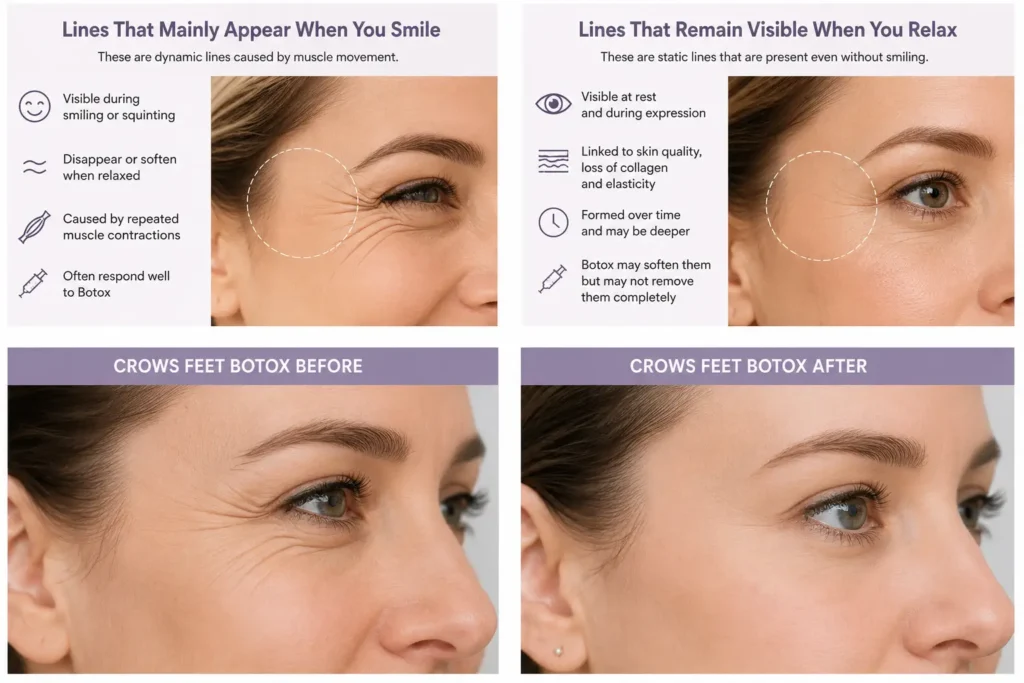
Lines That Mainly Appear When You Smile
If the lines are mostly visible when you smile, laugh or squint and become much less noticeable when your face relaxes, they are primarily dynamic expression lines.
Because muscle movement plays a major role in creating them, this is the type of crow’s feet most closely associated with Botox treatment.


Lines That Remain Visible When You Relax
If your outer-eye lines remain clearly visible when your face is relaxed, they may also involve:
- established skin creasing
- reduced skin elasticity
- skin laxity
- age-related skin-quality changes
- sun-related skin changes
Botox may reduce the movement contributing to these lines, but it may not completely remove an established crease or other skin-quality concerns.
What Results Can You Realistically Expect?
The aim of Crow’s Feet Botox is generally to make movement-related lines around the outer eyes appear softer.
Depending on your individual response, you may notice:
- softer lines when smiling
- less prominent outer-eye creasing
- a smoother-looking appearance around the eyes
- reduced repeated skin folding during expression
- a fresher appearance while maintaining natural facial movement
However, Botox does not guarantee completely wrinkle-free skin.
If lines remain visible at rest or the concern is partly caused by loose, crepey or sun-damaged skin, some lines may remain even when the treatment has successfully reduced muscle movement.
Will Crows Feet Botox Change My Eye Shape?
Treatment takes place close to the outer eye, so facial anatomy and individual muscle movement are important when planning Crow’s Feet Botox.
The intention is usually to soften selected expression lines rather than deliberately change the shape of the eyes. However, reducing movement in muscles around the eye can affect how surrounding areas move, which is why treatment planning and practitioner assessment matter.
If maintaining your natural smile or eye shape is particularly important to you, discuss this during your consultation before treatment.
“Does crow’s feet Botox change eye shape?” is a specific concern appearing in the current search journey, so it deserves more than a brief mention in a generic side-effects section.
What If I Have Crepey Skin Under My Eyes Too?
Crow’s feet and under-eye skin concerns are not always the same problem.
Crow’s feet usually appear at the outer corners of the eyes and are strongly associated with facial movement.
By comparison, concerns directly beneath the eyes may include:
- crepey skin
- reduced elasticity
- hollowness
- pigmentation
- skin laxity
- fine static lines
Because Botox primarily targets selected muscle activity, it may not address every under-eye concern.
How Much Botox Is Used Around the Crow’s Feet?
There is no single amount that is appropriate for every client.
The treatment plan may depend on:
- strength of your outer-eye muscles
- how strongly your lines appear when smiling
- facial symmetry
- individual anatomy
- previous injectable treatments
- how much movement you want to maintain
Your practitioner should assess the area before determining an appropriate approach rather than simply selecting a generic number of units.
What Happens at Your Crow’s Feet Appointment?
Your appointment begins with an assessment of the outer-eye area.
Your consultation should cover:
- what concerns you most
- how much movement you want to retain
- what improvement may realistically be possible
- your medical history
- previous injectable treatments
- possible side effects
- aftercare
If Crow’s Feet Botox is considered suitable, the treatment is then planned around your individual facial anatomy and movement.
How Long Can Crows Feet Botox Results Last?
Crow’s Feet Botox produces a temporary effect.
How long the result remains noticeable can vary depending on factors including:
- individual muscle activity
- anatomy
- previous treatment history
- treatment plan
- personal response
As the effect gradually wears off, movement around the outer eye returns and the crow’s feet may become more noticeable again.
Crows Feet Botox Before and After
Crow’s Feet Botox before and after results can help show how movement-related lines around the outer corners of the eyes may change following treatment. The most useful comparison is usually made while smiling, because crow’s feet are often more visible during expression. Results vary between individuals, and deeper lines that remain visible at rest may not disappear completely.
Before Crows Feet Botox
Before treatment, crow’s feet may become more noticeable when you smile, laugh or squint. Repeated movement around the outer eye can create visible creasing, and some lines may gradually remain even when your face is relaxed. The depth and pattern of these lines can vary depending on your facial movement, skin quality and age-related changes.
Before having Botox for crow’s feet, the practitioner can assess how far the lines extend from the outer corners of the eyes, whether both sides move equally and whether skin texture is also contributing to the concern. Looking at the area both at rest and while smiling helps distinguish movement-related crow’s feet wrinkles from more established skin changes. This assessment is useful for planning treatment around your natural eye shape and facial expression rather than treating every client in the same way.
After Crows Feet Botox
After treatment, selected muscle movement around the outer eye may be temporarily reduced, helping dynamic crow’s feet appear softer when you smile or squint. The area may look smoother while still maintaining a natural expression. If some lines are already static or linked to skin laxity, they may remain partly visible even after the movement-related component has improved.
The appearance of Crow’s Feet Botox results usually develops progressively rather than changing immediately after the appointment. Comparing the outer-eye area using the same smile, lighting and facial position can provide a clearer view of how the movement-related lines have responded. Because the effects are temporary, muscle activity gradually returns over time and future treatment can be discussed if appropriate. Individual results and duration will vary according to anatomy, muscle activity and treatment plan.
Is Botox the Best Option for Every Crow’s Feet Concern?
Not necessarily.
If your crow’s feet appear mostly when you smile or squint, muscle activity may be a major part of the concern and Botox may be worth discussing.
If you are more concerned about:
Crepey skin
Your practitioner may need to assess skin quality rather than treating muscle movement alone.
Loose or lax skin
Botox cannot physically tighten all forms of skin laxity.
Under-eye hollowness
This is a different concern from outer-eye crow’s feet.
Lines permanently visible at rest
Treatment expectations may be different from purely dynamic lines.
The best option depends on what is actually causing the appearance you want to improve.
Crow’s Feet Botox Side Effects and Eye-Area Risks
Crow’s Feet Botox is an injectable procedure, so temporary effects may occur after treatment.
Possible effects can include:
- redness
- tenderness
- bruising
- swelling
- small injection-site marks
- headache in some individuals
Because treatment takes place close to the eyes, your practitioner should also discuss treatment-specific risks and possible temporary changes to surrounding movement before you proceed.
Your medical history, medications and previous injectable treatments should be reviewed when assessing suitability.
Crows Feet Botox Aftercare
Your practitioner should provide aftercare guidance relevant to the product and treatment protocol used.
Follow the instructions provided by your clinic and avoid relying only on generic advice from social media or other patients.
If you experience an unexpected reaction or are concerned about how the treated area looks or feels after treatment, contact the clinic for advice.
You may be advised to avoid certain activities for a short period after treatment, depending on the product used and your individual treatment plan. It is also important to avoid rubbing or pressing the treated area unless your practitioner specifically tells you otherwise.
If you experience an unexpected reaction or are concerned about how the treated area looks or feels after treatment, contact the clinic for advice.
Who May Be Suitable for Crows Feet Botox?
You may wish to discuss Crow’s Feet Botox if:
- lines around your outer eyes are particularly noticeable when smiling
- you would like them to appear softer
- you want to maintain a natural expression
- you understand that results are temporary
- you have realistic expectations about static lines and skin-quality concerns
Suitability should still be determined individually.
Your practitioner should consider your facial anatomy, muscle movement, medical history, previous treatments and expected outcome before recommending treatment.
Why Choose Vitalis Luxe Clinic for Crows Feet?
At Vitalis Luxe Clinic, treatment begins by looking at how your face actually moves rather than simply treating the same points on every client.
We assess where your crow’s feet appear when you smile, how much movement you naturally have and whether your lines remain visible when your face is relaxed.
This helps create a more personalised discussion around what treatment may improve, what may remain visible and how much natural movement you would like to maintain.
Frequently Asked Questions About Crows Feet Botox
Does Botox really work for crow’s feet?
Botox is commonly considered for dynamic crow’s feet caused partly by muscle movement around the outer eyes. The level of improvement varies depending on your lines, anatomy and whether the concern is mainly visible during expression or also at rest.
Do crow’s feet only happen when you smile?
They often become much more noticeable when smiling or squinting, but more established lines may remain visible when your face is relaxed.
Does Crow’s Feet Botox affect your smile?
Treatment can affect selected muscle movement around the outer eye, which is why treatment planning should consider your natural smile and desired level of movement.
Can Crow’s Feet Botox change eye shape?
The aim is generally to soften expression lines rather than change eye shape. However, treatment occurs close to muscles surrounding the eye, so possible changes in surrounding movement should be discussed during consultation.
Why can I still see crow’s feet after Botox?
Some lines may already be established in the skin or may also be associated with skin laxity and texture changes. Reducing muscle movement does not necessarily remove every static line.
How many Botox units are needed for crow’s feet?
There is no universal amount suitable for everyone. Treatment planning should consider your anatomy, muscle strength, facial movement and desired result.
How long does Crow’s Feet Botox last?
The effect is temporary and varies between individuals. Movement gradually returns as the treatment wears off.
What are the side effects of Crow’s Feet Botox?
Temporary effects can include redness, bruising, swelling, tenderness or small injection-site marks. Other treatment-specific risks should be discussed before treatment.
Can men have Crow’s Feet Botox?
Yes, suitability is based on individual anatomy, muscle movement, medical history and treatment goals rather than gender alone.
Can Botox treat crepey under-eye skin?
Botox primarily targets selected muscle activity and may not address all forms of under-eye crepiness or skin-quality change. The underlying concern should be assessed before treatment is recommended.
Ready to Discuss Your Crow’s Feet?
If crow’s feet around your eyes are becoming more noticeable when you smile or squint, a consultation can help establish whether they are mainly caused by facial movement or whether skin-quality changes are also contributing.
At Vitalis Luxe Clinic, we can assess your outer-eye movement, discuss the level of change you want and explain what Crow’s Feet Botox may realistically achieve before you decide whether to proceed.